
1 Kings 9:15-17 is about King Solomon’s use of forced labor to build the temple of the Lord, highlighting the importance of following God’s commands with diligence and reverence.
15 And this is the account of the forced labor that King Solomon drafted to build the house of the Lord and his own house and the Millo and the wall of Jerusalem and Hazor and Megiddo and Gezer.
16 (Pharaoh king of Egypt had gone up and captured Gezer and burned it with fire, and had killed the Canaanites who lived in the city, and had given it as dowry to his daughter, Solomon’s wife.)
17 And Solomon rebuilt Gezer and Lower Beth-horon,
Setting the Scene for 1 Kings 9:15-17
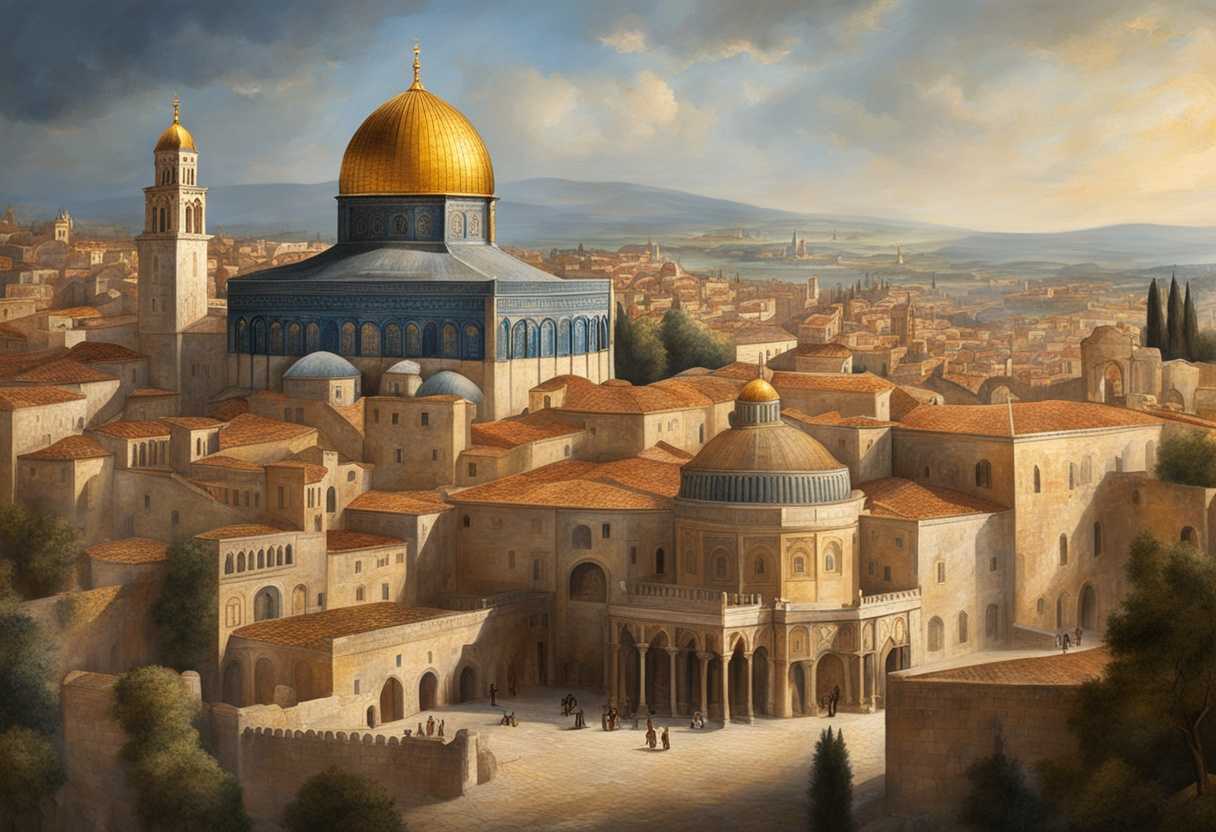
In 1 Kings chapter 9, we find King Solomon overseeing the construction of various important structures in his kingdom. The scene is set in the bustling city of Hazor, located in the northern part of Israel. King Solomon, known for his wisdom and wealth, has commissioned the building of several key projects, including the city of Hazor, Megiddo, and Gezer. These cities were strategically important for defense and trade, and their construction was a testament to Solomon’s vision for a prosperous and secure kingdom.
The names of those present in this scene include skilled craftsmen, laborers, and overseers who are diligently working on the construction projects. King Solomon himself is overseeing the progress, ensuring that everything is being built according to his specifications. The surroundings are filled with the sounds of hammering, sawing, and the shouts of workers as they go about their tasks. The air is filled with the smell of freshly cut wood and the dust kicked up by the construction work.
As the sun sets on the horizon, casting a warm glow over the city of Hazor, King Solomon takes a moment to reflect on the progress being made. The completion of these projects will not only strengthen his kingdom but also bring glory to God, who had granted him wisdom and success. The scene captures a moment of industry, ambition, and faith, as King Solomon’s grand vision for his kingdom begins to take shape before his eyes.
What is 1 Kings 9:15-17 about?
King Solomon demonstrates his wealth, power, and strategic thinking by building cities as a dowry for Pharaoh’s daughter in this verse. This act goes beyond a simple gesture of giving gifts; it signifies the importance of alliances, marriages, and political relationships in the ancient world. Solomon showed his commitment to the marriage and solidified his ties with Egypt by constructing these cities, a significant and influential kingdom during that time.
Imagine the intricate planning and resources required to build entire cities as a dowry. It shows the level of dedication and investment that Solomon was willing to make for this union. Additionally, the choice of cities such as Hazor, Megiddo, and Gezer holds significance. These cities were strategically located, serving both political and military purposes. Solomon displayed his generosity and strengthened his kingdom’s defenses and control over key territories by gifting these fortified cities. It’s a fascinating glimpse into the political landscape of ancient times and the lengths to which rulers would go to secure their power and alliances.
Understanding what 1 Kings 9:15-17 really means
In 1 Kings 9:15-17, we delve into a pivotal moment in King Solomon’s reign, where grand building projects shape the landscape of Jerusalem and surrounding cities. The forced labor employed for these endeavors raises ethical questions about the burdens placed on the people. Solomon’s construction of the Lord’s temple symbolizes the centrality of worship, while his palace showcases his wealth and power. The fortification of Jerusalem and the rebuilding of Gezer highlight the importance of security and restoration in a kingdom’s prosperity.
The mention of Pharaoh king of Egypt capturing Gezer and giving it as a wedding gift to Solomon’s wife underscores the political alliances and power dynamics of the time. This act of diplomacy through marriage alliances reflects the complexities of ancient geopolitics. Solomon’s subsequent rebuilding of Gezer signifies his commitment to strengthening his kingdom and restoring what was lost to foreign powers.
These verses resonate with contemporary themes of leadership, responsibility, and community well-being. They prompt us to reflect on the ethical considerations of leaders in utilizing resources and labor for grand projects. Prioritizing worship and community welfare emerges as a crucial aspect of governance, echoing the importance of investing in places of worship and communal spaces for the well-being of society.
Drawing parallels to modern scenarios, envision a bustling city undergoing extensive development akin to Solomon’s reign. The mayor’s ambitious projects bring both progress and challenges, mirroring the dual nature of grand undertakings. This narrative serves as a reminder that leadership entails balancing development with the welfare of the populace, urging us to navigate such complexities with wisdom and compassion.
In conclusion, 1 Kings 9:15-17 offers a tapestry of historical, political, and spiritual insights that resonate across time. Through Solomon’s reign, we glean lessons on leadership, the significance of worship, and the repercussions of political decisions. As we contemplate these ancient accounts, we are encouraged to lead with integrity, foresight, and a deep concern for the well-being of those under our care.
Do I prioritize building God’s temple?
Yes, according to the verse, it is important to prioritize building God’s temple. The construction of the temple is seen as a way to honor and show reverence to God. Dedicating time, resources, and effort to building the temple demonstrates a commitment to the worship and glory of God.
Furthermore, building God’s temple signifies a desire to create a sacred space where God’s presence can dwell among His people. The temple is not just a physical structure but a symbol of spiritual significance and a place of worship and connection with the divine. Prioritizing the construction of God’s temple ultimately reflects a deep faith and devotion to God, showing that His presence and worship are central to one’s life and priorities.
Application
Let’s mirror King Solomon’s wisdom in our own lives. Let’s be wise stewards of all the resources we’ve been given by the Higher Power and use them to build a brighter, harmonious world. Are we truly honoring ourselves and those around us by achieving this balance in the modern hustle and bustle? Let’s reflect and act.

Reverend Michael Johnson is an experienced Church Minister with a profound expertise in spirituality and guidance. With a serene presence and a compassionate heart, he has faithfully served his congregation for over 20 years, leading them on a spiritual journey towards inner peace and enlightenment. Reverend Johnson’s extensive knowledge of religious philosophies and profound understanding of human nature have made him a trusted confidant and mentor to many, as he seamlessly weaves his profound wisdom into life teachings. Reverend Johnson’s calming demeanor and empathetic nature continue to uplift and heal souls, nurturing a sense of unity and tranquility within his community.