
1 Samuel 6:1-6 is about the Philistines returning the ark of the covenant to the Israelites as a symbolic way of acknowledging the power and presence of the God of Israel.
1 The ark of the Lord was in the country of the Philistines seven months.
2 And the Philistines called for the priests and the diviners and said, “What shall we do with the ark of the Lord? Tell us with what we shall send it to its place.”
3 They said, “If you send away the ark of the God of Israel, do not send it empty, but by all means return him a guilt offering. Then you will be healed, and it will be known to you why his hand does not turn away from you.”
4 And they said, “What is the guilt offering that we shall return to him?” They answered, “Five golden tumors and five golden mice, according to the number of the lords of the Philistines, for the same plague was on all of you and on your lords.
5 So you must make images of your tumors and images of your mice that ravage the land, and give glory to the God of Israel. Perhaps he will lighten his hand from off you and your gods and your land.
6 Why should you harden your hearts as the Egyptians and Pharaoh hardened their hearts? After he had dealt severely with them, did they not send the people away, and they departed?
Setting the Scene for 1 Samuel 6:1-6
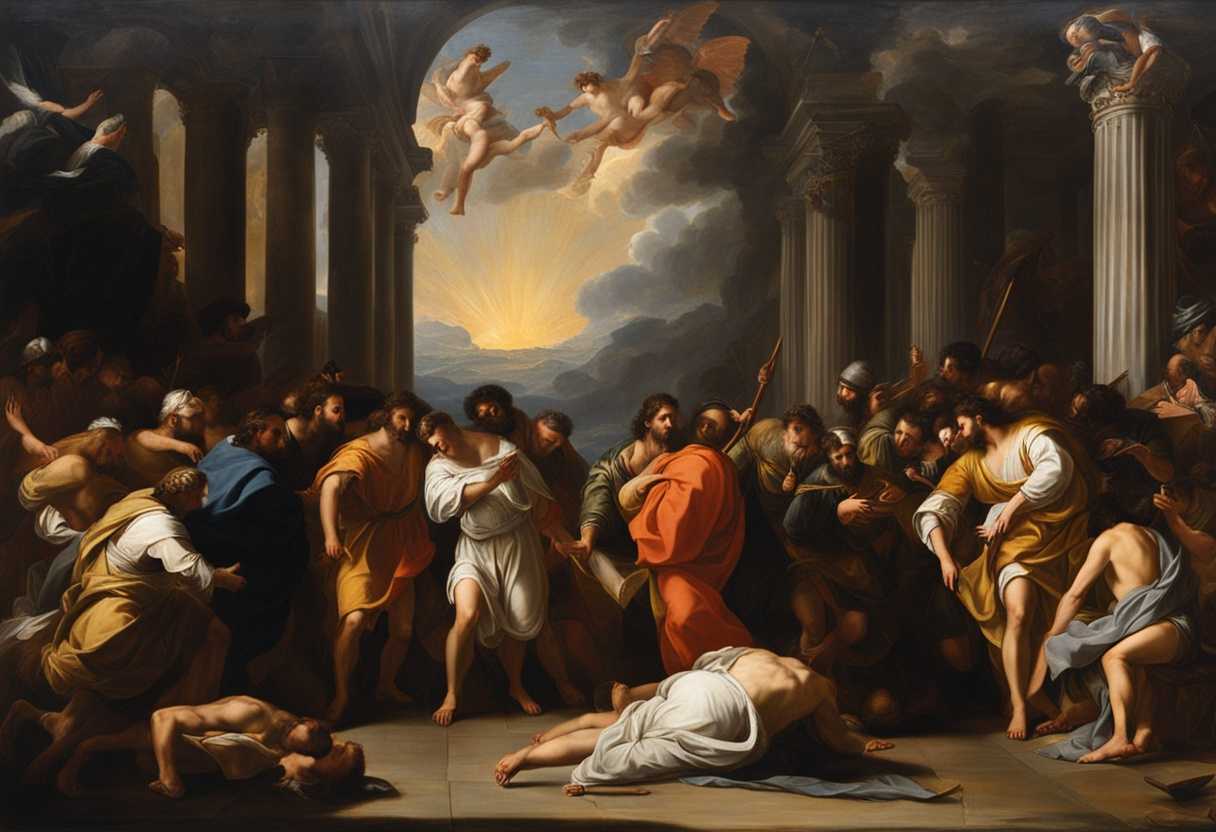
In 1 Samuel chapter 6, we find the Philistines in a state of distress after capturing the Ark of the Covenant. The Philistines had taken the Ark as a spoil of war after defeating the Israelites in battle. However, they soon realized that having the Ark in their possession brought upon them plagues and misfortunes. In an attempt to rid themselves of these afflictions, the Philistines consulted their priests and diviners for guidance on what to do with the Ark.
The scene is set in the city of Ashdod, one of the five principal cities of the Philistines. The Philistine rulers, priests, and diviners gather in a council to discuss the situation with the Ark. They are troubled by the plagues that have befallen them since capturing the sacred object. The atmosphere is tense as they debate the best course of action to appease the God of the Israelites and rid themselves of the curses that have plagued their land. The Philistines are desperate for a solution and are willing to go to great lengths to ensure their safety and well-being.
What is 1 Samuel 6:1-6 about?
The Philistines return the Ark of the Covenant to the Israelites along with offerings in this verse, showcasing a significant moment. This event symbolizes the acknowledgment of respect and reverence towards the Israelites’ sacred object. It shows a recognition of the Israelites’ connection to God and their religious practices. The act of returning the Ark with offerings also signifies a sense of remorse for any wrongdoing or disrespect that may have occurred previously.
This verse teaches us about the power of reconciliation and the importance of acknowledging and rectifying past mistakes. It highlights the value of showing respect and honoring others’ beliefs and traditions. The Philistines not only seek to make amends but also demonstrate a willingness to coexist peacefully with the Israelites by returning the Ark with offerings. It prompts us to reflect on the significance of forgiveness, understanding, and the peaceful resolution of conflicts in our own lives and relationships. Through this verse, we are reminded of the potential for reconciliation and unity, even in the midst of differences and past grievances.
Understanding what 1 Samuel 6:1-6 really means
In 1 Samuel 6:1-6, we are presented with a compelling narrative that delves into the consequences of defying the will of God. The Ark of the Covenant, a sacred symbol of God’s presence, had been taken by the Philistines, leading to a series of calamities befalling them. After enduring seven months of suffering, the Philistines recognized the magnitude of their actions and decided to return the Ark to Israel. This act not only highlights their acknowledgment of the power of the God of Israel but also serves as a cautionary tale for all who encounter the text.
The phrase “The Ark of the Lord was in the country of the Philistines seven months” encapsulates a period of trial and tribulation for the Philistines, emphasizing the sanctity and potency of the Ark. It serves as a stark reminder of the repercussions of straying from God’s path. Additionally, the reference to the hardening of hearts, likened to the obstinacy of the Egyptians and Pharaoh in the Exodus story, warns against the perils of stubbornness and disobedience to divine authority. This parallel underscores the timeless nature of the consequences of resisting God’s will.
Drawing connections to related biblical passages such as Exodus 7-12 and Proverbs 28:14 further enriches our understanding of the themes at play. The afflictions suffered by the Philistines while in possession of the Ark, as detailed in 1 Samuel 5, provide crucial context for their eventual decision to return it. Proverbs 28:14 reinforces the notion that those who harden their hearts are bound to encounter trouble, emphasizing the importance of humility and reverence before God.
The relevance of this passage to contemporary audiences is profound. Just as the Philistines came to acknowledge the divine power of the God of Israel, individuals today are called to recognize and honor the sovereignty and holiness of God in their lives. The narrative also serves as a poignant reminder of the dangers of obstinacy and the significance of seeking reconciliation. By reflecting on the Philistines’ actions in returning the Ark, we are prompted to consider our own relationships with God and others, urging us towards repentance and restoration.
An anecdote can vividly illustrate the message conveyed in 1 Samuel 6:1-6. Picture a person who disregards their health warnings until a severe crisis forces them to change their lifestyle. Similarly, the Philistines ignored the initial signs of God’s displeasure until their suffering became unbearable. This analogy underscores the importance of heeding divine warnings and making necessary adjustments before it is too late.
In conclusion, the passage from 1 Samuel 6:1-6 imparts valuable lessons on the power of God, the perils of a hardened heart, and the significance of seeking reconciliation. It beckons us to be attentive to God’s will, to approach Him with humility, and to respond obediently. May we heed the warnings embedded in this narrative and strive for reconciliation and obedience in our own lives.
How do we seek guidance from God?
One way to seek guidance from God in the context of the verse you provided is by acknowledging the importance of God’s presence and seeking His direction in all matters. It is essential to approach God with humility and reverence, recognizing His sovereignty and wisdom above all else. We demonstrate our dependence on God and our willingness to follow His will by turning to Him in prayer and seeking His guidance.
Furthermore, seeking guidance from God involves a sincere desire for God’s direction and clarity in our decision-making process. We can seek God’s guidance through prayer, meditation on His word, and seeking counsel from other believers. We can trust in His wisdom to lead us on the right path by aligning our hearts and minds with God’s truth and seeking His will above our own desires. It is through a deepening relationship with God and a commitment to seeking His guidance that we can find peace and direction in our lives.
Application
Dear friend, just as the Philistines sought answers in times of doubt, let us too turn to the divine for wisdom in our modern-day struggles. Embrace humility and invite God’s guidance into your work and family life. Pledge to navigate through uncertainty with faith as your compass. Will you choose to seek God’s direction wholeheartedly from now on?

Reverend Michael Johnson is an experienced Church Minister with a profound expertise in spirituality and guidance. With a serene presence and a compassionate heart, he has faithfully served his congregation for over 20 years, leading them on a spiritual journey towards inner peace and enlightenment. Reverend Johnson’s extensive knowledge of religious philosophies and profound understanding of human nature have made him a trusted confidant and mentor to many, as he seamlessly weaves his profound wisdom into life teachings. Reverend Johnson’s calming demeanor and empathetic nature continue to uplift and heal souls, nurturing a sense of unity and tranquility within his community.