
1 Samuel 6:1-7 is about the Philistines returning the Ark of the Covenant to the Israelites after suffering plagues as a result of their unlawful possession, highlighting the consequences of disrespecting sacred objects and the importance of honoring divine commandments.
1 The ark of the Lord was in the country of the Philistines seven months.
2 And the Philistines called for the priests and the diviners and said, “What shall we do with the ark of the Lord? Tell us with what we shall send it to its place.”
3 They said, “If you send away the ark of the God of Israel, do not send it empty, but by all means return him a guilt offering. Then you will be healed, and it will be known to you why his hand does not turn away from you.”
4 And they said, “What is the guilt offering that we shall return to him?” They answered, “Five golden tumors and five golden mice, according to the number of the lords of the Philistines, for the same plague was on all of you and on your lords.
5 So you must make images of your tumors and images of your mice that ravage the land, and give glory to the God of Israel. Perhaps he will lighten his hand from off you and your gods and your land.
6 Why should you harden your hearts as the Egyptians and Pharaoh hardened their hearts? After he had dealt severely with them, did they not send the people away, and they departed?
7 Now then, take and prepare a new cart and two milk cows on which there has never come a yoke, and yoke the cows to the cart, but take their calves home, away from them.
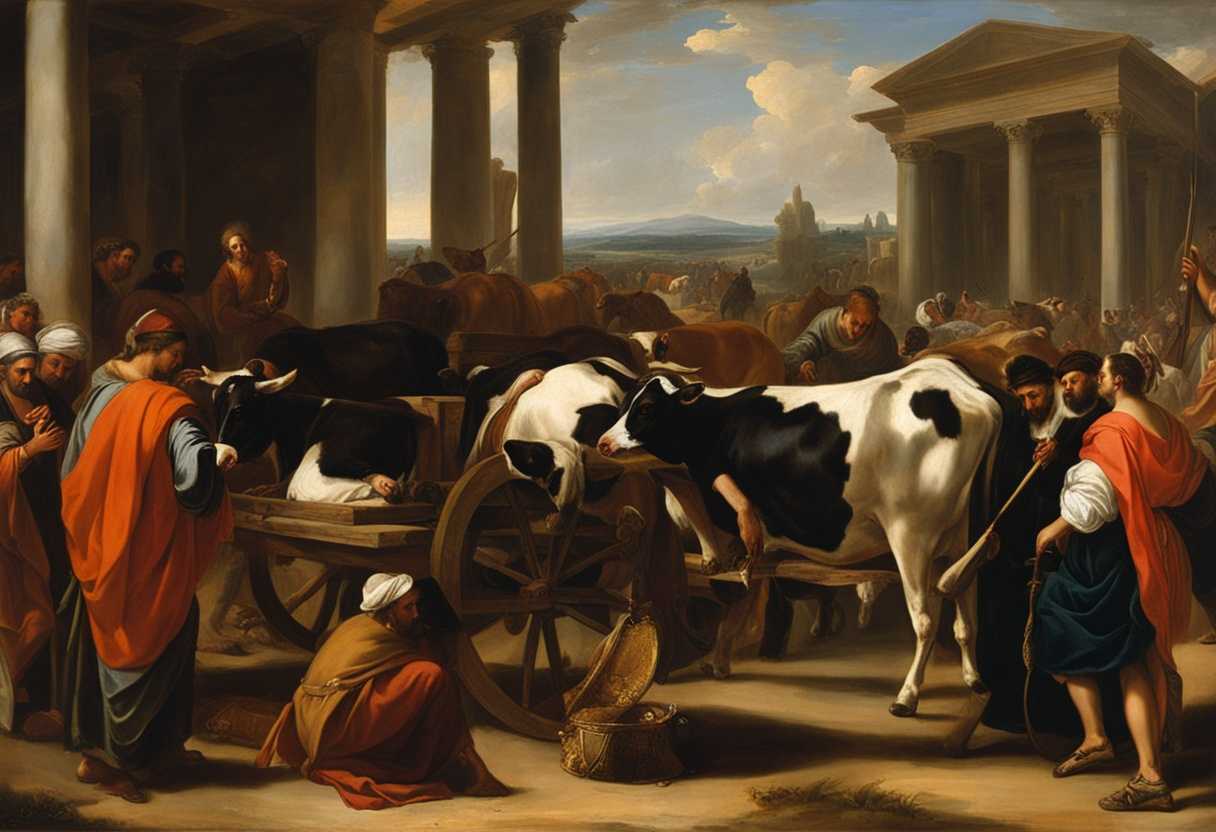
Setting the Scene for 1 Samuel 6:1-7
The scene in 1 Samuel 6:1-7 takes place in the land of the Philistines, specifically in the city of Ashdod. The Philistines had captured the Ark of the Covenant, a sacred chest containing the tablets of the Ten Commandments, and placed it in the temple of their god Dagon. However, after the Ark caused destruction and afflictions among the Philistines, they decided to return it to the Israelites.
In this scene, we see the Philistine rulers and priests gathered in the temple of Dagon, discussing the calamities that have befallen them since they took the Ark. They are troubled by the plagues that have struck their people and the destruction that has come upon their cities. The decision is made to send the Ark back to the Israelites along with a guilt offering to appease the God of Israel and hopefully end the suffering.
The setting is solemn and tense, with the Philistine leaders feeling the weight of their actions and seeking a way to rectify the situation. The temple of Dagon is described as grand and imposing, with statues and altars dedicated to their god. The atmosphere is filled with a sense of urgency and desperation as they prepare to send the Ark away, hoping to bring an end to the divine punishment they have incurred.
What is 1 Samuel 6:1-7 about?
The return of the Ark of the Covenant by the Philistines in this verse signifies a recognition of God’s power and a turning towards repentance. The Philistines, after witnessing the consequences of their actions and facing God’s judgment, choose to return the Ark to the Israelites as a gesture of acknowledging their wrongdoing and seeking reconciliation. This act showcases the transformative power of God’s judgment in influencing people to change their ways and make amends for their mistakes.
Imagine the profound impact of this moment – the Philistines, who were once adversaries of the Israelites, now humbly returning the Ark as a sign of respect and repentance. It emphasizes the importance of recognizing God’s authority and responding to His judgment with remorse and a desire for reconciliation. It serves as a powerful reminder that no matter how far we may have strayed, it is always possible to turn back to God and seek forgiveness. The return of the Ark symbolizes the potential for redemption and restoration that comes with acknowledging our sins and seeking to make things right.
Understanding what 1 Samuel 6:1-7 really means
In 1 Samuel 6:1-7, we delve into a pivotal moment where the Ark of the Covenant, a sacred symbol of God’s presence, had been captured by the Philistines. The Philistines, facing misfortune and suffering as a result of holding the Ark, decided after seven months to return it to Israel. This act of returning the Ark was not merely a physical action but carried deep symbolic meaning.
The phrase “The Ark of the Lord was in the country of the Philistines seven months” signifies a period of trial and suffering for the Philistines. It serves as a stark reminder of the power and holiness associated with the Ark, showcasing that divine presence cannot be taken lightly or manipulated for personal gain.
The instruction to “Make a new cart and take two milk cows on which there has never come a yoke” emphasizes purity and the need for a fresh start. This directive symbolizes the importance of approaching the sacred with reverence and respect, highlighting the significance of beginning anew with a clean slate.
Drawing parallels to other biblical passages such as Exodus 25:10-22, 2 Samuel 6:6-7, and Numbers 4:15, we see a consistent theme of reverence, obedience to God’s commands, and the consequences of failing to uphold the sacred. These passages reinforce the importance of following divine instructions and treating holy objects with utmost respect.
The narrative of the Ark’s return holds relevance for people today in various ways. It prompts us to reflect on the respect we show towards the sacred aspects of our lives, whether it be our faith, relationships, or moral values. Just as the Philistines sought to make amends by returning the Ark, we are encouraged to seek forgiveness and reconciliation in our personal and communal relationships.
To illustrate this point, consider a scenario where a community mishandles a borrowed artifact during a festival, leading to discord and misfortune. By acknowledging their mistake, returning the artifact with a sincere apology, and committing to honor it in the future, the community not only restores peace but also strengthens bonds with others.
In conclusion, the story of the Ark’s return imparts valuable lessons on respecting the sacred, seeking forgiveness, and embracing new beginnings after acknowledging our faults. It urges us to consider the consequences of our actions, strive for reconciliation, and uphold reverence in all aspects of our lives.
How can we honor God with our offerings today?
We can honor God with our offerings today by approaching Him with reverence and respect. We should also consider what we are presenting to the Lord, just as the people of Israel prepared a special offering for God with careful thought and intention. Our offerings should not be given haphazardly or without thought, but with a sincere heart as an act of worship and gratitude for all that He has done for us.
Furthermore, we can honor God with our offerings by seeking His guidance and direction. We should seek wisdom and discernment in how we can best honor God with what we have to offer, just as the men of Beth-shemesh inquired of the Levites. We can ensure that our offerings are pleasing to God and in alignment with His purposes by seeking His will in our giving.
Lastly, we can honor God with our offerings by recognizing His holiness and sovereignty. The Israelites acknowledged God’s power and holiness when they offered Him sacrifices, and we should do the same in our giving. We will present our offerings to the Lord with a heart that recognizes His greatness and majesty, and with a willingness to submit to His authority in all areas of our lives.
Application
In the hustle of work and family, remember the wisdom from 1 Samuel 6:1-7. Honor and seek God’s guidance in every task and decision. Stay focused on His teachings, much like staying driven in your career. Align your daily actions with His wisdom, trusting He will steer you right. How will you embody this call to faithfulness today?

Reverend Michael Johnson is an experienced Church Minister with a profound expertise in spirituality and guidance. With a serene presence and a compassionate heart, he has faithfully served his congregation for over 20 years, leading them on a spiritual journey towards inner peace and enlightenment. Reverend Johnson’s extensive knowledge of religious philosophies and profound understanding of human nature have made him a trusted confidant and mentor to many, as he seamlessly weaves his profound wisdom into life teachings. Reverend Johnson’s calming demeanor and empathetic nature continue to uplift and heal souls, nurturing a sense of unity and tranquility within his community.