
1 Samuel 6:17 is about the Philistines sending back the ark of the covenant to the Israelites as a gesture of acknowledging God’s power and seeking forgiveness for their sins.
17 These are the golden tumors that the Philistines returned as a guilt offering to the Lord: one for Ashdod, one for Gaza, one for Ashkelon, one for Gath, one for Ekron,
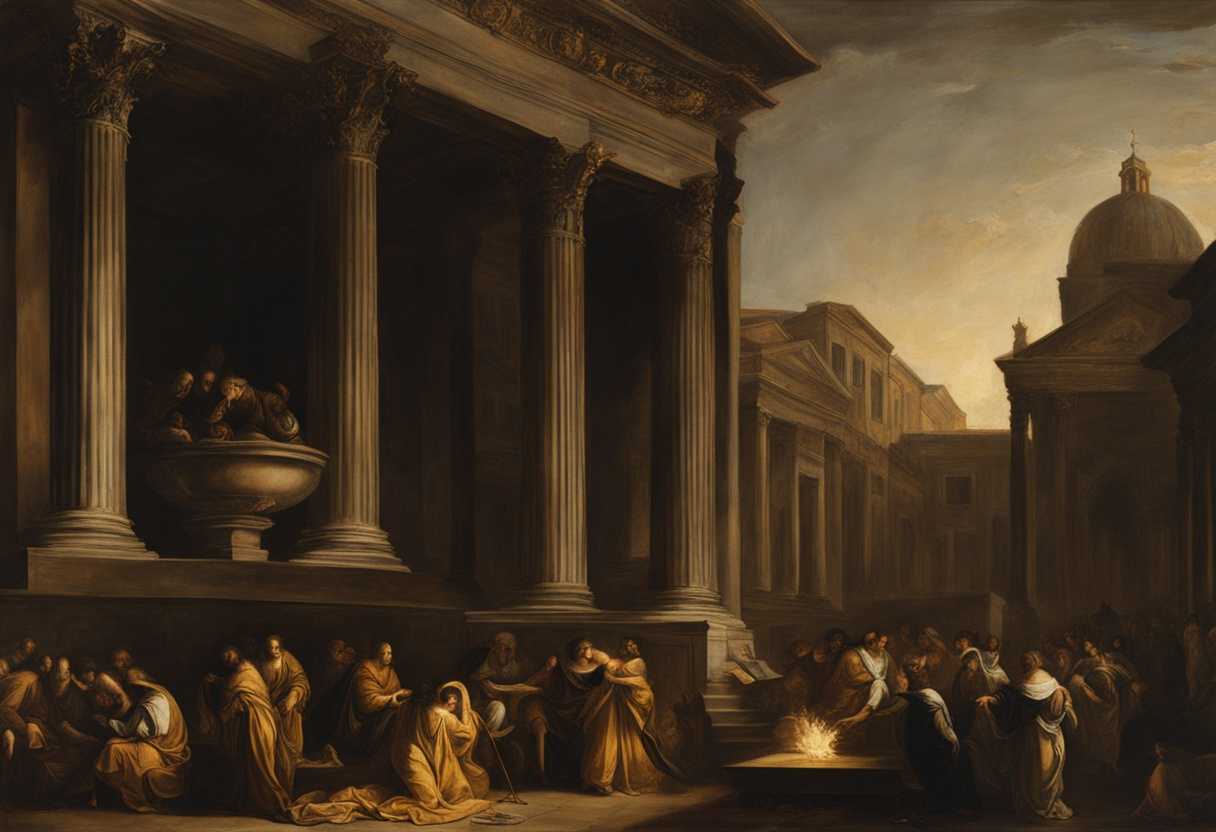
Setting the Scene for 1 Samuel 6:17
In 1 Samuel chapter 6, we find the scene where the Philistines, having captured the Ark of the Covenant, are struck with a plague as a result of their disrespect towards it. The Philistines, realizing the severity of the situation, consult their priests and diviners for guidance on how to appease the God of the Israelites and rid themselves of the plague. The priests advise them to return the Ark along with a guilt offering to the Israelites.
The Philistines then prepare a cart to carry the Ark back to the Israelites, along with the guilt offering of golden rats and tumors. They select two cows that have never been yoked and hitch them to the cart carrying the Ark. The cows, being led by the hand of God, make their way back to the land of the Israelites, lowing as they go, a sign of their reluctance to leave their calves behind.
The scene is one of tension and awe as the Philistines witness the power of the God of Israel in action. The Philistine leaders, priests, and people gather to watch the miraculous return of the Ark, a symbol of God’s presence among His chosen people. The surroundings are likely dusty and dry, with the sound of the cows’ hooves and the lowing of the animals breaking the silence of the desert landscape.
What is 1 Samuel 6:17 about?
This verse highlights a significant event in the history of the Israelites and the Philistines. The Ark of the Covenant was a sacred object that symbolized the presence of God among the Israelites. The Philistines had captured the Ark, but due to the plagues and misfortunes that befell them, they decided to return it to the Israelites. This act can be seen as a recognition of the power and significance of the God of Israel.
The return of the Ark of the Covenant signifies a moment of restoration and reconciliation between the two groups. It can also be interpreted as a reminder of the importance of honoring and respecting sacred objects and beliefs of others. This event ultimately speaks to the power of faith, the consequences of disrespecting sacred symbols, and the possibilities of forgiveness and reconciliation. It prompts us to reflect on the power dynamics between different cultures and the importance of understanding and respecting each other’s beliefs and practices.
Understanding what 1 Samuel 6:17 really means
In 1 Samuel 6:17, we witness a pivotal moment in the narrative where the Philistines, plagued by distress after capturing the Ark of the Covenant, decide to return it to Israel. The verse describes the unique guilt offering the Philistines send along with the Ark, consisting of golden tumors and rats, symbols of the afflictions they suffered. This act symbolizes their acknowledgment of the power of the God of Israel and their attempt to appease Him for their transgressions.
The specific mention of the cities Ashdod, Gaza, Ashkelon, Gath, and Ekron, each receiving a golden tumor, signifies a collective recognition of guilt across major Philistine centers. This distribution underscores the widespread acknowledgment of wrongdoing and the unified effort to seek reconciliation with the divine. The Philistines’ actions serve as a poignant example of a nation humbling itself before a higher power and seeking forgiveness for their trespasses.
Drawing parallels to other biblical passages, such as 1 Samuel 5:6-12 and Exodus 12:31-32, we see a recurring theme of divine intervention leading to repentance and submission. The concept of guilt offerings, as outlined in Leviticus 5:15-16, provides a framework for understanding the Philistines’ gesture and emphasizes the importance of restitution in seeking forgiveness.
The relevance of this narrative to contemporary audiences is profound. Just as the Philistines acknowledged their sins and sought reconciliation, individuals today are called to reflect on their wrongdoings, seek forgiveness, and strive to make amends. The story serves as a reminder of the power and sovereignty of God, urging us to approach Him with reverence and humility in times of repentance.
Consider a modern-day scenario where a community faces the consequences of collective negligence, such as environmental damage. By coming together to acknowledge their faults and taking concrete steps to restore the environment, akin to the Philistines’ offerings, the community not only heals the land but also strengthens their bonds and renews their relationship with the divine.
In conclusion, 1 Samuel 6:17 encapsulates timeless lessons on repentance, restitution, and reverence for God. It prompts us to introspect, acknowledge our faults, and take tangible steps towards reconciliation. True repentance involves both recognizing our wrongs and actively working to make things right, echoing the enduring message of this biblical passage.
How can we honor and reverence the presence of God?
One way we can honor and reverence the presence of God is by approaching Him with humility and reverence. We demonstrate our respect for who He is by acknowledging His greatness, holiness, and power. When we come before God in prayer or worship, we can do so with a heart that is humble and reverent, recognizing His authority over all things.
Additionally, showing obedience to God’s commands and seeking to live in alignment with His will is another way to honor His presence. We demonstrate our reverence for Him by living a life that reflects His love, grace, and righteousness. Our actions and choices can be a testimony to the world of our commitment to honoring God and living according to His ways.
Furthermore, setting aside dedicated time for prayer, worship, and reading the Bible can help us to cultivate a deeper sense of reverence for God’s presence in our lives. We can honor His presence and grow in our understanding and appreciation of who He is by prioritizing our relationship with Him and seeking to draw near to Him in all aspects of our lives.
Application
Just like you respect your boss at work or cherish moments with family, approach God with the same humility and awe. Imagine inviting the CEO of the universe into your daily life. Will you honor Him with your thoughts, actions, and decisions, making space for His presence? This is the ultimate commitment. Are you ready to live each day with that reverence?

Reverend Michael Johnson is an experienced Church Minister with a profound expertise in spirituality and guidance. With a serene presence and a compassionate heart, he has faithfully served his congregation for over 20 years, leading them on a spiritual journey towards inner peace and enlightenment. Reverend Johnson’s extensive knowledge of religious philosophies and profound understanding of human nature have made him a trusted confidant and mentor to many, as he seamlessly weaves his profound wisdom into life teachings. Reverend Johnson’s calming demeanor and empathetic nature continue to uplift and heal souls, nurturing a sense of unity and tranquility within his community.