
2 Chronicles 26:16-18 is about King Uzziah’s pride and his attempt to burn incense in the temple, an act reserved only for the priests, which resulted in him being afflicted with leprosy as a consequence of his disobedience and disrespect towards God’s laws.
16 But when he was strong, he grew proud, to his destruction. For he was unfaithful to the Lord his God and entered the temple of the Lord to burn incense on the altar of incense.
17 But Azariah the priest went in after him, with eighty priests of the Lord who were men of valor,
18 And they withstood King Uzziah and said to him, “It is not for you, Uzziah, to burn incense to the Lord, but for the priests, the sons of Aaron, who are consecrated to burn incense. Go out of the sanctuary, for you have done wrong, and it will bring you no honor from the Lord God.”
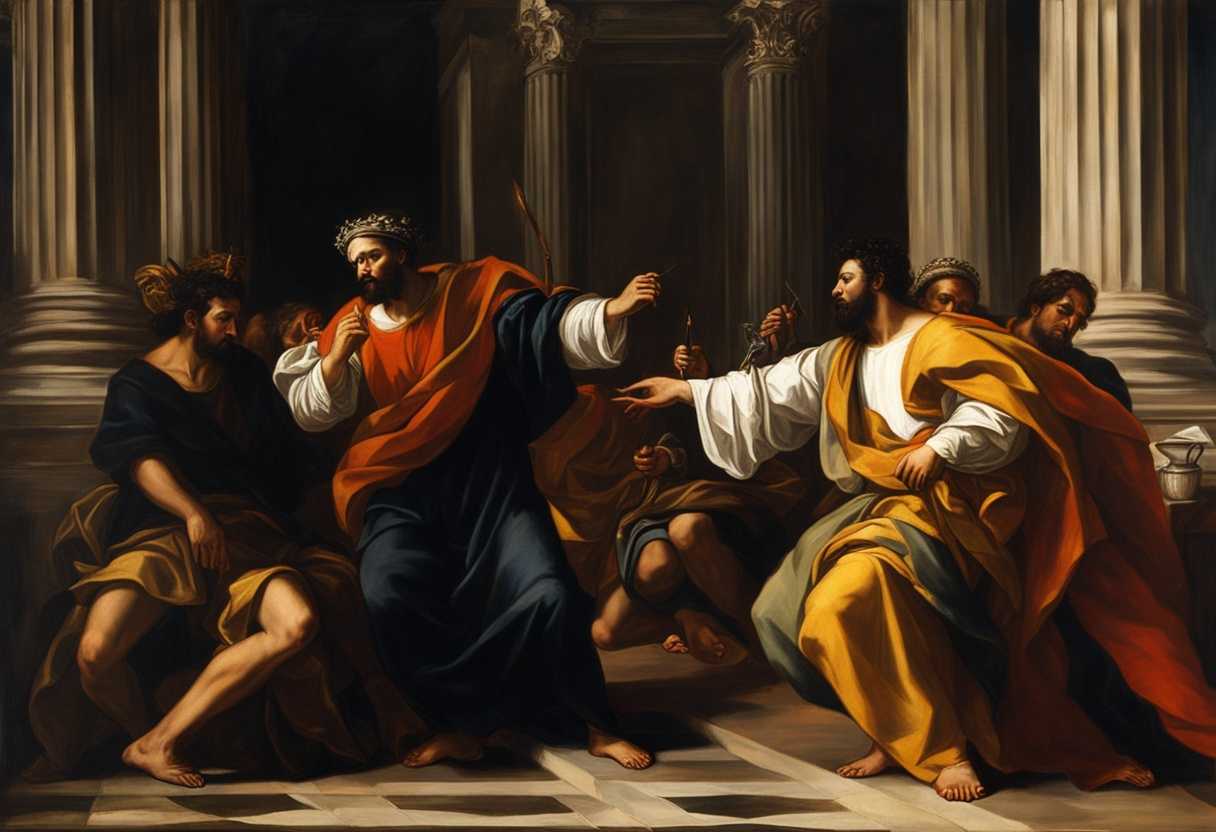
Setting the Scene for 2 Chronicles 26:16-18
In 2 Chronicles chapter 26, we find King Uzziah, also known as Azariah, reigning in Judah. Uzziah became king at the young age of 16 and reigned for 52 years. He was a king who did what was right in the eyes of the Lord and sought God during the days of Zechariah, who instructed him in the fear of God.
The scene in 2 Chronicles 26:16-18 takes place in the temple of the Lord. Uzziah, filled with pride and arrogance due to his military successes and prosperity, enters the temple to burn incense on the altar. This act was strictly reserved for the priests, and when Azariah the priest and 80 other courageous priests confronted him, warning him that it was not his place to burn incense before the Lord, Uzziah became angry. In his rage, he refused to listen to the priests and persisted in his disobedience. As a result, the Lord struck him with leprosy on his forehead, and Uzziah was forced to live out the rest of his days in isolation.
The temple setting is one of reverence and holiness, with the altar of incense, the sacred vessels, and the presence of the priests. The confrontation between Uzziah and the priests is a poignant moment of pride and humility, as the king’s arrogance leads to his downfall. This scene serves as a powerful reminder of the importance of obedience and humility before the Lord.
What is 2 Chronicles 26:16-18 about?
The cautionary tale of the consequences of pride and arrogance is seen in this verse. King Uzziah’s decision to take on the role of a priest by burning incense in the temple showcased his belief that he was above the boundaries set for him. This act of overstepping his authority and disregarding the sacred duties allotted to the priests spoke volumes about his arrogance and lack of humility. He faced immediate repercussions as leprosy struck him, a physical manifestation of his spiritual pride.
Think about the implications of this story in your own life. How often do we let our egos get in the way of following rules and respecting boundaries set in place for our own well-being? Are there moments when we think we know better than others, only to realize that our actions have led to negative consequences? Reflecting on King Uzziah’s downfall reminds us of the importance of humility, obedience, and staying within our designated roles. We should learn from this historical account and strive to practice humility and respect in all aspects of our lives.
Understanding what 2 Chronicles 26:16-18 really means
In the historical setting of 2 Chronicles 26, we find King Uzziah of Judah, a ruler who initially pleased God but later succumbed to pride. This shift in character led to a pivotal moment where Uzziah, in his arrogance, decided to unlawfully enter the temple to burn incense, a sacred duty reserved for the priests. The phrase “But after Uzziah became powerful, his pride led to his downfall” serves as a stark warning about the dangers of pride and self-reliance, which can ultimately result in spiritual and moral decline. Uzziah’s unfaithfulness to the Lord his God by disregarding His commandments showcases a blatant lack of reverence and obedience.
When the priests confronted Uzziah, stating, “It is not right for you, Uzziah, to burn incense to the Lord,” it underscored the importance of respecting God’s established order and the roles designated within the community of faith. This interaction between the spiritual leaders and the king highlights the crucial role of accountability, showing that even those in positions of power are not exempt from God’s laws. The narrative resonates with the broader biblical theme that pride goes before destruction, as seen in Proverbs 16:18, emphasizing the perilous nature of arrogance leading to downfall.
The relevance of Uzziah’s story extends to contemporary society, where individuals in positions of power can easily fall prey to pride, believing they are above moral guidelines and accountability. This passage serves as a poignant reminder of the value of humility, obedience, and respect for roles within various communities, be it religious, professional, or social. Drawing parallels to modern scenarios, such as a CEO’s unchecked pride leading to detrimental decisions in a company, illustrates the real-world implications of arrogance and the importance of humility in leadership.
Reflecting on personal experiences where pride may have influenced actions prompts introspection and growth. Considering how pride impacts relationships and responsibilities can offer valuable insights into the consequences of unchecked arrogance. In conclusion, the story of Uzziah serves as a timeless lesson on the significance of humility, obedience to God’s will, and the necessity of a supportive community that upholds accountability and provides guidance. Encouraging readers to examine their lives for prideful tendencies and seek guidance from God and their faith community fosters a path towards humility and righteousness.
How can we maintain humility in times of success?
Maintaining humility in times of success can be a challenge, as achievements and recognition can often lead to feelings of pride and arrogance. However, reflecting on the verse’s message can serve as a powerful reminder to stay grounded. Remembering that all successes come from God’s grace and should be used for His glory can help in cultivating a humble attitude. We can prevent pride from taking root in our hearts by acknowledging that our accomplishments are not solely our own doing.
Furthermore, staying connected to our faith community and seeking guidance from spiritual mentors can help us remain humble amidst success. Surrounding ourselves with individuals who can hold us accountable and provide gentle reminders of the importance of humility can be beneficial. Additionally, practicing gratitude and regularly expressing thanks to God for His blessings can help us maintain a humble perspective. We can navigate times of achievement with humility by continuously recognizing the source of our success and remaining grateful for His provisions.
Application
Reflect on your own actions— are pride and arrogance clouding your judgment and leading you astray? Just as in the story of 2 Chronicles, remember the perils of letting success and power corrupt your path. Seek guidance and wisdom from above, finding true strength in humility and obedience. Will you choose to stay grounded in what is right, safeguarding against the pitfalls of pride and arrogance in your journey?

Reverend Michael Johnson is an experienced Church Minister with a profound expertise in spirituality and guidance. With a serene presence and a compassionate heart, he has faithfully served his congregation for over 20 years, leading them on a spiritual journey towards inner peace and enlightenment. Reverend Johnson’s extensive knowledge of religious philosophies and profound understanding of human nature have made him a trusted confidant and mentor to many, as he seamlessly weaves his profound wisdom into life teachings. Reverend Johnson’s calming demeanor and empathetic nature continue to uplift and heal souls, nurturing a sense of unity and tranquility within his community.