
Apologies for the confusion. Let me provide you with the verse from 2 Kings 14:25: “He was the one who restored the boundaries of Israel from Lebo Hamath to the Dead Sea, in accordance with the word of the Lord, the God of Israel, spoken through his servant Jonah son of Amittai, the prophet from Gath Hepher.”
25 He restored the border of Israel from Lebo-hamath as far as the Sea of the Arabah, according to the word of the Lord, the God of Israel, which he spoke by his servant Jonah the son of Amittai, the prophet, who was from Gath-hepher.
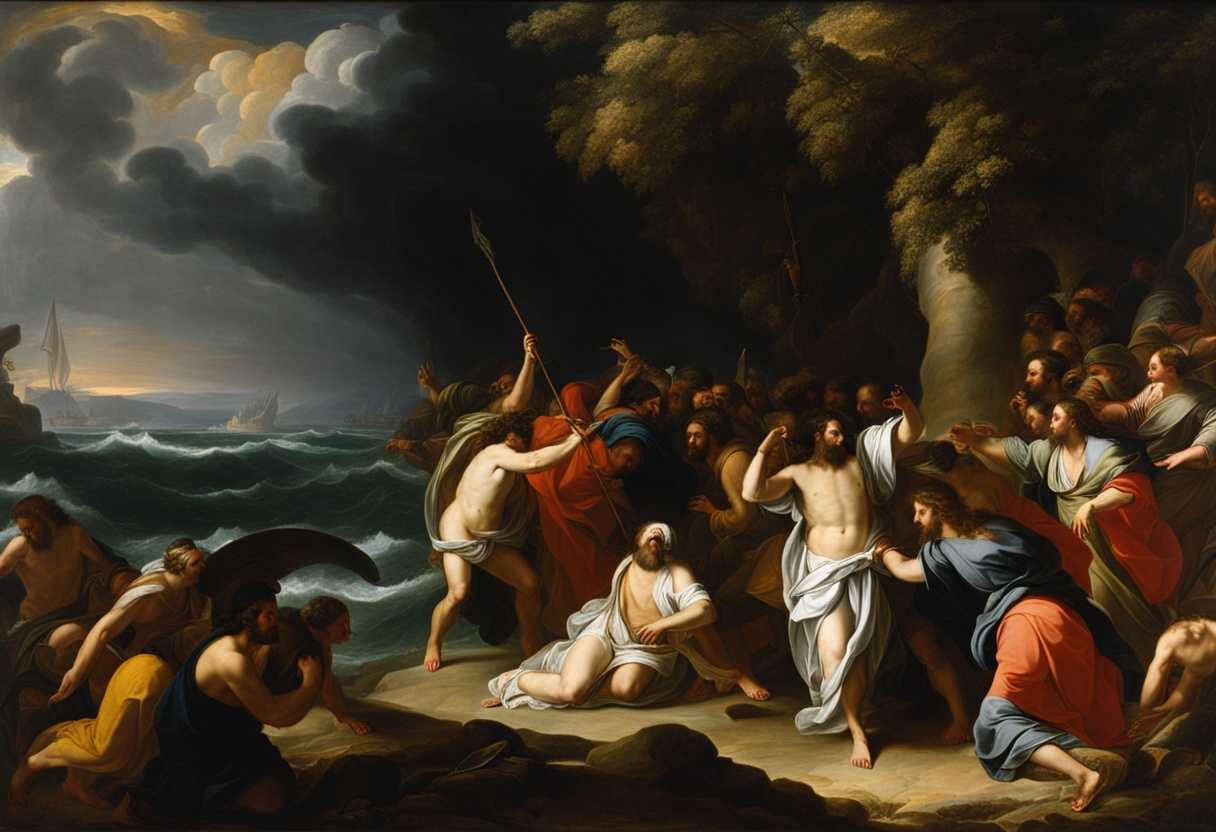
Setting the Scene for 2 Kings 14:25
In 2 Kings 14:25, the scene unfolds in the royal court of the Kingdom of Israel during the reign of King Jeroboam II. The atmosphere is bustling with activity as the king’s advisors, courtiers, and officials gather to discuss matters of state. King Jeroboam II, a powerful and ambitious ruler, is seated on his throne, adorned in regal attire, exuding authority and confidence.
Among those present is the prophet Jonah, who has been summoned to deliver a message from the Lord to the king. Jonah, known for his prophetic abilities and unwavering faith, stands before the king with a solemn expression, ready to convey the divine revelation he has received. The air is thick with anticipation as all eyes are fixed on Jonah, awaiting his words.
The royal court itself is opulently decorated, with rich tapestries adorning the walls and golden candelabras casting a warm glow over the proceedings. The sound of murmured conversations and the rustling of robes fill the air, creating a sense of grandeur and importance befitting the setting. As Jonah begins to speak, his voice carries a weight of authority and conviction, capturing the attention of all who are present in the court of King Jeroboam II.
What is 2 Kings 14:25 about?
This verse speaks to the restoration of the borders of Israel as directed by the word of the Lord. It signifies a divine intervention in the affairs of the nation, ensuring that the boundaries of Israel were returned to their rightful place in accordance with God’s will. It highlights the idea of God’s sovereignty and involvement in the governance and destiny of a nation, showing that when people align themselves with God’s word, He guides and protects them.
Have you ever experienced a situation where you felt like things were falling apart and needed divine intervention to set things right? Just like in this verse, it shows that when we follow God’s guidance and adhere to His commands, He can lead us towards restoration and wholeness. It also serves as a reminder that no matter how dire our circumstances may seem, God is always in control and can bring about healing and restoration in ways we may not even imagine. It is a powerful testament to the faithfulness and providence of God in the lives of His people.
Understanding what 2 Kings 14:25 really means
The verse 2 Kings 14:25 is nestled within the historical account of the kings of Israel and Judah, specifically focusing on Jeroboam II’s reign in Israel and his military triumphs. It points to the restoration of Israel’s borders, a significant event attributed to the fulfillment of a prophecy by Jonah, son of Amittai. This prophecy underscores the divine intervention in the affairs of nations and the role of prophetic voices in communicating God’s will to His people.
In exploring related passages, we encounter Jonah 1:1-2, which introduces the prophet Jonah, setting the stage for his involvement in the restoration of Israel’s borders. Amos 6:14 offers a contrasting prophecy about Israel’s boundaries, hinting at future challenges. Isaiah 54:2-3 echoes the themes of expansion and restoration, emphasizing God’s ability to bring about growth and renewal in His people’s lives.
The relevance of 2 Kings 14:25 to contemporary individuals lies in its themes of restoration, the fulfillment of promises, and the significance of heeding prophetic messages. In our modern lives, we often yearn for restoration in various aspects, be it personal, communal, or societal. This verse serves as a reminder that God’s promises are unwavering and that He works through individuals to accomplish His divine purposes.
Consider a scenario where a community grapples with prolonged economic challenges. A leader, driven by faith and a sense of divine calling, initiates projects that gradually restore prosperity to the community. In the eyes of the people, this leader becomes a beacon of hope and a tangible fulfillment of God’s promise, akin to how Jeroboam II was perceived in his time. This anecdote illustrates the power of faith, action, and divine guidance in bringing about restoration and the realization of communal aspirations.
Delving into the meaningful phrases within the verse, we uncover layers of significance. “He restored the border of Israel” goes beyond mere territorial expansion, symbolizing a return to strength, security, and divine favor. The phrase “According to the word of the Lord, the God of Israel” underscores that the restoration was not merely a human achievement but a fulfillment of God’s decree, highlighting His sovereignty and faithfulness. “Spoke through His servant Jonah” emphasizes the pivotal role of prophets as conduits of God’s will, urging readers to heed divine guidance and trust in His plans.
By contemplating these elements, readers can draw parallels to their own journeys, finding solace and motivation in the assurance that God’s promises are reliable and that He orchestrates events through individuals to bring about His divine purposes. The narrative of Jeroboam II’s restoration of Israel’s borders serves as a testament to God’s faithfulness and the transformative power of aligning one’s actions with His will.
What role does God play in restoring nations?
God plays a crucial role in restoring nations by using individuals as his instruments. God used Jeroboam II to restore the borders of Israel, fulfilling the prophecy given to his servant, Jonah, as mentioned in this verse. God can bring about restoration and revival in nations by working through leaders and individuals.
Through the example in this verse, we see that God’s plan for restoration is not limited by human circumstances or limitations. Despite the challenges or setbacks a nation may face, God can intervene and use specific individuals to bring about his purposes. Nations can find hope in the midst of turmoil and be assured of ultimate restoration by trusting in God’s sovereignty and his ability to work through people. God is ultimately involved in the affairs of nations and is able to bring about restoration and renewal, serving as a reminder through this verse. Nations can experience transformation and healing by following his guidance and relying on his power. The key lies in trusting in God’s plan and being willing to be used as instruments in his hands for the restoration of nations.
Application
Reflecting on 2 Kings 14:25 should ignite a fire within us, reminding us that even in our imperfections, God can work through us powerfully. Let’s not dwell on our flaws, but rather, trust in God’s perfect plan for us. Embrace each task with determination and faith, knowing that God’s power shines through our weaknesses. Will you rise up today, confident that God’s hand is guiding you towards greatness?

Reverend Michael Johnson is an experienced Church Minister with a profound expertise in spirituality and guidance. With a serene presence and a compassionate heart, he has faithfully served his congregation for over 20 years, leading them on a spiritual journey towards inner peace and enlightenment. Reverend Johnson’s extensive knowledge of religious philosophies and profound understanding of human nature have made him a trusted confidant and mentor to many, as he seamlessly weaves his profound wisdom into life teachings. Reverend Johnson’s calming demeanor and empathetic nature continue to uplift and heal souls, nurturing a sense of unity and tranquility within his community.