
2 Kings 14:8-14 is about King Amaziah of Judah’s pride and disobedience towards God, resulting in his downfall and defeat by King Jehoash of Israel.
8 Then Amaziah sent messengers to Jehoash the son of Jehoahaz, son of Jehu, king of Israel, saying, “Come, let us look one another in the face.”
9 And Jehoash king of Israel sent word to Amaziah king of Judah, “A thistle on Lebanon sent to a cedar on Lebanon, saying, ‘Give your daughter to my son for a wife,’ and a wild beast of Lebanon passed by and trampled down the thistle.
10 You have indeed struck down Edom, and your heart has lifted you up. Be content with your glory, and stay at home, for why should you provoke trouble so that you fall, you and Judah with you?”
11 But Amaziah would not listen. So Jehoash king of Israel went up, and he and Amaziah king of Judah faced one another in battle at Beth-shemesh, which belongs to Judah.
12 And Judah was defeated by Israel, and every man fled to his home.
13 And Jehoash king of Israel captured Amaziah king of Judah, the son of Jehoash, son of Ahaziah, at Beth-shemesh, and came to Jerusalem and broke down the wall of Jerusalem for four hundred cubits, from the Ephraim Gate to the Corner Gate.
14 He took all the gold and silver, and all the vessels that were found in the house of the Lord and in the treasuries of the king’s house, also hostages, and he returned to Samaria.
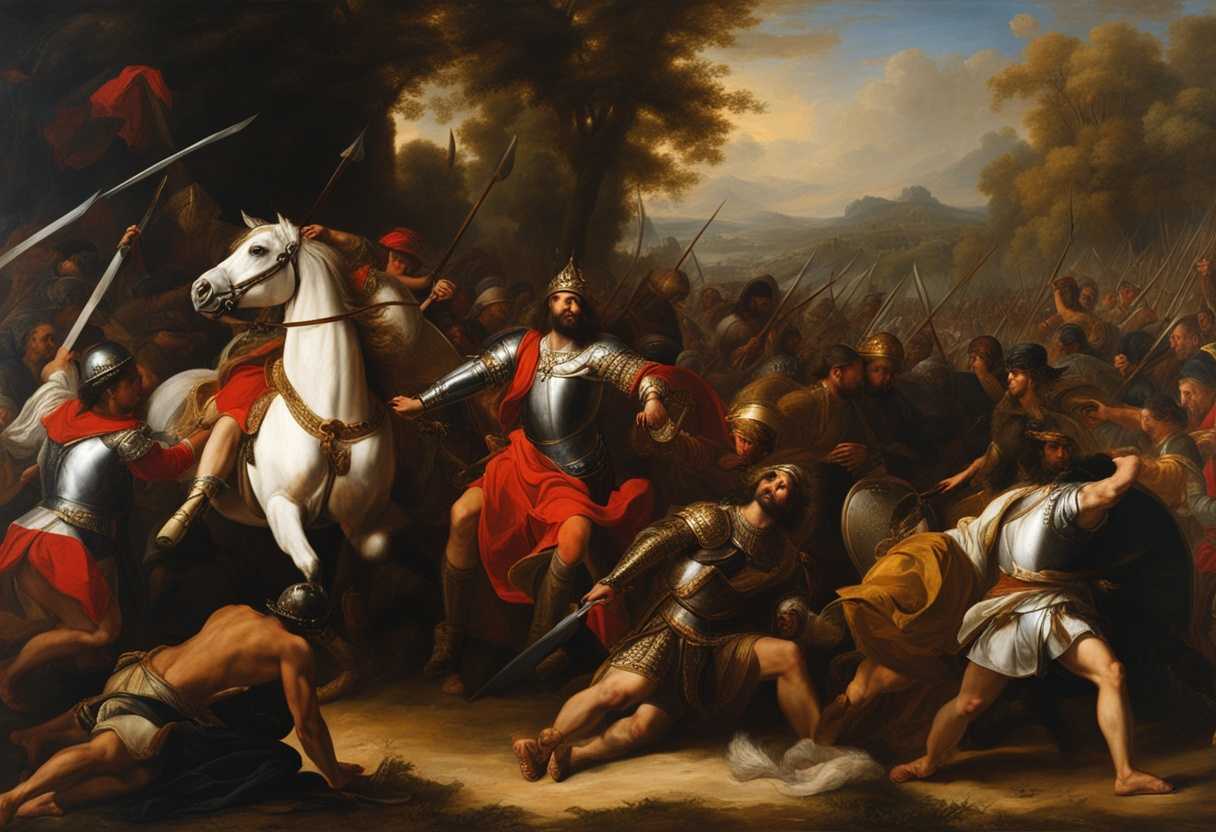
Setting the Scene for 2 Kings 14:8-14
In 2 Kings 14:8-14, we find King Amaziah of Judah seeking to assert his authority and expand his kingdom. The scene is set in the royal court of Judah, where King Amaziah is surrounded by his advisors and officials. The atmosphere is tense as Amaziah contemplates his next move to strengthen his reign.
Amaziah’s decision to challenge King Jehoash of Israel has brought him to this critical moment. The two kings are at odds over the territory of Edom, and Amaziah is determined to assert his dominance. His advisors, including the high priest and military commanders, offer counsel as he prepares for war.
The royal court is adorned with rich tapestries and ornate furnishings, reflecting the wealth and power of the kingdom. As tensions rise and strategies are discussed, the fate of Judah hangs in the balance. The scene is filled with anticipation and apprehension as King Amaziah weighs his options and prepares to face his rival in battle.
What is 2 Kings 14:8-14 about?
The consequences of ignoring wise counsel are seen in this verse, even after achieving a significant victory. King Amaziah’s triumph over Edom was a momentous event, showcasing his military prowess and leadership. However, his downfall comes not from a defeat on the battlefield but from his arrogance and disregard for the advice of a prophet. Despite being warned by the prophet to not bring back the gods of the people he defeated, Amaziah chooses to ignore the warning, leading to his eventual downfall.
This verse serves as a powerful reminder of the importance of humility and listening to wise counsel, even in moments of success. It raises essential questions for reflection: How do we handle success and power? Are we willing to admit when we are wrong or when we need guidance? Do we let our pride blind us to the advice of those who have our best interests at heart? We can learn from King Amaziah’s mistake and strive to be humble, open-minded leaders who seek and value wise counsel by considering these questions.
Understanding what 2 Kings 14:8-14 really means
In the historical setting of 2 Kings 14:8-14, we find ourselves amidst the reign of Amaziah, the king of Judah, and Jehoash, the king of Israel. Amaziah, fresh from a military triumph over Edom, decides to challenge Jehoash to battle, perhaps fueled by his recent success. However, Jehoash responds not with immediate aggression but with a parable, likening himself to a cedar in Lebanon and Amaziah to a mere thistle. This metaphorical warning highlights the stark difference in power and grandeur between the two kings, with Jehoash symbolizing strength and stability, while Amaziah’s pride blinds him to his true position.
The imagery of the “thistle in Lebanon” and the “cedar in Lebanon” serves as a poignant reminder of the dangers of overestimating one’s strength and importance. Amaziah’s pride and arrogance lead him to disregard Jehoash’s warning, ultimately resulting in a devastating defeat for Judah. This narrative echoes the timeless biblical truth found in Proverbs 16:18, emphasizing how pride precedes destruction and a haughty spirit precedes a fall. The consequences of Amaziah’s overconfidence serve as a cautionary tale for individuals and leaders today, highlighting the perils of ignoring wise counsel and overestimating one’s abilities.
The passage also resonates with the theme of humility found in 1 Peter 5:5-6 and Luke 14:11, which emphasize God’s favor towards the humble and the exaltation of those who humble themselves. In a world that often glorifies self-promotion and arrogance, the story of Amaziah and Jehoash challenges us to reevaluate our attitudes towards pride and humility. Consider a young professional who, buoyed by success, disregards advice and takes on more than they can handle, only to face a humbling setback. This personal anecdote mirrors Amaziah’s experience, underscoring the importance of recognizing our limitations and valuing the wisdom of others.
In conclusion, the narrative of Amaziah and Jehoash serves as a poignant reminder of the timeless lessons of humility and the perils of pride. It urges us to seek wisdom, embrace humility, and acknowledge our dependence on God and others for true strength. Let us heed the call to embody humility in our daily lives, learning from the mistakes of the past, and striving to uplift others rather than seeking self-exaltation.
What does it mean to seek guidance from God?
Seeking guidance from God means turning to Him for wisdom, direction, and insight in making decisions or navigating challenging situations. It involves having faith in God’s ability to provide answers and solutions that align with His will. Individuals who seek guidance from God acknowledge their dependence on Him and trust in His divine knowledge and wisdom to guide them in the right path. Believers seeking guidance from God can see it in their actions of seeking counsel from prophets or priests who were believed to be conduits of God’s wisdom. Individuals essentially sought guidance from God through His chosen messengers by consulting these religious figures. This process reflects the underlying belief in divine guidance and the importance of aligning decisions and actions with God’s teachings. Seeking guidance from God involves humility, faith, and a willingness to listen and follow His direction. It is a way of acknowledging God’s sovereignty and seeking His will in all aspects of life. Through prayer, reflection, and seeking counsel from those who are knowledgeable in matters of faith, individuals can strive to align their actions with God’s plans and purpose.
Application
Let’s learn from Amaziah’s mistake – rely on God’s wisdom over our own. Trust in Him like a beacon in a stormy sea of decisions. Will you walk with me on this path of divine guidance and let our actions reflect His light and direction?

Reverend Michael Johnson is an experienced Church Minister with a profound expertise in spirituality and guidance. With a serene presence and a compassionate heart, he has faithfully served his congregation for over 20 years, leading them on a spiritual journey towards inner peace and enlightenment. Reverend Johnson’s extensive knowledge of religious philosophies and profound understanding of human nature have made him a trusted confidant and mentor to many, as he seamlessly weaves his profound wisdom into life teachings. Reverend Johnson’s calming demeanor and empathetic nature continue to uplift and heal souls, nurturing a sense of unity and tranquility within his community.