
2 Kings 16:20 is about King Ahaz passing away and being buried with his ancestors, and his son King Hezekiah succeeding him as the ruler of Judah.
20 And Ahaz slept with his fathers and was buried with his fathers in the city of David, and Hezekiah his son reigned in his place.
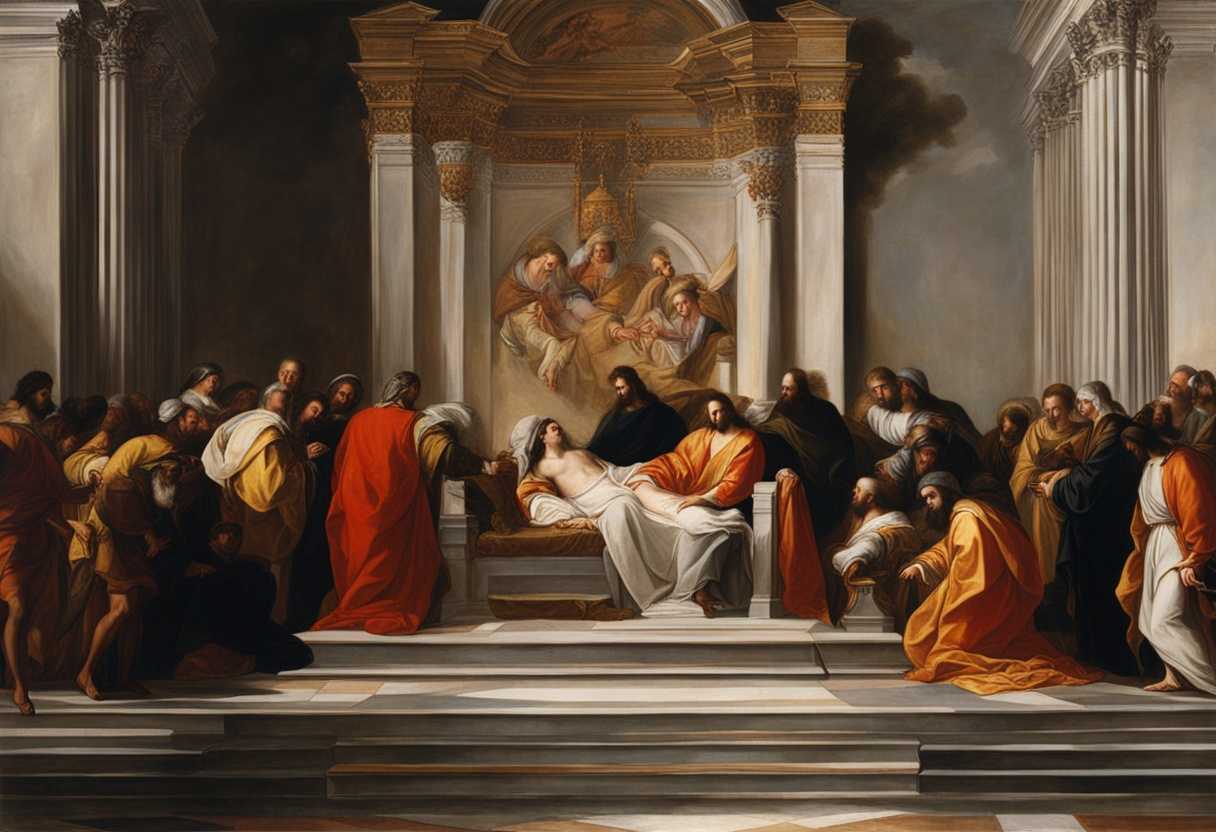
Setting the Scene for 2 Kings 16:20
In 2 Kings chapter 16, we find ourselves in the royal court of Judah during the reign of King Ahaz. The scene is filled with tension and intrigue as Ahaz, a king known for his wickedness and idolatry, has just passed away. The atmosphere is heavy with uncertainty as the people await the ascension of Ahaz’s son, Hezekiah, to the throne.
Hezekiah, a young and righteous king, is surrounded by his advisors and court officials who are eager to see the changes he will bring to the kingdom. The transition of power is a pivotal moment for the nation of Judah, as they hope for a return to the ways of the Lord and a break from the idolatrous practices of Ahaz’s reign.
The royal court is adorned with opulent decorations and rich tapestries, reflecting the wealth and power of the kingdom. As Hezekiah takes his place on the throne, the people look to him with hope and expectation, praying for a new era of faithfulness and prosperity under his rule.
What is 2 Kings 16:20 about?
King Ahaz passes the power to his son Hezekiah in this verse. Ahaz, who had ruled before his son, passed away and was laid to rest with his ancestors. This marks the end of his reign and the beginning of a new era with Hezekiah taking the throne as the new king. This passing of power from father to son was a common practice in ancient monarchies, where leadership and authority were usually inherited within the royal family.
It is a moment of both continuity and change. The legacy of Ahaz is now passed on to Hezekiah, who will carry the responsibilities and burdens of kingship. Hezekiah, as the torchbearer of his father’s reign, will have to navigate his own path and face new challenges as the ruler of the kingdom. This verse serves as a reminder of the cyclical nature of leadership and the inevitable succession of power in political systems. It prompts us to reflect on the passing of time and the legacy we leave behind for future generations.
Understanding what 2 Kings 16:20 really means
In the historical narrative of King Ahaz of Judah, as depicted in 2 Kings 16:20, we witness the culmination of a reign marked by unfaithfulness and idolatry. Ahaz’s choices, including forming alliances with foreign powers, had far-reaching consequences for the kingdom of Judah. However, with Ahaz’s death, a new chapter begins with his son Hezekiah ascending to the throne. Hezekiah’s reign stands in stark contrast to his father’s, characterized by a dedication to restoring Judah’s worship of Yahweh.
The transition from Ahaz to Hezekiah serves as a poignant reminder of the significance of leadership and the enduring impact of one’s actions. Ahaz’s legacy of unfaithfulness underscores the importance of remaining steadfast in one’s commitment to God, especially in the face of adversity and temptation. Conversely, Hezekiah’s reign embodies hope and renewal, illustrating that positive change is always within reach, even after periods of failure and waywardness.
In contemporary society, the themes encapsulated in this biblical account resonate profoundly. Leaders, whether in positions of authority or influence, wield a profound influence on those they lead. The narrative of Ahaz and Hezekiah prompts us to reflect on the legacy we are crafting through our choices and actions. Are we steering towards faithfulness and integrity, like Hezekiah, or veering off course into unfaithfulness and moral compromise, akin to Ahaz?
Consider a scenario where a community leader’s decisions lead to turmoil and suffering among the people. When a new leader emerges, committed to rectifying past wrongs and fostering positive change, the community experiences healing and growth. This narrative mirrors the transition from Ahaz to Hezekiah, illustrating that transformation and renewal are attainable, no matter how dire the circumstances may seem.
The phrases within the verse, such as “slept with his fathers” and “buried with his fathers in the city of David,” carry symbolic weight. They signify the cyclical nature of life and leadership, where one era ends, making way for the next. The mention of Hezekiah succeeding his father hints at the promise of a fresh start, a chance to realign with God’s will and usher in a period of restoration and revival.
By delving into the lessons embedded in the account of Ahaz and Hezekiah, we glean insights into the enduring relevance of faithfulness, the transformative power of leadership, and the ever-present prospect of renewal in our personal journeys. Just as Hezekiah’s reign brought about a revival of worship and fidelity to God, we too can strive to emulate his example by remaining resolute in our faith, seeking redemption in moments of waywardness, and embracing the prospect of renewal and positive change in our lives.
What is the legacy we leave behind?
The legacy we leave behind is determined by how we live our lives and the impact we have on those around us. Our actions and choices shape our legacy just as King Ahaz was remembered for his wickedness and disobedience to God. Our decisions not only affect us but also influence future generations. Therefore, it is important to live a life that aligns with our values and beliefs, leaving a positive impact that will be remembered long after we are gone. Reflecting on the consequences of King Ahaz’s actions reminds us of the importance of living a life of faith, obedience, and righteousness. Our legacy is not just about how we are perceived in the present, but also the lasting impact we have on the world. It is a reminder to strive to leave behind a legacy that honors God and positively influences those who come after us.
Our legacy is a reflection of our character, values, and beliefs. It is the imprint we leave on the world and the memories that others hold onto after we are gone. Our own legacy should inspire others to do good and follow in our footsteps, just as King Ahaz’s legacy serves as a cautionary tale. May we strive to build a legacy that reflects our love, kindness, and faith, leaving a positive mark on the world for future generations to remember.
Application
Time is fleeting, and our decisions hold immense power. Like King Ahaz, our actions leave a mark on the world that outlasts our time here. Are you building a life that will inspire and endure, one that reflects your true values? Embrace this moment to pave a path of righteousness and purpose. Will you seize this opportunity to shape a future that shines with integrity and goodness?

Reverend Michael Johnson is an experienced Church Minister with a profound expertise in spirituality and guidance. With a serene presence and a compassionate heart, he has faithfully served his congregation for over 20 years, leading them on a spiritual journey towards inner peace and enlightenment. Reverend Johnson’s extensive knowledge of religious philosophies and profound understanding of human nature have made him a trusted confidant and mentor to many, as he seamlessly weaves his profound wisdom into life teachings. Reverend Johnson’s calming demeanor and empathetic nature continue to uplift and heal souls, nurturing a sense of unity and tranquility within his community.