
2 Kings 23:13-14 is about King Josiah defiling the high places where pagan worship was practiced and burning the bones of the false prophets on the altars, purifying the land of Judah from idolatry and reinforcing the commandment to worship the one true God.
13 And the king defiled the high places that were east of Jerusalem, to the south of the mount of corruption, which Solomon the king of Israel had built for Ashtoreth the abomination of the Sidonians, and for Chemosh the abomination of Moab, and for Milcom the abomination of the Ammonites.
14 And he broke in pieces the pillars and cut down the Asherim and filled their places with the bones of men.
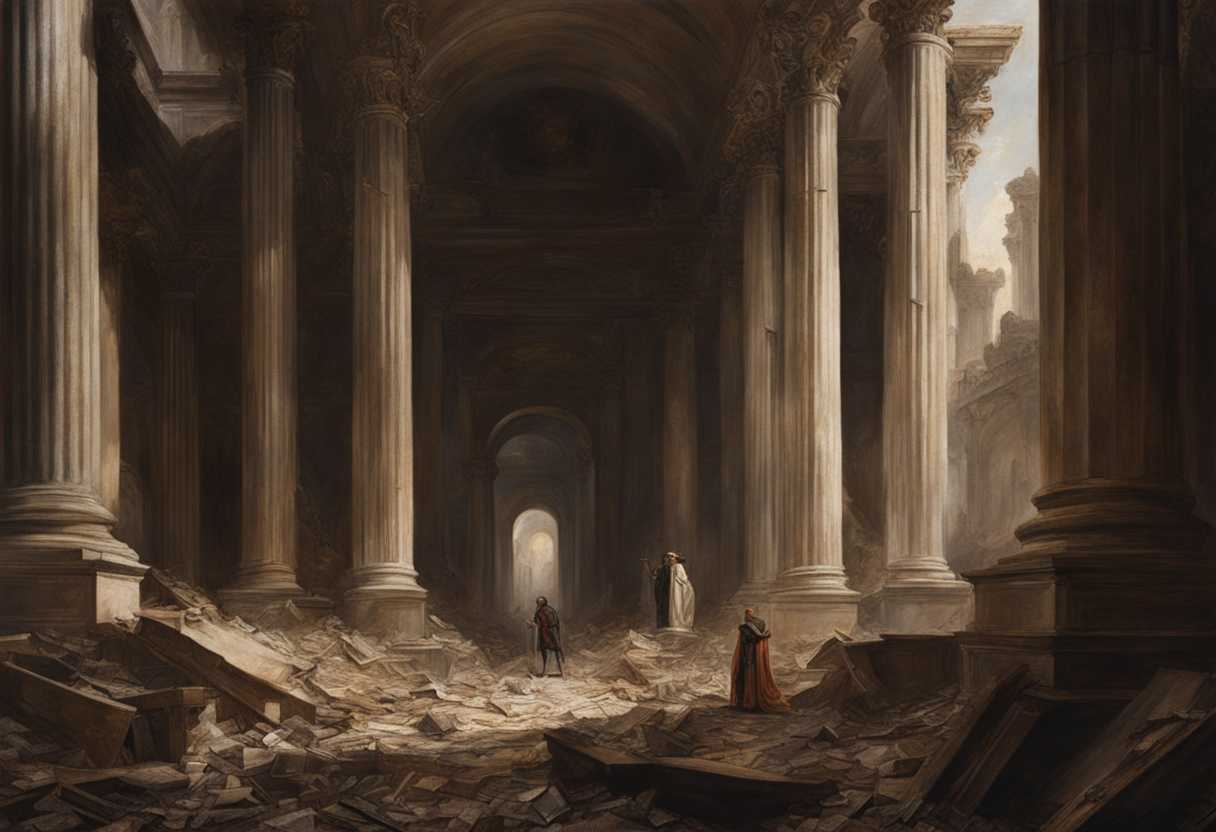
Setting the Scene for 2 Kings 23:13-14
In 2 Kings 23:13-14, the scene is set in the city of Bethel, a significant religious site in ancient Israel. King Josiah, a devout ruler who sought to reform the religious practices of his people, is leading a group of priests to cleanse the area of idolatry. The priests, likely including Hilkiah the high priest, are following the king’s orders to destroy the altars and high places dedicated to false gods that had been erected in Bethel.
The surroundings are solemn and tense as the group approaches the pagan shrines. The air is thick with the smell of incense and the sound of chanting from the followers of the foreign deities. King Josiah, determined and resolute, is leading the way with a sense of purpose and righteousness. The priests, carrying tools of destruction, are ready to carry out the king’s commands and rid the land of idol worship.
As they reach the altars, King Josiah gives the signal, and the priests begin to dismantle the structures, smashing the idols and burning the sacred groves. The scene is one of spiritual warfare, as the forces of light and darkness clash in a battle for the hearts and souls of the people. King Josiah’s actions in Bethel are a powerful statement of his commitment to serving the one true God and upholding the covenant with the people of Israel.
What is 2 Kings 23:13-14 about?
We see the importance of obeying God’s commandments and worshiping Him alone in this verse. The act of destroying pagan worship sites is a powerful symbol of dedicating yourself fully to God and His ways. Removing these sites shows a commitment to honoring God’s truth and eliminating any distractions or influences that could lead you away from His path.
Have you ever felt the pull of temptations or false idols in your life? We are reminded to rid ourselves of anything that hinders our relationship with God, just as the Israelites were instructed to destroy the pagan sites. This verse teaches us the importance of staying steadfast in our faith and not allowing anything to come between us and God. It challenges us to reflect on our own lives and evaluate if there are any ‘pagan worship sites’ that we need to remove in order to fully honor and serve God.
So, let us take inspiration from this verse to actively seek out and destroy anything that stands in the way of our relationship with God. We should cleanse our hearts and minds of any distractions or false idols, so that we may fully devote ourselves to following His commandments and living a life that brings glory to Him.
Understanding what 2 Kings 23:13-14 really means
In 2 Kings 23:13-14, we delve into the narrative of King Josiah’s reforms in Judah, a pivotal moment in the history of the people of God. Josiah’s fervor for restoring true worship shines through as he takes decisive action against the high places and idols that had tainted the land. These verses serve as a stark reminder of the dangers of idolatry and the necessity of wholehearted devotion to God.
The mention of “the high places that were before Jerusalem” highlights the proximity of idol worship to the holy city, symbolizing the people’s deviation from the true worship of Yahweh. Even Solomon, a revered king of Israel, had contributed to this idolatrous legacy, underscoring the insidious nature of spiritual compromise. The reference to Ashtoreth, the abomination of the Sidonians, further emphasizes the moral decay associated with idol worship, portraying the detestable practices that had infiltrated the land.
Josiah’s resolute actions in breaking the pillars and cutting down the Asherim symbolize a complete rejection of idolatry and a firm commitment to covenant faithfulness. His thoroughness in purging the land of these symbols of false worship serves as a powerful example of the radical steps sometimes required to restore true devotion to God. Just as Josiah took bold measures to cleanse Judah of idolatry, we are called to examine our lives and remove anything that hinders our relationship with God.
Drawing parallels to modern times, we see that idolatry can manifest in various forms beyond physical idols. Materialism, careerism, and other distractions can subtly take precedence over our spiritual well-being, mirroring the challenges faced by the ancient Israelites. Josiah’s reforms prompt us to reflect on our own lives and consider what idols may be hindering our walk with God. Like the person who steps back from social media to prioritize mental health and relationships, we too may need to take radical steps to refocus on what truly matters.
In conclusion, Josiah’s reforms serve as a poignant reminder of the importance of exclusive devotion to God. His actions were not merely about removing physical idols but about restoring the hearts of the people to true worship. As we navigate our own spiritual journeys, let us heed the call to purity and vigilance against anything that competes with our love and allegiance to God. May we be inspired by Josiah’s unwavering commitment to righteousness and be willing to take bold steps to maintain our spiritual integrity in a world filled with distractions and temptations.
Can we discern between true and false spirituality?
The emphasis on eliminating false spirituality and practices that deviate from the true worship of God is seen in the context of 2 Kings 23:13-14. King Josiah took measures to destroy idols, altars, and the worship of false gods in order to cleanse the land and restore proper worship. This demonstrates a clear distinction between true spirituality, which is centered on God and His commandments, and false spirituality, which involves the worship of idols or practices contrary to God’s will.
True spirituality is characterized by a genuine relationship with God, obedience to His commands, and a genuine desire to worship Him in spirit and truth. False spirituality, on the other hand, involves empty rituals, idolatry, worship of false gods, and practices that do not align with the teachings of the Bible. It is important for believers to discern between the two and to uphold true spirituality by following the example of King Josiah in eliminating anything that hinders genuine worship of God. True spirituality ultimately focuses on honoring and glorifying God, living a life of faith and obedience, and seeking to grow in a deeper relationship with Him. It involves a sincere heart, genuine worship, and a commitment to following God’s word. False spirituality leads people away from God, promotes idolatry, and relies on empty rituals and practices that do not reflect the truth of God’s word. Believers are called to discern between the two and choose to walk in the path of true spirituality, as demonstrated by King Josiah in 2 Kings 23:13-14.
Application
Are you ready to confront the idols in your life, just like King Josiah did in the Bible? Let’s take a moment to cleanse our own “high places” and remove anything that hinders our connection with God. It’s time to purify our hearts and align our actions with God’s will. Are you willing to make the necessary changes to honor God wholeheartedly?

Reverend Michael Johnson is an experienced Church Minister with a profound expertise in spirituality and guidance. With a serene presence and a compassionate heart, he has faithfully served his congregation for over 20 years, leading them on a spiritual journey towards inner peace and enlightenment. Reverend Johnson’s extensive knowledge of religious philosophies and profound understanding of human nature have made him a trusted confidant and mentor to many, as he seamlessly weaves his profound wisdom into life teachings. Reverend Johnson’s calming demeanor and empathetic nature continue to uplift and heal souls, nurturing a sense of unity and tranquility within his community.