
2 Kings 2:13-15 is about the passing of the spiritual mantle from Elijah to Elisha, symbolizing the transfer of spiritual power and authority from one generation to the next.
13 He picked up the cloak of Elijah that had fallen from him and went back and stood on the bank of the Jordan.
14 Then he took the cloak of Elijah that had fallen from him and struck the water, saying, “Where is the Lord, the God of Elijah?” And when he had struck the water, the water was parted to the one side and to the other, and Elisha went over.
15 Now when the sons of the prophets who were at Jericho saw him opposite them, they said, “The spirit of Elijah rests on Elisha.” And they came to meet him and bowed to the ground before him.
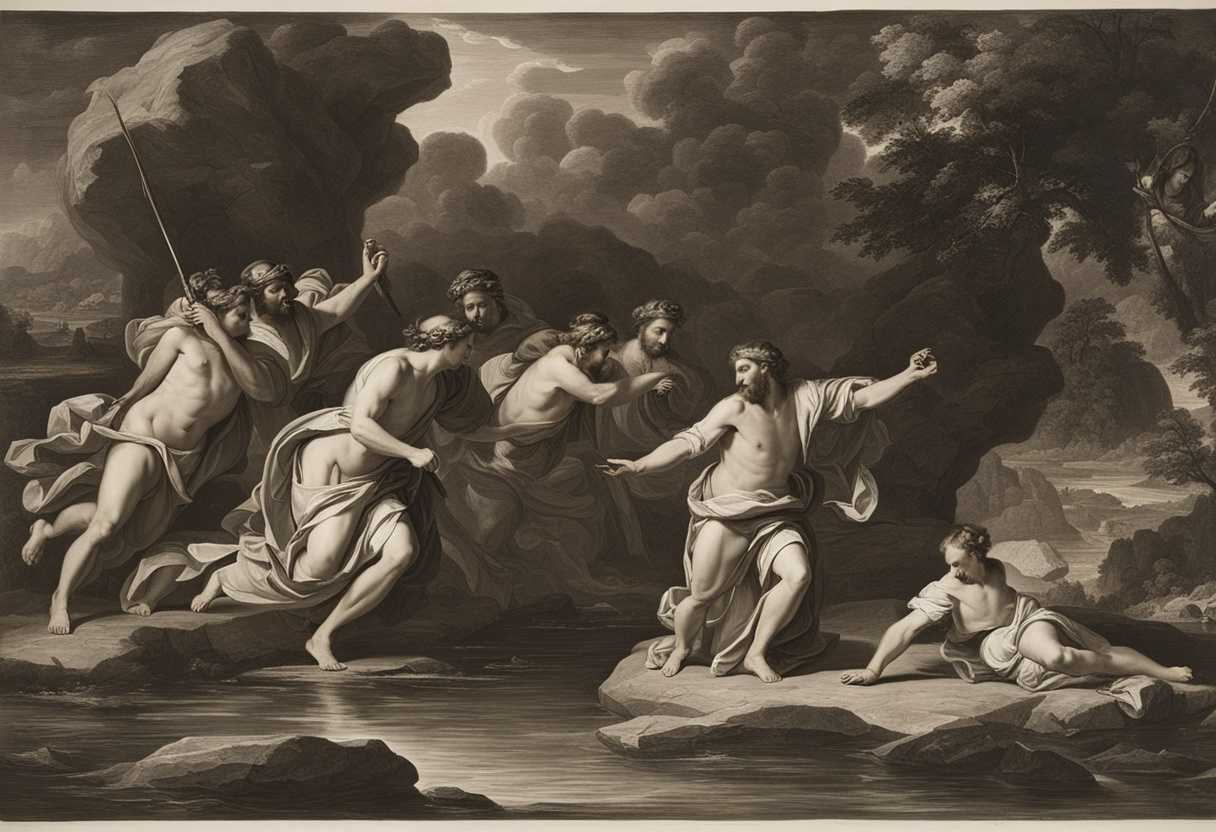
Setting the Scene for 2 Kings 2:13-15
In 2 Kings chapter 2, we find the prophet Elijah and his successor Elisha at the Jordan River. Elijah is about to be taken up to heaven in a whirlwind, and Elisha is aware that this is about to happen. The two of them have been traveling together, and Elijah has tested Elisha’s commitment to following him by asking him to stay behind at various points along their journey. However, Elisha has remained steadfast in his determination to stay by Elijah’s side.
As they stand by the Jordan River, a chariot of fire and horses of fire appear, separating Elijah and Elisha. Elijah is taken up to heaven in a whirlwind, leaving Elisha behind. Elisha witnesses this miraculous event and cries out in grief as he sees his mentor and friend being taken away. Despite his sorrow, Elisha also receives a double portion of Elijah’s spirit, signifying that he is now the chosen successor to carry on Elijah’s work as a prophet.
The scene at the Jordan River is one of great significance and emotion, as Elijah’s departure marks the end of an era and the beginning of a new chapter in the prophetic ministry of Elisha. The surroundings are described as the Jordan River, with its flowing waters and the chariot of fire that appears to take Elijah up to heaven. The moment is filled with awe and wonder, as Elisha witnesses the power of God in action and prepares to step into his new role as a prophet.
What is 2 Kings 2:13-15 about?
Elijah transfers authority and responsibility powerfully to Elisha in this verse. When Elijah passes his mantle (a symbol of his authority and anointing) to Elisha, he is essentially passing on the responsibility of carrying on God’s ministry with the same power and anointing that he himself operated under. This act signifies a deep level of trust and recognition of Elisha’s readiness and capability to continue the work that Elijah started. It shows us the importance of mentorship, succession planning, and passing on wisdom and authority to the next generation of leaders.
Think about the significance of this passing of the mantle. Why is it important for each generation to pass on their knowledge and authority to the next? How does this act of passing the mantle inspire and empower Elisha to step into his new role with confidence and courage? It is a powerful reminder for us to be intentional about mentoring and training others, so that the work of God may continue to prosper and grow beyond our own lifetimes. Let this verse serve as a motivation for us to invest in the next generation, equip them, and empower them to carry on the work that God has called them to.
Understanding what 2 Kings 2:13-15 really means
In 2 Kings 2:13-15, we witness a pivotal moment as Elisha takes on the mantle of Elijah, signifying the transfer of prophetic authority from one servant of God to another. The mantle, representing Elijah’s role and responsibility, falls to Elisha, who picks it up, embracing his new calling. This symbolic act marks a significant transition in leadership and divine empowerment.
Elisha’s question, “Where is the Lord God of Elijah?” reflects his longing to witness the same power and presence of God that characterized Elijah’s ministry. The response, “The spirit of Elijah doth rest on Elisha,” assures Elisha that he now carries the same divine authority and anointing that was with Elijah. This moment highlights the continuity of God’s work through His chosen vessels.
Drawing parallels to other biblical passages, such as 1 Kings 19:19-21, where Elijah calls Elisha by casting his mantle upon him, and Acts 1:8, where Jesus promises the Holy Spirit to His disciples, we see a pattern of spiritual authority being passed down from one generation to the next. John 14:12 further emphasizes the idea that believers will continue the work of Christ and even do greater things through His empowerment.
The relevance of this passage to people today is profound. Just as Elisha stepped into a new role with divine empowerment, individuals often face transitions and challenges in their lives. The reminder that the same God who empowered Elijah and Elisha is available to us today encourages us to seek His presence and power in our own journeys. This assurance can be a source of strength and comfort in times of uncertainty.
Consider the story of Sarah, a young woman navigating a new leadership role. Feeling overwhelmed, she reads these verses and decides to seek God’s guidance, much like Elisha did. Through prayer and reliance on God’s strength, Sarah finds herself leading with wisdom and courage, mirroring Elisha’s experience. This anecdote illustrates how seeking divine help can equip and empower us in our endeavors.
In conclusion, 2 Kings 2:13-15 serves as a reminder of the importance of seeking God’s presence and power in times of transition and challenge. The passage underscores the continuity of God’s work through His servants and the assurance that His empowering spirit is available to us today. Whether we are stepping into new roles, facing obstacles, or striving to fulfill God’s purposes, we can find confidence in His unchanging presence and provision.
How can we cultivate a heart of humility?
To cultivate a heart of humility, we can draw inspiration from the humility displayed by Elisha in 2 Kings 2:13-15. Elisha’s actions reflect a deep sense of humility and respect towards his mentor, Elijah. He not only sought to learn from Elijah but also demonstrated patience and persistence in following his lead.
One way to cultivate humility is by recognizing that we can learn from those around us, regardless of our own knowledge or experience. Being open to guidance and correction, seeking wisdom from others, and acknowledging that we don’t have all the answers can help us grow in humility. Additionally, approaching situations with a willingness to serve and uplift others, rather than seeking personal gain or recognition, is another important aspect of developing humility. Through these actions and attitudes, we can nurture a heart of humility similar to Elisha’s in the biblical passage.
Application
Embrace the fire of determination within you, just like Elisha did as he walked alongside Elijah. Let your faith be the guiding light in the darkness, leading you through every trial and tribulation. Stand firm in your beliefs, unwavering in the face of adversity, ready to take on whatever may come your way. Are you prepared to step into the shoes of faith and walk the path laid out for you with unwavering devotion?

Reverend Michael Johnson is an experienced Church Minister with a profound expertise in spirituality and guidance. With a serene presence and a compassionate heart, he has faithfully served his congregation for over 20 years, leading them on a spiritual journey towards inner peace and enlightenment. Reverend Johnson’s extensive knowledge of religious philosophies and profound understanding of human nature have made him a trusted confidant and mentor to many, as he seamlessly weaves his profound wisdom into life teachings. Reverend Johnson’s calming demeanor and empathetic nature continue to uplift and heal souls, nurturing a sense of unity and tranquility within his community.