
2 Kings 2:16-18 is about Elisha receiving the power of God to perform miracles and demonstrating his authority as a true prophet by parting the waters of the Jordan River, revealing his divine connection and successorship to the great prophet Elijah.
16 And they said to him, “Behold now, there are with your servants fifty strong men. Please let them go and seek your master. It may be that the Spirit of the Lord has caught him up and cast him upon some mountain or into some valley.” And he said, “You shall not send.”
17 But when they urged him till he was ashamed, he said, “Send.” They sent therefore fifty men. And for three days they sought him but did not find him.
18 And when they came back to him (for he was staying in Jericho), he said to them, “Did I not say to you, ‘Do not go’?”
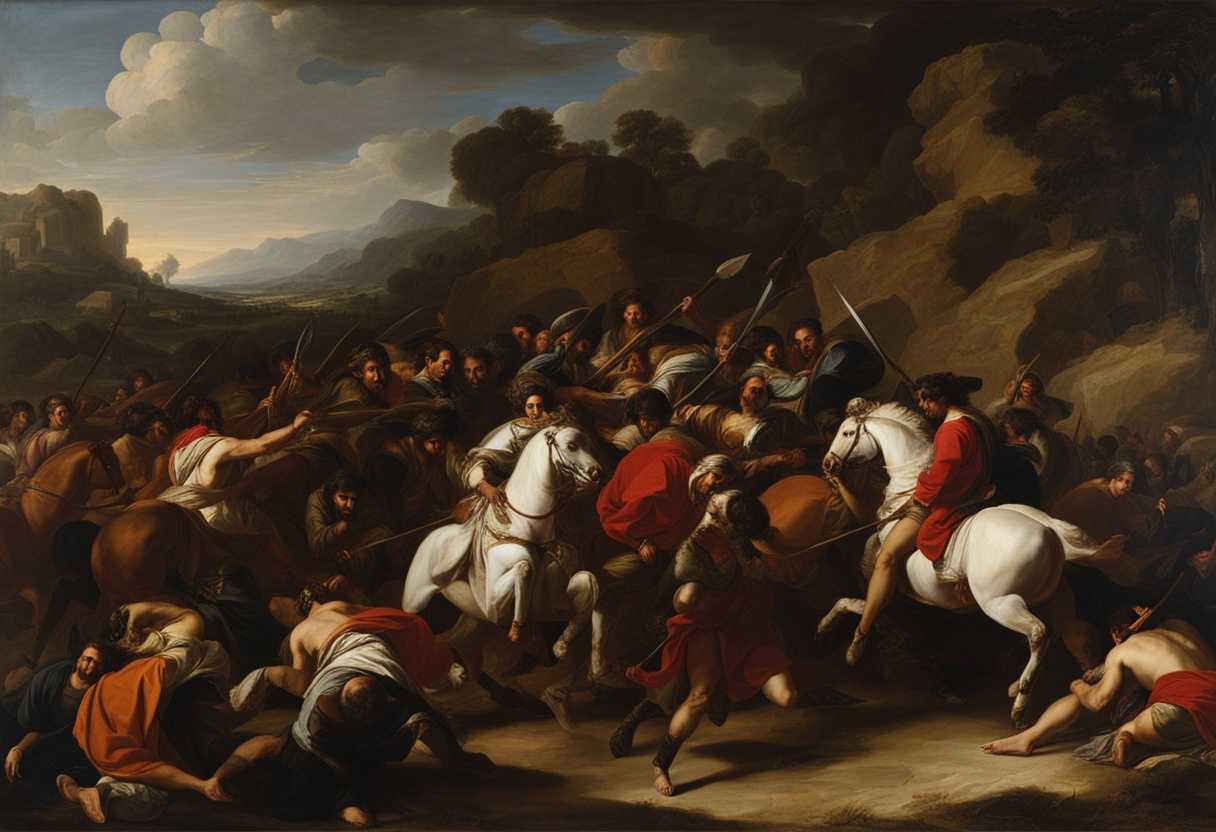
Setting the Scene for 2 Kings 2:16-18
In 2 Kings chapter 2, we find the prophet Elijah and his disciple Elisha on a significant journey. The scene unfolds as Elijah is about to be taken up to heaven in a whirlwind, and Elisha is by his side, unwilling to leave his mentor’s side. The two of them have been traveling together, with Elisha determined to stay with Elijah until the very end.
Surrounded by the rugged terrain of the Jordan River, the atmosphere is charged with anticipation and a sense of the miraculous. As they stand together, a chariot of fire and horses of fire suddenly appear, separating Elijah and Elisha. Elijah is then taken up in a whirlwind to heaven, leaving Elisha behind. Elisha witnesses this incredible event, receiving a double portion of Elijah’s spirit as his mentor’s mantle falls to the ground for him to pick up.
The moment is both awe-inspiring and bittersweet, as Elisha now carries on the prophetic ministry that Elijah had entrusted to him. The passing of the mantle signifies the transition of leadership and the continuation of God’s work through Elisha. This powerful scene marks a pivotal moment in the lives of these two prophets and sets the stage for Elisha’s own remarkable journey of faith and miracles.
What is 2 Kings 2:16-18 about?
Ah, the transition from Elijah to Elisha is truly a powerful moment in the Bible, showcasing how God’s work continues through the faithful hands of His chosen servants. Elijah passes his mantle to Elisha, symbolizing a transfer of authority and responsibility in continuing God’s work on earth. Elisha’s ministry is marked by numerous miracles and signs, displaying God’s power working through him for the benefit of others.
Have you ever experienced a moment when you felt called to step into a new role or responsibility, just like how Elisha took on the mantle from Elijah? It can be daunting to follow in the footsteps of someone great, but Elisha’s story reminds us that with faith and obedience, we can carry out God’s work in miraculous ways. We too can be vessels of God’s power and grace in the world around us, just as Elisha performed miracles and signs. Elisha’s example inspires us to trust in God’s guidance and boldly step into the roles He calls us to, knowing that His power will work through us to accomplish His purposes.
Understanding what 2 Kings 2:16-18 really means
The narrative in 2 Kings 2:16-18 unfolds amidst the transition of prophetic leadership from Elijah to Elisha. The sons of the prophets, followers of these revered figures, are unsettled by Elijah’s sudden disappearance. Their concern leads them to propose sending fifty strong men to search for Elijah, fearing that the Spirit of the Lord might have transported him to an unknown location. This act of sending men reflects their earnestness and determination to find their mentor, showcasing their commitment to the search.
The phrase “The Spirit of the Lord has taken him up” reveals the sons of the prophets’ understanding of divine intervention, yet it also exposes their limited comprehension of the miraculous nature of Elijah’s ascension. Elisha’s response, “Do not send them,” demonstrates his unwavering faith in what he has witnessed and his trust in God’s unfolding plan. It signifies a pivotal moment where Elisha’s faith in God’s sovereignty overrides the human impulse to seek tangible explanations.
Drawing parallels from other biblical passages such as 1 Kings 18:12, Acts 8:39-40, and John 14:12, we see a consistent theme of divine intervention and the Spirit of the Lord orchestrating extraordinary events. These passages provide a broader context for understanding the miraculous occurrences in 2 Kings 2:16-18 and emphasize the continuity of God’s miraculous works through different prophets and disciples across time.
The relevance of this narrative extends to contemporary believers, urging them to embrace faith and trust in God’s unseen plans, even when faced with uncertainty. In a world that often demands empirical evidence, this passage serves as a poignant reminder to rely on spiritual discernment and trust in the unseen workings of God. It challenges individuals to move beyond the confines of physical proof and embrace the mysterious ways in which God operates in their lives.
Consider a scenario where a community grapples with the loss of a beloved leader, akin to the sons of the prophets losing Elijah. In such moments of upheaval and confusion, a wise successor steps forward, urging the community to trust in God’s timing and providence. This anecdote mirrors Elisha’s response to the sons of the prophets, illustrating the importance of faith and obedience in the face of uncertainty.
In conclusion, the passage from 2 Kings 2:16-18 serves as a profound lesson on faith, trust, and divine intervention. It prompts believers to look beyond the visible and embrace the mysterious ways in which God works in their lives. By internalizing this message, individuals can find solace and direction in times of ambiguity, knowing that God’s plans are intricately woven into their journey, even when obscured from immediate sight.
How can we seek and recognize God’s presence?
The Prophet Elisha asks for a double portion of Elijah’s spirit in these verses. This request symbolizes a desire for a deeper connection with God and a greater awareness of His presence. We must approach God with a humble heart, like Elisha did, and ask for spiritual insight and understanding in seeking His presence.
Recognizing God’s presence requires us to be attentive and sensitive to His leading in our lives. We can see God at work in our lives through His blessings, answered prayers, and the peace and comfort He provides in times of trouble, just as Elisha recognized the presence of God through the miraculous parting of the Jordan River. We can experience God’s guidance, strength, and love in a profound way by tuning in to His presence. Seeking and recognizing God’s presence is ultimately a continual process of seeking Him through prayer, studying His Word, and being open to His leading in our lives. We will increasingly become aware of His presence and work in our lives as we cultivate a relationship with God and deepen our faith, leading us to grow in our love and knowledge of Him.
Application
Just like Elisha’s unwavering faith in the face of challenges, let’s remember to seek divine guidance in our own lives. In times of difficulty, let’s turn to God for strength and trust in His power to overcome obstacles. Let’s draw inspiration from Elisha’s conviction and deepen our faith. Are you willing to trust in God’s providence and embrace unwavering faith in the midst of life’s storms?

Reverend Michael Johnson is an experienced Church Minister with a profound expertise in spirituality and guidance. With a serene presence and a compassionate heart, he has faithfully served his congregation for over 20 years, leading them on a spiritual journey towards inner peace and enlightenment. Reverend Johnson’s extensive knowledge of religious philosophies and profound understanding of human nature have made him a trusted confidant and mentor to many, as he seamlessly weaves his profound wisdom into life teachings. Reverend Johnson’s calming demeanor and empathetic nature continue to uplift and heal souls, nurturing a sense of unity and tranquility within his community.