
2 Kings 4:8-37 is about the story of Elisha raising the Shunammite woman’s son from the dead, emphasizing God’s power over life and death and the importance of faith and trust in His plans.
8 One day Elisha went on to Shunem, where a wealthy woman lived, who urged him to eat some food. So whenever he passed that way, he would turn in there to eat food.
9 And she said to her husband, “Behold now, I know that this is a holy man of God who is continually passing our way.
10 Let us make a small room on the roof with walls and put there for him a bed, a table, a chair, and a lamp, so that whenever he comes to us, he can go in there.”
11 One day he came there, and he turned into the chamber and rested there.
12 And he said to Gehazi his servant, “Call this Shunammite.” When he had called her, she stood before him.
13 And he said to him, “Say now to her, ‘See, you have taken all this trouble for us; what is to be done for you? Would you have a word spoken on your behalf to the king or to the commander of the army?’” She answered, “I dwell among my own people.”
14 And he said, “What then is to be done for her?” Gehazi answered, “Well, she has no son, and her husband is old.”
15 And he said, “Call her.” And when he had called her, she stood in the doorway.
16 And he said, “At this season, about this time next year, you shall embrace a son.”
17 But the woman conceived, and she bore a son about that time the following spring, as Elisha had said to her.
18 When the child had grown, he went out one day to his father among the reapers.
19 But he said to his father, “My head, my head!” So he said to his servant, “Carry him to his mother.”
20 So he picked him up and brought him to his mother. And the child sat on her lap till noon, and then he died.
21 And she went up and laid him on the bed of the man of God and shut the door behind him and went out.
22 She called to her husband and said, “Send me one of the servants and one of the donkeys, that I may quickly go to the man of God and come back again.”
23 So he said, “Why will you go to him today? It is neither new moon nor Sabbath.” She said, “All is well.”
24 Then she saddled the donkey, and said to her servant, “Urge the animal on; do not slacken the pace for me unless I tell you.”
25 So she set out and came to the man of God at Mount Carmel.
26 Run at once to meet her and say to her, ‘Is all well with you? Is all well with your husband? Is all well with the child?’ And she answered, ‘All is well.’
27 And when she came to the mountain to the man of God, she caught hold of his feet. And Gehazi came to push her away. But the man of God said, “Leave her alone, for she is in bitter distress, and the Lord has hidden it from me and has not told me.”
28 Then she said, “Did I ask my lord for a son? Did I not say, ‘Do not deceive me’?”
29 He said to Gehazi, “Tie up your garment and take my staff in your hand and go. If you meet anyone, do not greet him, and if anyone greets you, do not reply. And lay my staff on the face of the child.”
30 Then the mother of the child said, “As the Lord lives and as you yourself live, I will not leave you.” So he arose and followed her.
31 Gehazi went on ahead and laid the staff on the face of the child, but there was no sound or sign of life. So he returned to meet him and told him, “The child has not awakened.”
32 When Elisha came into the house, he saw the child lying dead on his bed.
33 So he went in and shut the door behind the two of them and prayed to the Lord.
34 Then he went up and lay on the child, putting his mouth on his mouth, his eyes on his eyes, and his hands on his hands. And as he stretched himself upon him, the flesh of the child became warm.
35 Then he got up again and walked once back and forth in the house, and went up and stretched himself upon him. The child sneezed seven times, and the child opened his eyes.
36 Then he summoned Gehazi and said, “Call this Shunammite.” So he called her. And when she came to him, he said, “Pick up your son.”
37 Then she went in and fell at his feet and bowed to the ground. Then she took up her son and went out.
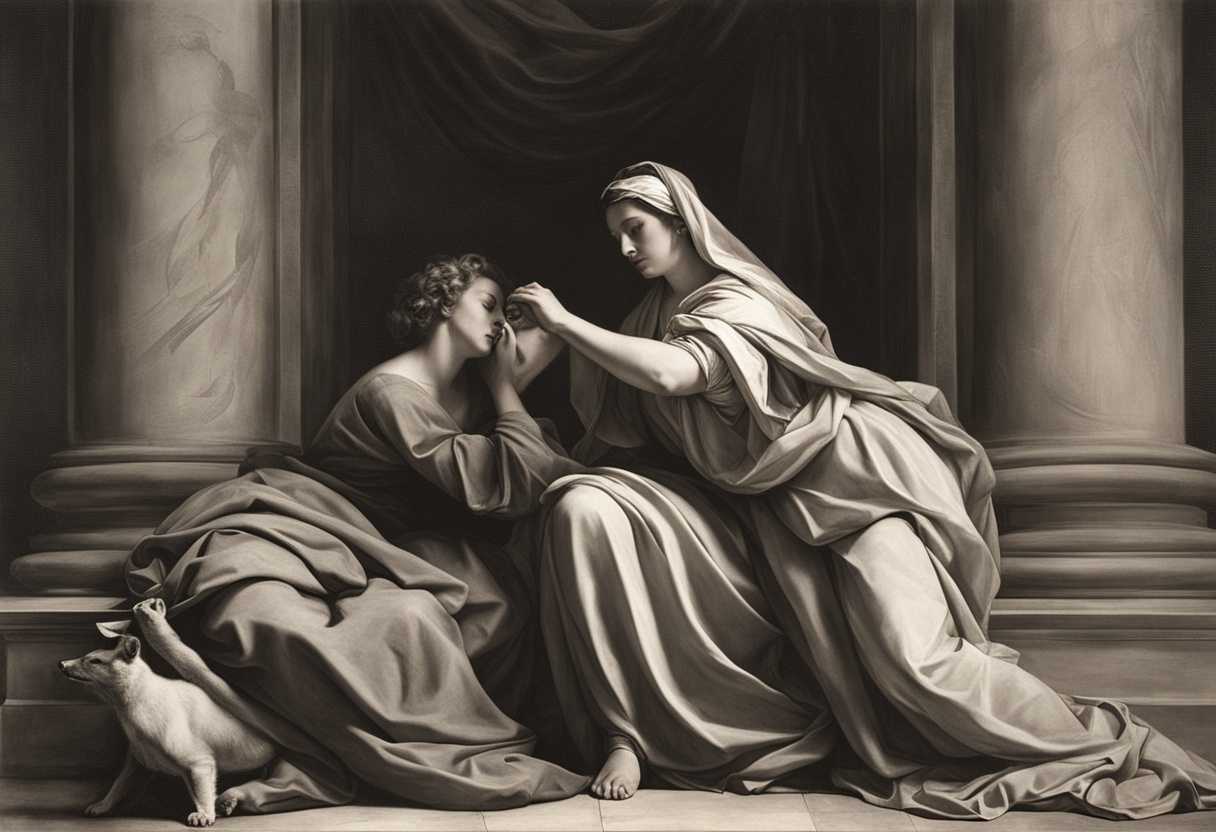
Setting the Scene for 2 Kings 4:8-37
In 2 Kings chapter 4, we find the story of the Shunammite woman. The scene opens with Elisha, a prophet of God, traveling through the town of Shunem. The Shunammite woman, a wealthy and hospitable woman, notices Elisha passing by and invites him to her home for a meal. Impressed by her kindness, Elisha becomes a frequent guest in her home during his travels.
As time passes, the Shunammite woman and her husband build a small room onto their house for Elisha to stay in whenever he visits. Elisha is grateful for their hospitality and wants to repay them for their kindness. He asks the woman what he can do for her in return, and she humbly replies that she is content with her life.
One day, tragedy strikes when the Shunammite woman’s son falls ill and dies. Distraught, she rushes to find Elisha, who comes to her home and miraculously raises her son back to life. The scene is one of faith, hospitality, tragedy, and ultimately, the power of God’s intervention in the lives of those who trust in Him.
What is 2 Kings 4:8-37 about?
What an incredible display of power and compassion shown by Elisha in this verse! The story of Elisha raising the Shunammite woman’s son from the dead is a powerful demonstration of the prophet’s direct connection to God and his ability to perform miracles. It showcases the depth of faith and belief in God’s power that both Elisha and the Shunammite woman possess. This miraculous event underscores the idea that nothing is impossible for God, and that even death itself is not a barrier to His power.
Imagine the overwhelming gratitude and awe that the Shunammite woman must have felt at witnessing her son being brought back to life. This story serves as a reminder of the faithfulness of God and His ability to bring life and hope even in the midst of despair and darkness. It challenges us to reflect on our own faith and belief in God’s miraculous power, prompting us to trust in Him even in the face of seemingly impossible situations. Let this story inspire and encourage you to deepen your faith and reliance on God, knowing that He is the ultimate source of life and resurrection.
Understanding what 2 Kings 4:8-37 really means
In 2 Kings 4:8-37, we encounter the captivating narrative of Elisha and the Shunammite woman, which unfolds themes of faith, hospitality, divine intervention, and resurrection. The story begins with the Shunammite woman recognizing Elisha as a holy man of God and extending her hospitality by providing him with a room in her home. This act of generosity reflects the biblical principle of showing hospitality to strangers, as Hebrews 13:2 reminds us that such acts can lead to unexpected blessings. The woman’s hospitality sets the stage for the miraculous events that follow, emphasizing the importance of kindness and generosity in our interactions with others.
To fully grasp the significance of this story, we must consider the historical and cultural context of ancient Israel. Prophets like Elisha played a crucial role in conveying God’s messages and performing miracles among the people. Elisha’s ministry was marked by extraordinary deeds that showcased God’s power and presence in the lives of His chosen ones. Understanding the context helps us appreciate the profound impact of Elisha’s actions and the Shunammite woman’s unwavering faith in the face of adversity.
The key themes of faith and trust in God are exemplified in the Shunammite woman’s response to her son’s sudden death. Despite the heartbreaking loss, she demonstrates a profound trust in the Lord, echoing the wisdom of Proverbs 3:5-6, which urges us to lean not on our understanding but to trust in God wholeheartedly. This narrative underscores the transformative power of faith, showing that even in the darkest moments, God’s intervention can bring about miraculous outcomes beyond human comprehension.
The pivotal moment of divine intervention occurs when Elisha, through prayer, raises the Shunammite woman’s son from the dead. This miraculous resurrection echoes the words of Jesus in John 11:25, affirming God’s sovereignty over life and death and His ability to perform extraordinary miracles. The resurrection serves as a powerful reminder of God’s limitless power and His capacity to bring forth life from death, instilling hope and faith in the hearts of believers.
The timeless relevance of this story resonates with people today, inspiring us to maintain faith in the midst of adversity, to rely on the power of prayer for divine intervention, and to practice generosity and kindness towards others. Through anecdotes of individuals who have experienced breakthroughs through faith and prayer, we witness the enduring impact of these principles in our lives. The narrative of Elisha and the Shunammite woman serves as a beacon of hope, guiding us to trust in God’s miraculous power and to extend hospitality and kindness to those around us.
As we delve into the detailed explanations of key phrases in the passage, we uncover profound truths about honoring God’s servants, providing for the needs of others, the suddenness of tragedy, the reality of death, and the completeness of God’s healing power. Each phrase carries layers of meaning that deepen our understanding of the story’s significance and its implications for our spiritual journey.
In conclusion, the story of Elisha and the Shunammite woman imparts valuable lessons on faith, generosity, and trust in God’s miraculous power. Let us heed these lessons, applying them in our daily lives as we navigate challenges with unwavering faith, extend hospitality and kindness to those in need, and trust in God’s ability to bring forth life from death. May we be inspired by the example of the Shunammite woman’s faith and Elisha’s ministry, seeking to emulate their unwavering trust in the Almighty. Let us offer a prayer for faith, generosity, and a deepening reliance on God’s miraculous intervention in our lives.
How can we trust God in times of despair?
During times of despair, we can trust God by remembering His faithfulness and power as demonstrated in the passage from 2 Kings 4:8-37. A woman in this story faces the loss of her son, a situation that seemed hopeless and beyond repair. However, through the prophet Elisha, God performed a miraculous intervention, bringing the dead child back to life. This serves as a powerful reminder that God is able to work miracles in our own lives, even in the midst of our despair.
We can also trust God in times of despair by leaning on His promises and holding onto our faith. We too can choose to trust and rely on God’s faithfulness, even when faced with challenges, just as the woman in the passage did in continuing to believe in the power and goodness of God despite the death of her son. We can find comfort and strength to face our challenges with hope and perseverance by staying connected to Him through prayer, reading His Word, and seeking guidance from Him.
Lastly, we can trust God in times of despair by surrendering our fears and worries to Him. The woman in the passage turned to God in her time of need, expressing her distress and seeking help from Him. We can bring our concerns before God in the same way, knowing that He cares for us and will provide for our needs. We can experience His peace that surpasses all understanding, even in the darkest moments of despair, by relinquishing control and placing our trust in Him.
Application
Draw inspiration from the story of the Shunammite woman in 2 Kings 4:8-37. Let her faith and hospitality ignite a fire within you to extend kindness and trust in the face of adversity. Are you ready to embrace challenges with unwavering faith like she did for Elisha? Take up the mantle of faith and hospitality in your own life. Will you rise up and embody the strength and warmth found in this powerful biblical tale today?

Reverend Michael Johnson is an experienced Church Minister with a profound expertise in spirituality and guidance. With a serene presence and a compassionate heart, he has faithfully served his congregation for over 20 years, leading them on a spiritual journey towards inner peace and enlightenment. Reverend Johnson’s extensive knowledge of religious philosophies and profound understanding of human nature have made him a trusted confidant and mentor to many, as he seamlessly weaves his profound wisdom into life teachings. Reverend Johnson’s calming demeanor and empathetic nature continue to uplift and heal souls, nurturing a sense of unity and tranquility within his community.