
2 Kings 7:8-9 is about four lepers who, in their desperation and disobedience to the king’s orders, discover the abandoned camp of the Arameans full of provisions, symbolizing God’s provision and deliverance even in seemingly hopeless situations for those who act in faith.
8 And when these lepers came to the edge of the camp, they went into a tent and ate and drank, and they carried off silver and gold and clothing and went and hid them. Then they came back and entered another tent and carried off things from it and went and hid them.
9 Then they said to one another, “We are not doing right. This day is a day of good news. If we are silent and wait until the morning light, punishment will overtake us. Now therefore come; let us go and tell the king’s household.”
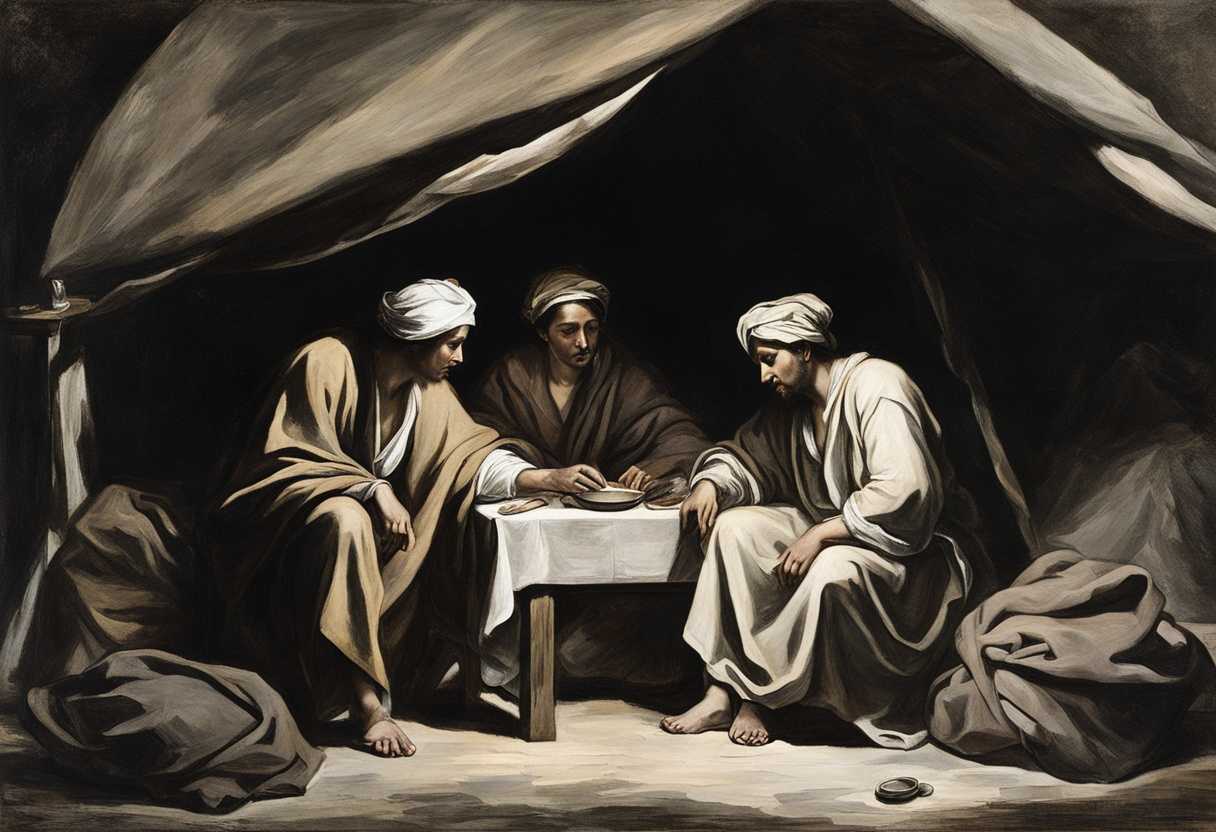
Setting the Scene for 2 Kings 7:8-9
In 2 Kings chapter 7, the scene unfolds outside the walls of Samaria, the capital of the northern kingdom of Israel. The city is under siege by the Aramean army, and the people inside are suffering from a severe famine. Four men afflicted with leprosy are sitting at the entrance of the city gate. These men are outcasts, forced to live outside the city due to their condition.
As they sit there, they come to a pivotal moment where they realize that they have nothing to lose by surrendering to the Arameans. They reason that if they stay where they are, they will die of starvation, but if they surrender, there is a chance they might be spared. So, they make the bold decision to go to the Aramean camp, not knowing what fate awaits them. Little do they know that God has already intervened, causing the Arameans to hear the sound of a great army approaching, leading them to flee in panic, leaving behind their tents, horses, and food supplies.
The four lepers enter the deserted camp and find an abundance of food and riches. They feast on the provisions, hiding some for later, and eventually, their consciences lead them to share the good news with the starving people of Samaria. This miraculous turn of events not only saves the four men from certain death but also brings relief to the besieged city, fulfilling the prophecy of Elisha that food would be plentiful in Samaria the next day.
What is 2 Kings 7:8-9 about?
This verse highlights the power and protection that God offers to His followers. Imagine the strength and comfort it brings knowing that when faced with adversaries or challenges, God can make them retreat in terror. It demonstrates His ability to provide not just safety but also prosperity and liberation to those who trust in Him.
Reflect on how reassuring it is to have a higher power, God, who watches over you and ensures that you are shielded from harm. This verse serves as a reminder of God’s faithfulness and might, encouraging us to rely on Him during difficult times. Consider how this verse can inspire hope and confidence in your own life, knowing that God is capable of turning the tables in your favor and granting you victory over your enemies.
Understanding what 2 Kings 7:8-9 really means
In 2 Kings 7:8-9, we are transported to a time of great distress in Samaria, besieged by the Arameans, where four lepers find themselves in a remarkable situation. These outcasts stumble upon the abandoned camp of the Arameans, filled with provisions and riches. Initially, they are tempted to keep this newfound wealth to themselves, but a realization dawns upon them – this is a day of good news not meant to be hoarded. The phrase “This is a day of good news” signifies a divine moment of blessing and intervention, prompting the lepers to understand the importance of sharing their discovery with the starving city.
As the lepers grapple with their moral dilemma, the phrase “We are not doing right” echoes the ethical responsibility to share blessings rather than selfishly holding onto them. Their acknowledgment that withholding this news would be unjust highlights the universal truth that blessings are meant to be shared. The urgency expressed in “If we wait until daylight, punishment will overtake us” underscores the importance of timely and compassionate action, reminding us of the consequences of neglecting our duty to others.
Drawing parallels from related biblical passages such as Luke 12:48, Matthew 5:14-16, and James 4:17, we are reminded of the consistent message throughout scripture about the responsibility that accompanies blessings. These verses emphasize the call to share our resources, light, and knowledge with others, reinforcing the idea that withholding good when we have the ability to help is a missed opportunity for righteousness.
The relevance of this narrative to contemporary society is striking. In a world where disparities in wealth and opportunity persist, the lesson from 2 Kings 7:8-9 resonates deeply. It challenges us to consider how we handle the abundance in our lives and prompts us to act with compassion and urgency towards those in need. The story serves as a timeless reminder of the importance of community, shared responsibility, and the moral imperative to spread good news and blessings.
To illustrate this point further, imagine a scenario where someone discovers a job opportunity that could benefit a struggling friend. Initially tempted to keep this information to themselves, they eventually realize that sharing this opportunity is not only the right thing to do but also strengthens their bond with their friend and fosters a sense of unity and support.
In conclusion, the narrative of the lepers in 2 Kings 7:8-9 challenges us to reflect on our actions and consider how we can share our blessings and good news with those around us. It urges us to act with integrity, compassion, and a sense of communal responsibility, recognizing that our willingness to help others can bring relief, joy, and unity in a world that often faces scarcity and division.
What hinders us from sharing God’s blessings with others?
The hindrance that can prevent us from sharing God’s blessings with others is fear and hesitation. The lepers initially kept the spoils of the Arameans’ camp to themselves out of fear and self-preservation in the story from 2 Kings 7:8-9. They were afraid that if they shared the good news with the people in the city, something might happen to them. This fear caused them to hesitate in sharing the abundance they had found with those who were in need.
When we allow fear and hesitation to take hold in our hearts, it can hinder us from being generous and sharing the blessings that God has given us. However, the lesson from this verse is that when we step out in faith and trust in God’s provision, He can multiply our blessings and use us to be a blessing to others. We can become conduits of God’s blessings and bring hope and provision to those around us by letting go of fear and selfishness.
Application
Take a leap of faith just like the lepers in 2 Kings 7:8-9 and witness the abundance of God’s provision in your life. Trust in His promises and courageously step forward, even if the path seems uncertain. Reflect on your own beliefs and see where God is nudging you to take action. Will you dare to trust in God’s provision and take that step towards the blessings waiting for you?

Reverend Michael Johnson is an experienced Church Minister with a profound expertise in spirituality and guidance. With a serene presence and a compassionate heart, he has faithfully served his congregation for over 20 years, leading them on a spiritual journey towards inner peace and enlightenment. Reverend Johnson’s extensive knowledge of religious philosophies and profound understanding of human nature have made him a trusted confidant and mentor to many, as he seamlessly weaves his profound wisdom into life teachings. Reverend Johnson’s calming demeanor and empathetic nature continue to uplift and heal souls, nurturing a sense of unity and tranquility within his community.