
2 Kings 8:25-29 is about the rise and fall of King Jehoram of Judah, his evil reign, and his eventual demise due to his wickedness and disobedience to God.
25 In the twelfth year of Joram the son of Ahab, king of Israel, Ahaziah the son of Jehoram, king of Judah, began to reign.
26 Ahaziah was twenty-two years old when he began to reign, and he reigned one year in Jerusalem. His mother’s name was Athaliah; she was a granddaughter of Omri king of Israel.
27 And he walked in the way of the house of Ahab and did what was evil in the sight of the Lord, as the house of Ahab had done, for he was son-in-law to the house of Ahab.
28 He went with Joram the son of Ahab to make war against Hazael king of Syria at Ramoth-gilead, and the Syrians wounded Joram.
29 And King Joram returned to be healed in Jezreel of the wounds that the Syrians had given him at Ramah, when he fought against Hazael king of Syria. And Ahaziah the son of Jehoram king of Judah went down to see Joram the son of Ahab in Jezreel, because he was sick.
Setting the Scene for 2 Kings 8:25-29
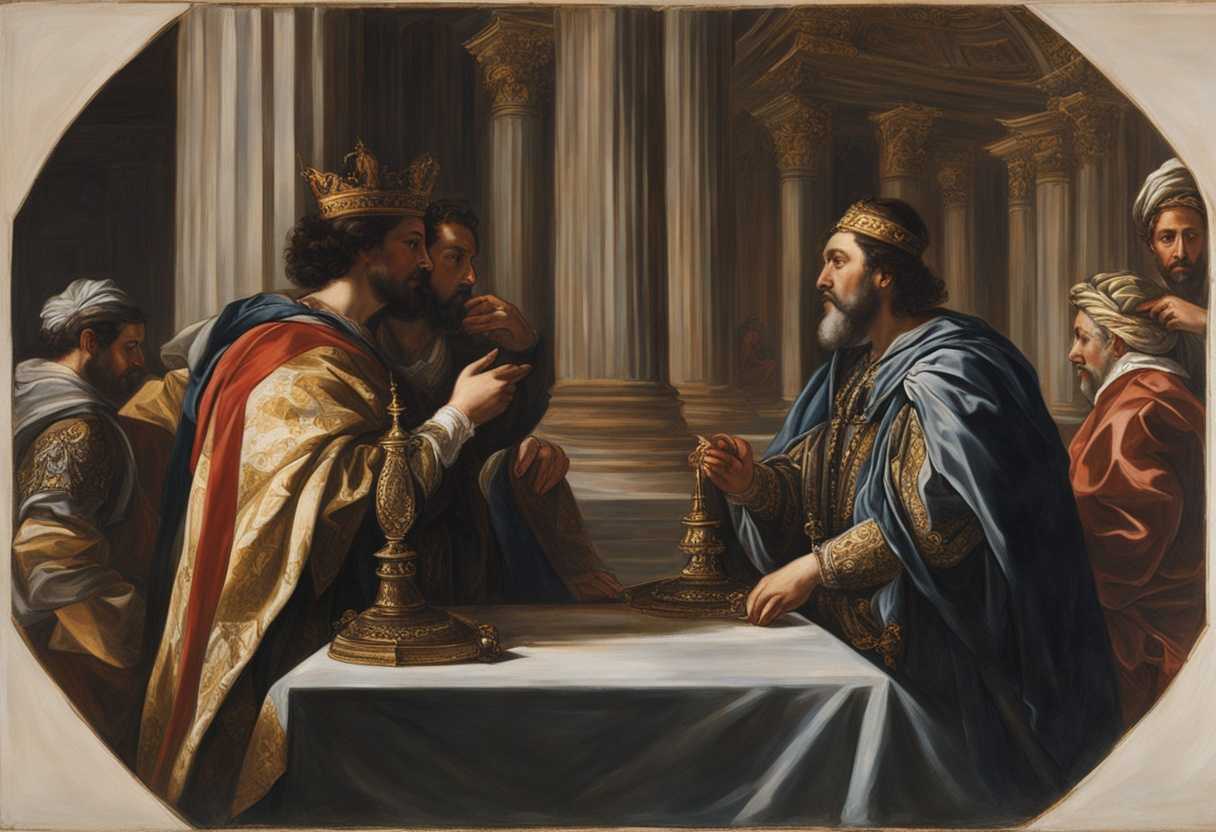
In 2 Kings chapter 8, we find ourselves in the royal court of Judah during the reign of King Jehoram. The scene is bustling with activity as the king’s son, Ahaziah, is being prepared to take over the throne. Ahaziah had just ascended to the throne of Judah after the death of his father, King Jehoram. The atmosphere is tense as the young king is surrounded by advisors and courtiers, all eager to make their mark on the new reign.
Among those present in the scene are Queen Athaliah, the mother of Ahaziah, who wields significant influence in the court. She is a formidable figure, known for her ambition and cunning. Also present is the prophet Elisha, who has been observing the political turmoil in the kingdom with concern. Elisha is there to offer guidance and wisdom to the young king as he navigates the challenges of ruling a kingdom torn by internal strife and external threats.
The setting is opulent, with rich tapestries adorning the walls and the scent of incense hanging heavy in the air. The courtiers whisper amongst themselves, speculating on the future of the kingdom under the rule of the inexperienced Ahaziah. As tensions rise and alliances shift, the stage is set for a dramatic chapter in the history of Judah.
What is 2 Kings 8:25-29 about?
This verse serves as a cautionary tale about the impact of bad influences and poor leadership. King Ahaziah of Judah allowed his mother Athaliah to guide his decisions, ultimately leading the kingdom to disaster and facing divine judgment. The story of Ahaziah reminds us of the importance of surrounding ourselves with wise counsel and making decisions based on righteousness and wisdom. Allowing negative influences to guide your actions can have consequences that should be considered. How might your decisions be swayed by the people you surround yourself with? Reflect on the leadership qualities you possess and the impact they can have on those around you. Strive to remember the lessons from Ahaziah’s reign as you navigate your own path, lead with integrity, and seek out positive influences to guide your decisions.
Understanding what 2 Kings 8:25-29 really means
In the twelfth year of Joram son of Ahab, king of Israel, Ahaziah, son of Jehoram, king of Judah, began his reign. The mention of these kings sets the stage for the political landscape of the time, showcasing the intertwined destinies of the kingdoms of Israel and Judah. Ahaziah’s choice to walk in the ways of the house of Ahab reveals a troubling pattern of following sinful practices contrary to God’s commands. His decision to join forces with Joram against Hazael, king of Aram, highlights the alliances and conflicts that shaped the region’s dynamics.
Joram’s injury in battle symbolizes not only a physical wound but also a weakening of Israel’s leadership. This event serves as a cautionary tale about the consequences of unwise alliances and actions. The narrative echoes themes found in related biblical passages, such as the sinful practices of Ahab’s family and the influence of idolatry during Ahaziah’s reign. Proverbs 13:20’s wisdom about choosing companions wisely resonates with Ahaziah’s story, emphasizing the impact of one’s associations on their well-being.
The relevance of this passage extends to contemporary society, emphasizing the significance of leadership choices and the influence of associations. Just as Ahaziah’s alignment with Joram had far-reaching implications, individuals today must carefully consider the company they keep and the values they uphold. A modern anecdote illustrates how exposure to unethical environments can gradually erode personal integrity, leading to compromising situations and adverse outcomes. The lesson drawn from Ahaziah’s experience underscores the importance of seeking out relationships that align with one’s values and beliefs.
Reflecting on the influences in one’s life becomes crucial in light of Ahaziah’s narrative. Evaluating whether these influences draw one closer to their values and faith or lead them astray prompts introspection and intentional decision-making. The application of this passage lies in actively seeking mentors, friends, and leaders who exemplify godly wisdom and integrity. By making conscious choices about alliances and associations, individuals can navigate life’s complexities with discernment and steadfastness.
How can we avoid repeating the mistakes of our ancestors?
To avoid repeating the mistakes of our ancestors, we must learn from their actions and understand the repercussions of their choices. We can strive to make more informed decisions that align with our values and beliefs by reflecting on our missteps. It is essential to place importance on the lessons we can draw from history to build a better future for ourselves and those around us. We can make thoughtful and intentional choices that will lead to positive outcomes by being vigilant and conscious of the consequences of past actions. It is crucial to avoid falling into the same patterns of behavior that have led to conflicts and struggles in the past. Instead, we should seek to break the cycle by embodying qualities such as wisdom, humility, and integrity in our actions and interactions.
Through self-awareness and continuous learning, we can grow as individuals and as a society. We can pave the way for a brighter and more harmonious future by recognizing the errors of our ancestors and striving to make better decisions. We can create a legacy of progress and understanding for future generations by heeding the lessons of the past.
Application
In our journey through the twists and turns of life, we will encounter obstacles and trials that test our resolve. Much like Jehu faced opposition during his reign, we too may face challenges that shake our beliefs. Let us draw strength from his unwavering faith and trust in God’s guidance as we navigate the complexities of our own journeys. Will you choose to stand firm in your faith, even when faced with adversity?

Reverend Michael Johnson is an experienced Church Minister with a profound expertise in spirituality and guidance. With a serene presence and a compassionate heart, he has faithfully served his congregation for over 20 years, leading them on a spiritual journey towards inner peace and enlightenment. Reverend Johnson’s extensive knowledge of religious philosophies and profound understanding of human nature have made him a trusted confidant and mentor to many, as he seamlessly weaves his profound wisdom into life teachings. Reverend Johnson’s calming demeanor and empathetic nature continue to uplift and heal souls, nurturing a sense of unity and tranquility within his community.