
2 Samuel 20:1-2 is about the aftermath of Absalom’s rebellion against David, where the people of Israel were divided in their support for David and Sheba attempted to capitalize on this division to rebel against the king.
1 Now there happened to be there a worthless man, whose name was Sheba, the son of Bichri, a Benjaminite. And he blew the trumpet and said, “We have no portion in David, and we have no inheritance in the son of Jesse; every man to his tents, O Israel!”
2 So all the men of Israel withdrew from David and followed Sheba the son of Bichri. But the men of Judah followed their king steadfastly from the Jordan to Jerusalem.
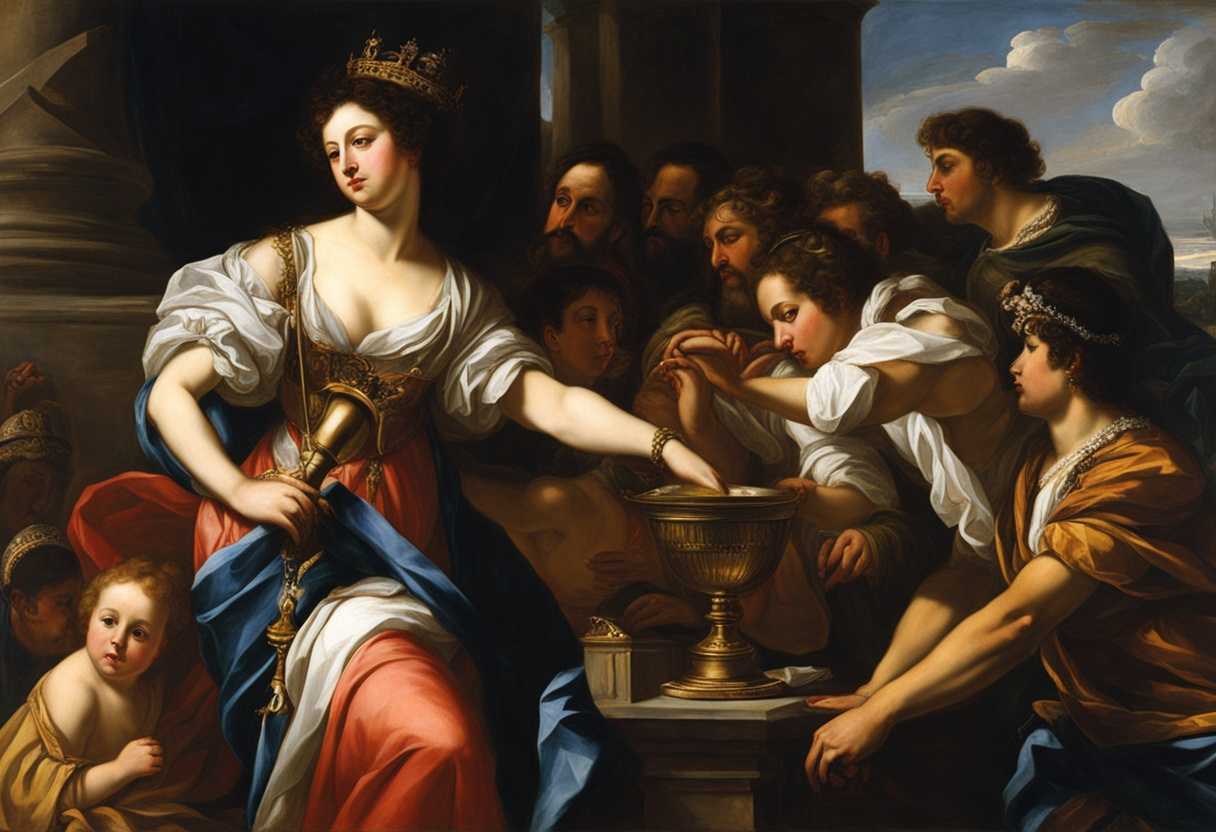
Setting the Scene for 2 Samuel 20:1-2
The scene in 2 Samuel 20:1-2 takes place shortly after the death of Absalom, King David’s rebellious son. The people of Israel had been divided in their loyalties during Absalom’s uprising, with some supporting him and others remaining faithful to King David. As the dust settled after the conflict, a man named Sheba, son of Bichri, saw an opportunity to capitalize on the unrest and lead a rebellion against King David.
In this tense and uncertain time, King David’s loyal followers, including Joab, the commander of his army, and his other trusted advisors, gathered to discuss the situation. They were likely in a war council meeting, strategizing on how to maintain order and unity in the kingdom amidst the lingering effects of Absalom’s rebellion. The atmosphere would have been charged with a sense of urgency and the weight of recent events still fresh in their minds.
The setting for this scene would have been a fortified city or stronghold, where King David and his inner circle had retreated to regroup and plan their next steps. The walls of the city would have provided a sense of security, but also a reminder of the external threats facing them. As they deliberated on how to address the new threat posed by Sheba, tensions ran high, and the fate of the kingdom hung in the balance.
What is 2 Samuel 20:1-2 about?
Oh, what a tumultuous time! The aftermath of Absalom’s rebellion has left David in a vulnerable position, as the Israelites now turn their allegiance towards Sheba. This shift in loyalty not only threatens David’s authority and reign but also plunges the kingdom into a state of civil unrest and division. The betrayal by his own people must have cut deep, leaving David to navigate through the turbulent waters of political instability and disunity within his own realm.
Imagine the heartache and disbelief David must have felt as he saw his once loyal subjects abandon him for another leader. The power struggle and conflict that arise from this betrayal must have weighed heavily on David as he sought to restore order and unity within his kingdom. This verse serves as a stark reminder of the fickleness of human allegiance and the complexities of leadership in the face of internal discord. Reflecting on this verse reminds us of the challenges that come with holding power and the importance of maintaining trust and loyalty among those we lead.
Understanding what 2 Samuel 20:1-2 really means
During the tumultuous reign of King David, a period marked by political unrest and rebellion, Sheba, a Benjamite, emerges as a troublemaker, inciting a revolt against the king. The phrase “A troublemaker named Sheba son of Bikri, a Benjamite” vividly portrays Sheba’s disruptive role in sowing discord and challenging the established authority. His cry, “We have no share in David, no part in Jesse’s son!” signifies a bold rejection of David’s kingship, sparking a divisive sentiment among the tribes of Israel. As a result, “all the men of Israel deserted David to follow Sheba son of Bikri,” illustrating the widespread discontent and fragmentation within the nation.
In parallel with other biblical passages, such as 1 Samuel 8:7 and 1 Kings 12:16, the rejection of David echoes the recurring theme of the Israelites turning away from God’s chosen leaders. These passages provide a broader context for understanding the cycle of rebellion and division that plagued the nation throughout its history. The rejection of leadership and the call for division in 2 Samuel 20:1-2 serve as cautionary tales about the consequences of discontent and the erosion of unity.
The narrative of Sheba’s rebellion resonates with contemporary issues of unity and division, underscoring the fragility of harmony within communities and nations. It prompts reflection on the destructive nature of discord and the imperative of fostering cohesion in the face of dissent. Moreover, the challenges faced by leaders in navigating discontent and rebellion serve as a sobering reminder of the complexities of governance and the need for wisdom and discernment in leadership.
Drawing a parallel to modern scenarios, envision a community grappling with internal strife as a charismatic figure stirs up unrest, leading to fractures and discord reminiscent of Sheba’s rebellion. This analogy underscores the timeless relevance of the biblical account, highlighting the enduring lessons on the perils of division and the imperative of addressing underlying grievances to preserve unity.
In applying the insights gleaned from 2 Samuel 20:1-2, individuals are encouraged to engage in introspection, examining their roles in either fostering unity or perpetuating division in their spheres of influence. Furthermore, the passage prompts a call to action in supporting and uplifting leaders, recognizing the weight of their responsibilities and the challenges they confront. By actively participating in community-building efforts and promoting harmony, individuals can contribute to the cultivation of a cohesive and resilient society, guarding against the seeds of discord that threaten unity.
Through a nuanced understanding of the historical context and the profound meanings encapsulated in the verses, we are equipped to extract valuable lessons for contemporary living. The narrative of Sheba’s rebellion serves as a poignant reminder of the significance of unity, the complexities of leadership, and the indispensable role of community solidarity in navigating challenges and preserving harmony.
How can we truly find peace in conflict?
True peace in the midst of conflict can be found by seeking a resolution that honors justice and respects all parties involved. When facing disagreements or fighting, it is essential to uphold principles of fairness, equity, and righteousness. Striving for a peaceful outcome that acknowledges the concerns and needs of everyone is crucial. We can work towards a sustainable peace that fosters understanding and harmony by valuing the importance of justice and impartiality in resolving conflicts. Moreover, addressing the root causes of the discord requires a commitment to finding peace in conflict. It involves delving into the underlying issues, understanding different perspectives, and engaging in constructive dialogue to reach a mutual understanding. We can pave the way for genuine reconciliation and lasting peace by focusing on the fundamental reasons behind the conflict and working towards solutions that address these concerns. Empathy, compassion, and a willingness to listen and understand one another can ultimately achieve true peace in the midst of conflict. We demonstrate a genuine desire to reach a peaceful resolution by showing kindness and empathy towards those involved in the conflict. Embracing a spirit of empathy and compassion can create an environment where conflicts can be resolved amicably, leading to a deeper sense of harmony and understanding among all parties.
Application
Let’s be the architects of harmony in our modern world. Like skilled craftsmen blending different materials, let’s weave unity and peace into the fabric of our relationships. As we navigate disagreements, let’s be the peacemakers who bridge divides and mend broken bonds. Let’s honor our calling by fostering reconciliation and understanding in our families and workplaces. How will you embark on this journey towards unity and healing in your life and community?

Reverend Michael Johnson is an experienced Church Minister with a profound expertise in spirituality and guidance. With a serene presence and a compassionate heart, he has faithfully served his congregation for over 20 years, leading them on a spiritual journey towards inner peace and enlightenment. Reverend Johnson’s extensive knowledge of religious philosophies and profound understanding of human nature have made him a trusted confidant and mentor to many, as he seamlessly weaves his profound wisdom into life teachings. Reverend Johnson’s calming demeanor and empathetic nature continue to uplift and heal souls, nurturing a sense of unity and tranquility within his community.