
2 Samuel 20:11-13 is about the cunning and deception of a wise woman who negotiates peace by appealing to the town’s sense of protecting its livelihood and heritage, showcasing the power of using wit and diplomacy in resolving conflicts.
11 And one of Joab’s young men took his stand by Amasa and said, “Whoever favors Joab, and whoever is for David, let him follow Joab.”
12 And Amasa lay wallowing in his blood in the highway. And anyone who came by, seeing him, stopped. And when the man saw that all the people stopped, he carried Amasa out of the highway and into the field and threw a garment over him.
13 And when he was removed from the highway, all the men passed on after Joab to pursue Sheba the son of Bichri.
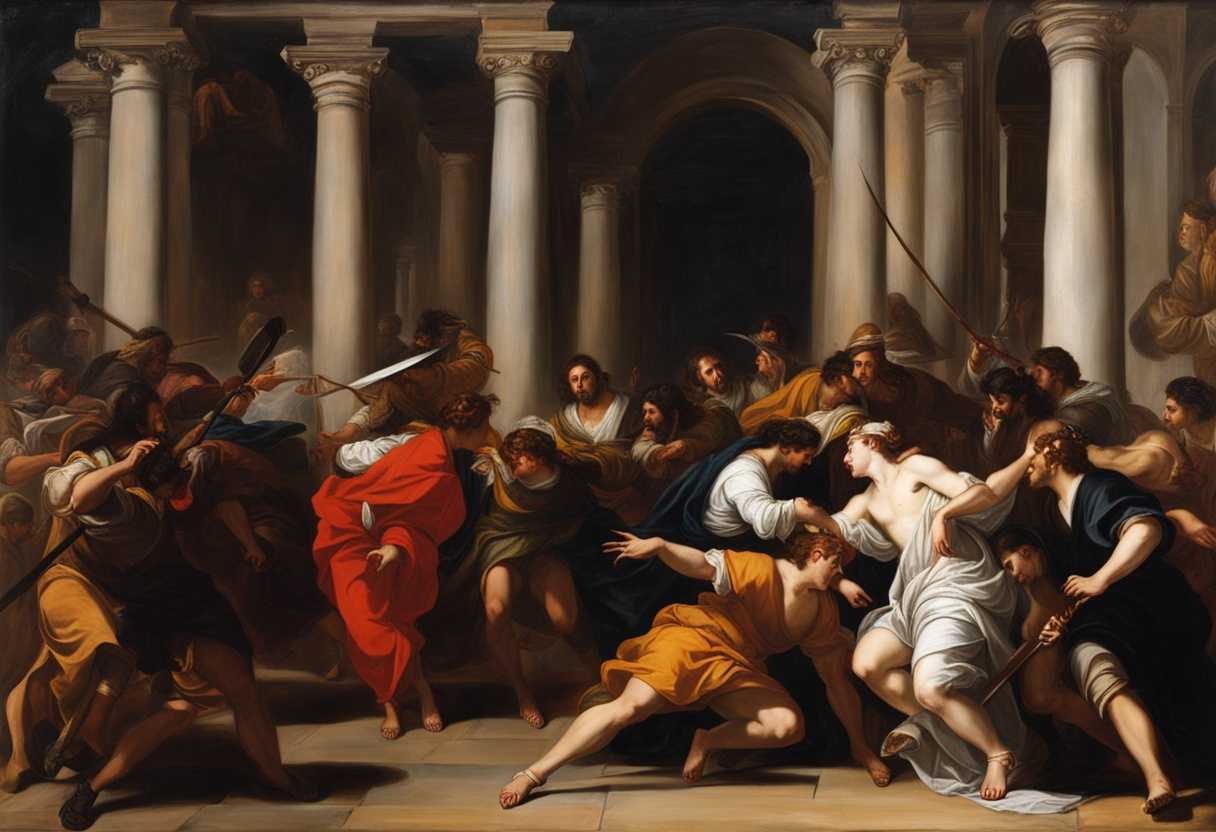
Setting the Scene for 2 Samuel 20:11-13
The scene in 2 Samuel 20:11-13 takes place in the city of Abel Beth Maacah, a fortified town in northern Israel. The city is in turmoil as Sheba, a rebel leader, has taken refuge within its walls after leading a revolt against King David. Joab, the commander of David’s army, arrives at the city with his troops to capture Sheba and end the rebellion.
The inhabitants of Abel Beth Maacah, led by a wise woman, find themselves caught in the middle of the conflict. The woman negotiates with Joab from the city wall, pleading for peace and offering to hand over Sheba to save her city from destruction. Joab agrees to spare the city if Sheba is handed over, and the woman ensures that Sheba is beheaded and his head thrown over the wall to Joab.
The tense standoff in Abel Beth Maacah showcases the political intrigue and power struggles that were common during King David’s reign. The scene is filled with drama as the fate of the city hangs in the balance, and the actions of the wise woman ultimately prevent further bloodshed and secure the safety of her people.
What is 2 Samuel 20:11-13 about?
Let’s take a moment to reflect on this powerful statement. When trust is broken, when someone we rely on betrays us, it can feel like our world is crumbling down. The aftermath of betrayal often brings pain, anger, and a sense of loss. This verse reminds us that the outcome of betrayal can indeed lead to destruction – destruction of relationships, of trust, and of peace of mind. But, there is a way out of this destruction. And that way is through seeking reconciliation.
Think about it – when we choose to confront the hurt, to have those difficult conversations, to seek understanding and forgiveness, that is where true wisdom lies. It takes courage and humility to choose reconciliation over resentment and anger. And in that choice, we often find peace. Peace within ourselves, knowing that we have done all we can to mend what was broken. Peace in the relationships that we hold dear, as they are strengthened through forgiveness and understanding. So, next time you find yourself facing betrayal, remember that the path to wisdom and peace lies in seeking reconciliation.
Understanding what 2 Samuel 20:11-13 really means
In the narrative of Sheba’s rebellion against King David, a pivotal moment unfolds as Joab, David’s military commander, takes decisive action by killing Amasa, who was meant to lead David’s army. Amidst the aftermath of this act, Joab’s men are stirred into action, with one boldly proclaiming, “Whoever favors Joab, and whoever is for David, let him follow Joab!” This declaration resonates with themes of loyalty and the call to stand by leadership, even in the midst of internal strife and uncertainty.
The vivid imagery of Amasa lying in his own blood on the highway serves as a stark reminder of the brutal realities of conflict and rebellion. It paints a grim picture of the consequences of disunity and insurrection, urging readers to consider the costs of turning against established authority. Despite the chaos and violence, a poignant moment of respect is shown when a man, witnessing the halt in movement caused by Amasa’s body, moves him to a field and covers him with a garment. This act underscores the need to maintain focus on the mission at hand, even in the face of tragedy.
Drawing parallels from related biblical passages, such as Proverbs 3:5-6 and Romans 13:1, we are reminded of the importance of trusting in God’s plan and respecting the authorities He has established. These verses reinforce the themes of loyalty, leadership, and submission to divine order, echoing the sentiments echoed in the account of Joab and Amasa.
In today’s context, the lessons from 2 Samuel 20:11-13 resonate profoundly. The principles of loyalty to righteous leadership and the necessity of maintaining focus on overarching goals amidst internal conflicts are timeless and applicable across various spheres of life. Whether in workplaces, communities, or nations, the significance of supporting good leadership and prioritizing unity for collective success remains paramount.
Consider a scenario in a modern workplace where a new leader faces resistance from some team members. One individual steps forward, echoing the sentiments of the passage, and encourages unity and support for the new leader. This act of loyalty and focus helps the team navigate through the transition smoothly, emphasizing the importance of standing by leadership and maintaining sight of shared objectives.
In conclusion, 2 Samuel 20:11-13, though set in a historical and violent backdrop, imparts enduring wisdom on loyalty, leadership, and the imperative of staying resolute amidst turmoil. By internalizing these teachings and applying them to our own lives, we can navigate challenges with wisdom, grace, and a steadfast commitment to unity and purpose.
How can we discern true motives in relationships?
People can often discern a person’s true motives in relationships through their actions and behaviors. It is important to observe how individuals treat others and the choices they make, as these can reveal their underlying intentions and character. We can gain insight into someone’s true motives by paying attention to consistency in behavior over time and how they respond to different situations.
Additionally, communication is key in understanding the intentions of others in relationships. Honest and open dialogue can help clarify misunderstandings and allow for a deeper understanding of each other’s motivations. We can gain a clearer perspective on the true motives behind someone’s actions by expressing concerns, asking questions, and listening actively. Trust is also crucial in discerning true intentions, as it allows for vulnerability and honesty in relationships.
Application
Act swiftly and decisively like the wise woman of Abel. Be vigilant, discerning, and ready to intervene in times of crisis. Intercede for peace and actively seek resolution in conflicts. How will you rise up when faced with urgent situations that require your wisdom and courage?

Reverend Michael Johnson is an experienced Church Minister with a profound expertise in spirituality and guidance. With a serene presence and a compassionate heart, he has faithfully served his congregation for over 20 years, leading them on a spiritual journey towards inner peace and enlightenment. Reverend Johnson’s extensive knowledge of religious philosophies and profound understanding of human nature have made him a trusted confidant and mentor to many, as he seamlessly weaves his profound wisdom into life teachings. Reverend Johnson’s calming demeanor and empathetic nature continue to uplift and heal souls, nurturing a sense of unity and tranquility within his community.