
2 Samuel 2:18-23 is about the treacherous murder of Asahel by Abner during a skirmish between Abner’s men representing the house of Saul and Joab’s men representing the house of David, highlighting the destructive consequences of unchecked vengeance and the cost of seeking personal retribution in the midst of political turmoil.
18 Now the three sons of Zeruiah were there, Joab, Abishai, and Asahel. And Asahel was as swift of foot as a wild gazelle.
19 And Asahel pursued Abner, and as he went, he turned neither to the right hand nor to the left from following Abner.
20 So Joab and Abishai his brother killed Abner, because he had put their brother Asahel to death in the battle at Gibeon.
21 And Abner said to him, “Turn aside to your right hand or to your left, and seize one of the young men and take his spoil.” But Asahel would not turn aside from following him.
22 And Abner said again to Asahel, “Turn aside from following me. Why should I strike you to the ground? How then could I lift up my face to your brother Joab?”
23 But he refused to turn aside. Therefore Abner struck him in the stomach with the butt of the spear, so that the spear came out at his back. And he fell there and died where he was. And all who came to the place where Asahel had fallen and died, stood still.
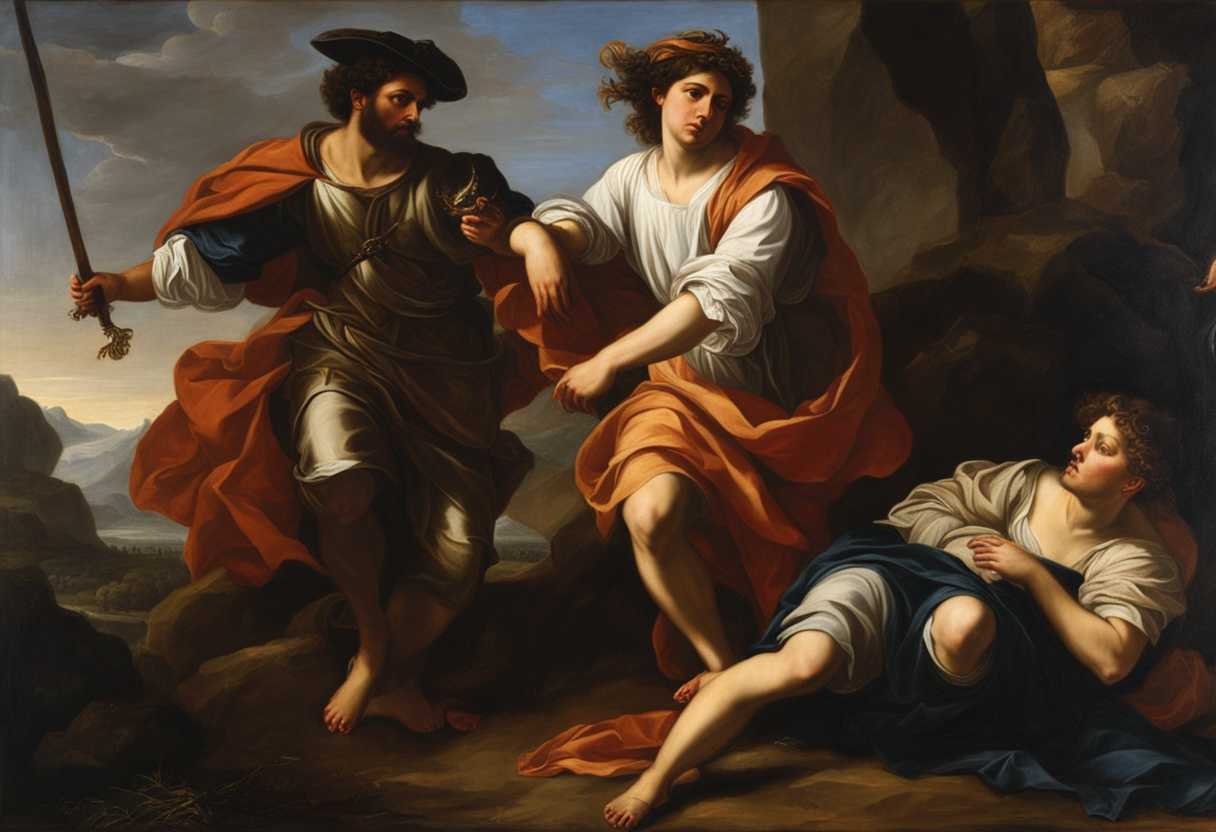
Setting the Scene for 2 Samuel 2:18-23
The scene in 2 Samuel 2:18-23 takes place during a tumultuous time in ancient Israel, shortly after the death of King Saul. The nation is divided, with David being anointed as king over Judah in Hebron, while Ish-bosheth, Saul’s son, is proclaimed king over the rest of Israel. The tension between the two factions is palpable as they prepare for a showdown to determine who will rule over the entire nation.
In this particular scene, we find representatives of David’s forces, led by Joab, and representatives of Ish-bosheth’s forces, led by Abner, meeting at the pool of Gibeon. The two groups come face to face, each with their swords drawn, ready for a confrontation. The atmosphere is charged with anticipation and uncertainty as they prepare to engage in a battle to assert their claim to the throne.
The pool of Gibeon, a strategic location in ancient Israel, serves as the backdrop for this encounter. Surrounded by rocky terrain and lush vegetation, the pool provides a serene yet ominous setting for this pivotal moment in the struggle for power. As the two sides stand poised for conflict, the outcome of this meeting will have far-reaching consequences for the future of the nation.
What is 2 Samuel 2:18-23 about?
Ah, this verse captures the intense and tragic consequences of conflict between two powerful figures, Abner and Joab. The clash of egos and ambitions escalates into a brutal battle, where lives are lost and families are left grieving as we delve into the narrative. It serves as a poignant reminder of the destructive nature of pride and the devastating impact of unresolved disputes.
Have you ever witnessed a situation where conflicts spiraled out of control, causing harm and suffering to those involved? The verse highlights the importance of conflict resolution and the danger of allowing disagreements to escalate unchecked. It challenges us to reflect on our own interactions with others and the potential consequences of letting pride and anger drive our actions. This verse ultimately serves as a cautionary tale, urging us to seek peace, understanding, and reconciliation in the face of conflict. It prompts us to consider the human cost of discord and the value of pursuing harmony and unity in our relationships and communities.
Understanding what 2 Samuel 2:18-23 really means
In the tumultuous period of King David’s early reign, a fierce civil war raged between the factions of Saul and David, setting the stage for a tragic encounter involving Asahel, Joab, and Abner, pivotal figures in the conflict. As the narrative unfolds, we witness Asahel’s remarkable swiftness likened to a wild gazelle, symbolizing his youthful energy and unwavering determination. Abner’s plea for Asahel to veer off his pursuit, urging him to choose a path of peace and avoid unnecessary bloodshed, underscores the complexity of the situation.
The poignant question posed by Abner, “How then could I look your brother Joab in the face?” reveals the intricate web of relationships and loyalties at play, highlighting the personal stakes involved in the conflict. Drawing parallels to other biblical passages, such as Proverbs 16:18 cautioning against pride and Matthew 5:9 extolling peacemakers, we glean timeless wisdom on the perils of unchecked ambition and the virtues of seeking harmony.
In a contemporary context, the narrative resonates with individuals navigating ambition and relationships in a fast-paced world. The cautionary tale of Asahel prompts reflection on the consequences of pride and the significance of heeding counsel, urging us to consider the motives driving our actions and the potential repercussions they may entail. Through a relatable anecdote of a young professional disregarding advice in pursuit of success, we see echoes of Asahel’s downfall, emphasizing the enduring relevance of the biblical lesson.
Ultimately, the passage from 2 Samuel 2:18-23 serves as a poignant reminder of the dangers of hubris and the merits of pursuing peace and wisdom. By internalizing these themes, readers are encouraged to cultivate humility, prioritize relationships over personal ambition, and strive for harmony in their interactions. The narrative invites us to introspect on our own pursuits, guiding us towards a balanced approach that values humility, wisdom, and the pursuit of peace above all else.
How do we handle betrayal and conflict in friendships?
Betrayal and conflict in friendships can be difficult to navigate, but it is important to remember that forgiveness and communication are key components in resolving such issues. Emotions can run high and lead to rash decisions, as the verse illustrates the intense conflict between Joab and Abner. However, seeking reconciliation and understanding the other person’s perspective can help mend the friendship.
When faced with betrayal and conflict in friendships, it is crucial to approach the situation with a calm and understanding demeanor. Taking time to reflect on the situation and considering the feelings of both parties involved can lead to a more peaceful resolution. It is also important to communicate openly and honestly about the issues at hand, as this can help rebuild trust and strengthen the friendship in the long run. Ultimately, individuals require patience, humility, and a willingness to forgive to overcome betrayal and conflict in friendships. Conflicts can escalate quickly and lead to unfortunate consequences, as demonstrated in the verse. However, by practicing forgiveness and striving towards reconciliation, we can work towards healing the wounds caused by betrayal and conflict, and ultimately strengthen our friendships.
Application
In the game of life, seeking guidance is like finding the hidden key in a maze to unlock the next level. Just as David sought guidance before going into battle, we must turn to God for clarity in our decisions. Let God’s wisdom be our GPS, guiding us through the twists and turns of modern challenges. Are you ready to seek divine direction in your journey today?

Reverend Michael Johnson is an experienced Church Minister with a profound expertise in spirituality and guidance. With a serene presence and a compassionate heart, he has faithfully served his congregation for over 20 years, leading them on a spiritual journey towards inner peace and enlightenment. Reverend Johnson’s extensive knowledge of religious philosophies and profound understanding of human nature have made him a trusted confidant and mentor to many, as he seamlessly weaves his profound wisdom into life teachings. Reverend Johnson’s calming demeanor and empathetic nature continue to uplift and heal souls, nurturing a sense of unity and tranquility within his community.