
2 Samuel 4:1-3 is about the fear and chaos that ensued among the Israelites following the death of King Saul and his sons, highlighting the turmoil and power struggles that often accompany the fall of a ruler.
1 When Ish-bosheth, Saul’s son, heard that Abner had died at Hebron, his courage failed, and all Israel was dismayed.
2 And Saul’s son had two men who were captains of raiding bands; the name of the one was Baanah, and the name of the other Rechab, sons of Rimmon a man of Benjamin from Beeroth, for Beeroth also is counted part of Benjamin.
3 And the Beerothites fled to Gittaim and have been sojourners there to this day.
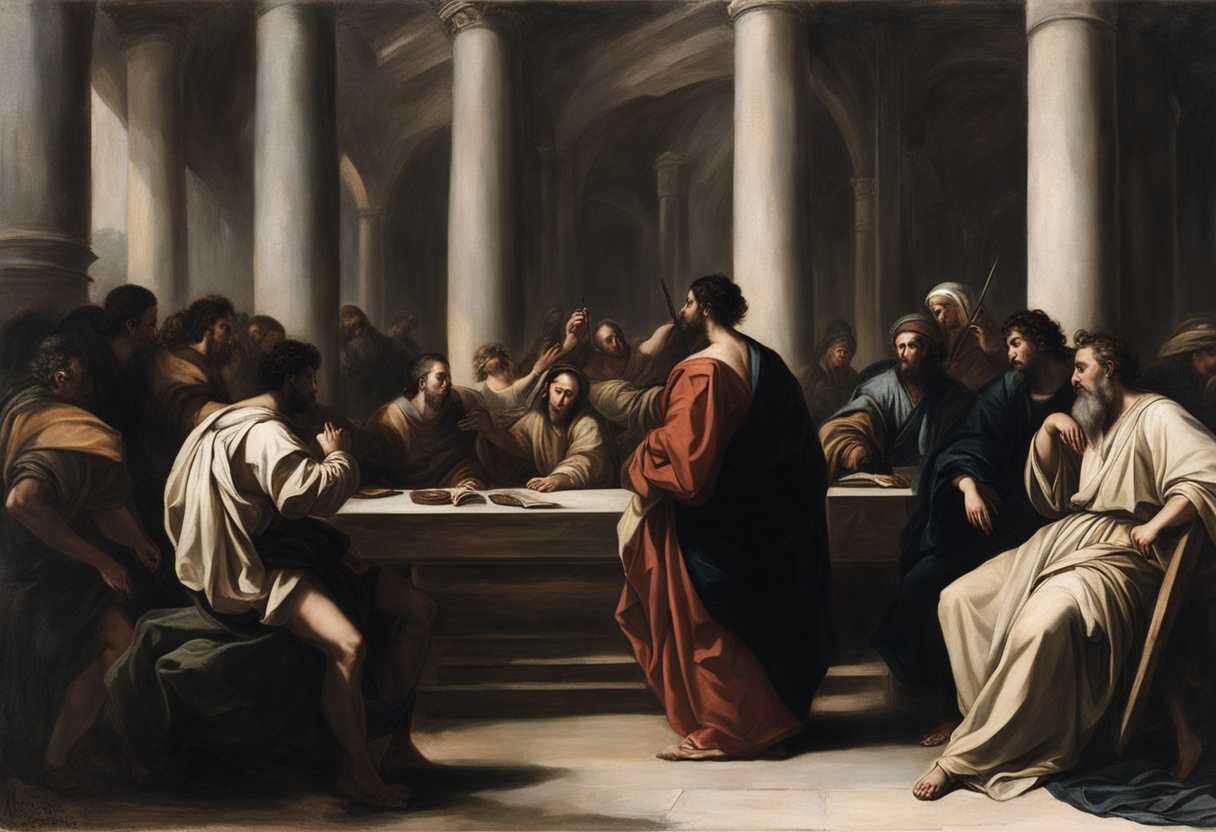
Setting the Scene for 2 Samuel 4:1-3
In 2 Samuel 4:1-3, the scene is set in the aftermath of the death of King Saul and his son Jonathan. The focus is on the two men, Baanah and Rechab, who were captains in Ish-bosheth’s army, Saul’s son who had been proclaimed king over Israel. The setting is a tense and uncertain time as the power dynamics in the kingdom are shifting following the deaths of Saul and Jonathan.
Baanah and Rechab find themselves in the city of Hebron, which is significant as it is where David has been anointed as king over Judah. The two men are likely there to assess the situation and possibly seek favor with David as the new emerging power. Hebron is a city in the hill country of Judah, known for its strategic location and historical significance.
The atmosphere in Hebron is charged with political intrigue and uncertainty as different factions vie for power and influence. Baanah and Rechab’s presence in Hebron sets the stage for the events that will unfold as David’s reign begins to take shape, and the fate of Ish-bosheth’s kingdom hangs in the balance.
What is 2 Samuel 4:1-3 about?
Political ambition can lead to violence and bloodshed, as seen in this verse. Ish-bosheth, the son of Saul, is murdered as part of a power struggle. The desire for control and dominance drives individuals to commit heinous acts, even against their own kin. It shows how power can corrupt and lead to moral decay, resulting in the ultimate betrayal of family and values.
Reflecting on this verse, we must consider the consequences of unchecked ambition and the lengths to which people are willing to go to satisfy their thirst for power. It prompts us to question the true cost of such actions and the impact they have on individuals and society as a whole. By examining this narrative, the reader is reminded of the importance of ethical leadership, empathy, and the dangers of placing personal gain above all else. Let us uphold principles of justice and integrity in all our endeavors by using this story as a cautionary tale and a call.
Understanding what 2 Samuel 4:1-3 really means
In the historical setting of 2 Samuel 4:1-3, we find ourselves amidst the aftermath of King Saul’s death and the ascension of David as the new king of Israel. The nation is in a state of flux, grappling with political instability and transition. Ish-bosheth, Saul’s son, and Abner, the commander of Saul’s army, emerge as central figures whose actions shape the unfolding events.
“When Ish-bosheth son of Saul heard that Abner had died in Hebron, he lost courage,” revealing the fragility of Ish-bosheth’s claim to the throne and his reliance on Abner’s support. This phrase underscores the transient nature of power and the vulnerability inherent in human leadership. The subsequent alarm that grips all of Israel reflects the widespread fear and uncertainty permeating the nation in the absence of stable leadership.
The introduction of Baanah and Recab, leaders of raiding bands, sets the stage for the moral complexities that will unfold. These characters will play a crucial role in the narrative, highlighting the intricate web of alliances and betrayals that characterize this period of Israel’s history. The passage intertwines themes of power, loyalty, and the consequences of human actions in a volatile political landscape.
Drawing parallels to other biblical passages such as 1 Samuel 31:1-6 and 2 Samuel 3:6-11 provides a broader context for understanding the power struggles and conflicts that shape the narrative. Psalm 146:3-4’s caution against placing ultimate trust in human leaders resonates with the themes of uncertainty and the limitations of earthly authority portrayed in 2 Samuel 4:1-3.
The relevance of this passage to contemporary readers lies in its exploration of leadership, trust, and courage. It prompts us to reflect on the nature of leadership and the risks of placing unwavering trust in fallible human beings. In times of personal or societal upheaval, the passage encourages us to find courage and hope beyond immediate circumstances, seeking stability and guidance from a higher source.
An anecdote illustrating a community facing a leadership crisis mirrors the Israelites’ experience, highlighting the importance of wise and steadfast leadership in times of uncertainty. Just as David brought stability to Israel, we are reminded that hope and guidance can emerge even in the midst of chaos and fear. Ultimately, the passage challenges us to reconsider where we place our trust and to draw strength and guidance from a higher power in the face of uncertainty. It calls us to remain resolute and courageous, trusting in a greater plan even when the present seems tumultuous.
How can we seek God’s justice in difficult situations?
First, we can seek God’s justice in difficult situations by understanding that ultimately, God is the ultimate judge. We can trust that He sees all things and knows the truth of every situation. Therefore, we can pray for His guidance and wisdom to navigate the challenges we face and to seek justice in alignment with His will.
We can also seek God’s justice by leaning on His promises of righteousness and fairness. We can advocate for truth and integrity, standing up for what is right and just, even when it may be difficult or unpopular. We can be a reflection of His character and seek to bring about justice in our own spheres of influence by upholding God’s principles of justice and mercy in our actions and decisions.
Additionally, we can seek God’s justice in difficult situations by relying on His strength and grace. Through prayer, we can ask for the courage and perseverance to pursue justice with humility and love, even in the face of adversity. We can find peace by trusting in God’s sovereignty and committing our ways to Him, knowing that He will ultimately bring about justice according to His perfect timing and purposes.
Application
Let’s be lights of forgiveness in this world by embracing grace towards those who have hurt us. Just like in our work and family settings, extending compassion can mend broken relationships and bring healing. Are you ready to show mercy and grace, reflecting the unconditional love we receive from God?

Reverend Michael Johnson is an experienced Church Minister with a profound expertise in spirituality and guidance. With a serene presence and a compassionate heart, he has faithfully served his congregation for over 20 years, leading them on a spiritual journey towards inner peace and enlightenment. Reverend Johnson’s extensive knowledge of religious philosophies and profound understanding of human nature have made him a trusted confidant and mentor to many, as he seamlessly weaves his profound wisdom into life teachings. Reverend Johnson’s calming demeanor and empathetic nature continue to uplift and heal souls, nurturing a sense of unity and tranquility within his community.