
2 Samuel 8:18 is about the establishment of David’s administrative and military structure, highlighting the roles of various officials in his kingdom, particularly the influence of Zadok and Abiathar as priests, symbolizing the integration of religious leadership within the governance of Israel.
18 and Benaiah the son of Jehoiada was over the Cherethites and the Pelethites, and David’s sons were priests.
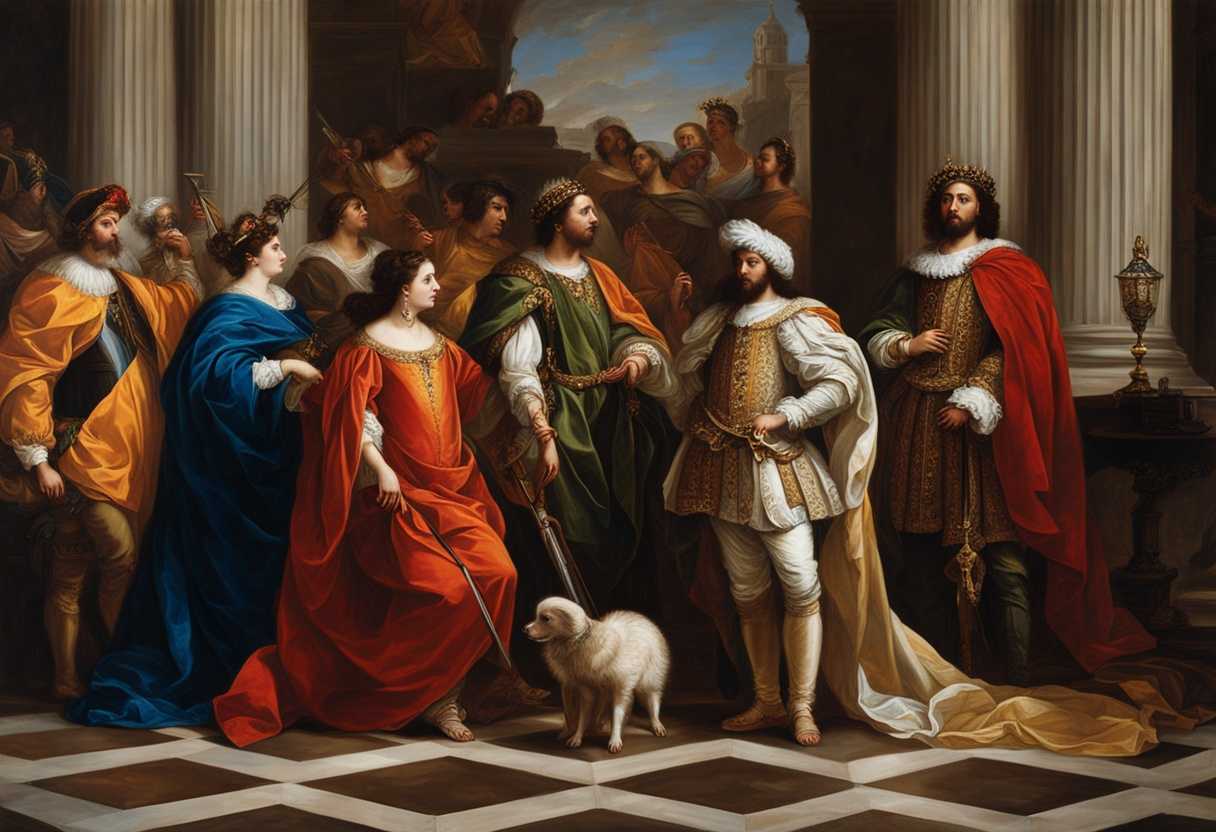
Setting the Scene for 2 Samuel 8:18
In the heart of ancient Israel, the air was thick with the scent of victory and the sounds of celebration. King David, now firmly established on the throne after years of conflict and struggle, stood at the forefront of a gathering that marked a significant moment in his reign. The sun was beginning to set, casting a golden hue over the landscape, illuminating the faces of his loyal warriors and the leaders of his newly unified kingdom. Among them were Joab, his fierce and loyal commander, and Abishai, Joab’s brother, both of whom had fought valiantly alongside David in numerous battles. The atmosphere was electric, filled with the camaraderie of men who had shared the trials of war and the joy of triumph.
As David surveyed the scene, he felt a swell of gratitude for those who had stood by him through thick and thin. The recent military campaigns had expanded Israel’s borders and solidified its power, and David was keenly aware that this success was not solely his own but a collective achievement of his devoted followers. The soldiers, clad in their battle-worn armor, exchanged stories of their exploits, their laughter mingling with the sounds of drums and flutes played by musicians who had come to honor the king. The encampment was alive with the flickering light of torches, casting shadows that danced across the faces of the men who had fought for their homeland.
In this moment of unity and strength, David took a moment to reflect on the significance of his leadership and the responsibilities that came with it. He understood that the success of his reign depended not just on military might but also on the wisdom to govern justly and the ability to inspire loyalty among his people. As he prepared to address his men, he felt the weight of history upon him, knowing that he was not just a king but a shepherd to his people, tasked with guiding them through the challenges that lay ahead. The scene was set for a new chapter in Israel’s history, one that would be defined by David’s vision and the unwavering support of those who stood beside him.
What is 2 Samuel 8:18 about?
Let’s delve into this intriguing verse together. David’s sons, particularly their appointment as priests, play significant roles and responsibilities that are highlighted in 2 Samuel 8:18. This is notable because within the context of Ancient Israel, the positions of leadership, especially spiritual leadership, were not only about religious duties but also about guiding the moral and ethical compass of the nation. Have you ever pondered why David chose to involve his sons in this priestly role? What message might this send to the people of Israel about the importance of leadership and faith? Their calling intertwines their responsibilities as both leaders in government as sons of the king and spiritual leaders as priests, and we must appreciate this dual nature as we reflect on the passage. This duality suggests that leadership in a faith-based community requires a commitment to both physical and spiritual well-being. Doesn’t this resonate with our own experiences of finding balance in various roles we take on in life? It challenges us to consider how our own leadership or influence in different spheres—be it at home, work, or community—reflects our values and faith. Are we serving those we lead with integrity and righteousness, drawing from our spiritual teachings, just as David desired from his sons?
Furthermore, this passage encourages us to think about the legacy we are leaving behind. David’s decision to elevate his sons to such critical roles may indicate his desire to ensure that the future of Israel remained rooted in strong moral principles. Are we mindful of how our actions today influence future generations? David’s example beckons us to strive for unity and purpose in our own leadership journeys in a world where both spiritual and secular leadership can often appear fragmented or contentious. It makes us wonder: How can we embody hope and guidance in our roles, just as David sought from his sons?
Understanding what 2 Samuel 8:18 really means
In 2 Samuel 8:18, we encounter a significant moment in the narrative of King David’s reign, where it is noted that “David’s sons were priests.” This statement is not merely a historical footnote; it encapsulates the profound intertwining of political authority and spiritual leadership in ancient Israel. Understanding this context is essential for grasping the implications of their dual roles. David’s sons were not only heirs to the throne but also mediators between God and the people, highlighting the expectation that leaders should embody both governance and righteousness.
The phrase “David’s sons were priests” carries weighty implications. It suggests that leadership in Israel was not solely about wielding power but also about serving the spiritual needs of the community. This duality emphasizes that true leadership is rooted in faith and moral integrity. The role of a priest, as defined in this context, is one of guidance and responsibility, reminding us that leaders are called to shepherd their communities in both practical and spiritual matters. How often do we see this principle reflected in our own leaders today?
To further understand this verse, we can look at related biblical passages. For instance, Exodus 28:1 speaks to the sanctity of the priestly role, underscoring the idea that those who lead must be set apart for God’s service. Similarly, 1 Peter 2:9 refers to believers as a “royal priesthood,” suggesting that all Christians are called to blend leadership with spiritual service. This connection reinforces the notion that the responsibilities of leadership extend beyond mere administration; they encompass a sacred calling to serve others in alignment with divine principles.
In our contemporary society, the integration of faith and leadership remains as relevant as ever. Leaders across various sectors—politics, business, and community organizations—are often faced with the challenge of upholding values that reflect their beliefs. The example of David’s sons serves as a reminder that our actions should align with our faith. Spiritual integrity is not just an ideal; it is essential for effective leadership. How can we ensure that our own leadership reflects our values and beliefs?
Consider the story of a local community leader who, despite facing immense pressure to compromise on ethical standards, chooses to uphold integrity and transparency. This leader openly shares their faith, inspiring others to act with honesty and compassion. Just as David’s sons were called to serve both as leaders and priests, this modern leader exemplifies how faith can guide decision-making and positively influence a community. What can we learn from such examples in our own lives?
In conclusion, 2 Samuel 8:18 serves as a powerful reminder of the interconnectedness of leadership and spirituality. It challenges us to reflect on our roles—whether in our families, workplaces, or communities—and to consider how we can embody the principles of faith in our leadership. By doing so, we honor the legacy of those who have gone before us, like David and his sons, and contribute to a more just and compassionate world. How might we take steps today to ensure that our leadership reflects the values we hold dear?
How can I serve others with my gifts?
Serving others with your gifts involves recognizing the specific talents and abilities you possess and using them to meet the needs of those around you. Whether your gifts lie in leadership, compassion, teaching, or any other area, the essence of service is to redirect your strengths towards uplifting and supporting others. Fulfill your purpose and foster a sense of community and connection by doing so. Consider how you can address the challenges or obstacles others are facing in your interactions using your unique abilities. This might involve volunteering your time, sharing your knowledge, or offering emotional or practical support. The impact of serving others can create a ripple effect, inspiring those you help to also contribute their skills, thereby fostering an environment of mutual support and growth. Serving others with your gifts ultimately involves selflessness and commitment to the greater good. It’s about recognizing that your abilities can be a source of hope and strength for others, and actively seeking opportunities to share them. This not only enriches the lives of those you serve but also brings fulfillment and joy to your own life, creating a harmonious balance between giving and receiving.
Application
Imagine your workplace as a thriving garden and your family as the roots that nourish it. Just as David’s mighty men lifted each other up, you have the power to cultivate greatness by serving those around you. Whether it’s offering a helping hand to a colleague, mentoring someone at home, or volunteering in your community, every act of kindness counts. Now is the time to step up and make a difference in someone’s life. Are you prepared to become the force that transforms lives and honors your calling?

Reverend Michael Johnson is an experienced Church Minister with a profound expertise in spirituality and guidance. With a serene presence and a compassionate heart, he has faithfully served his congregation for over 20 years, leading them on a spiritual journey towards inner peace and enlightenment. Reverend Johnson’s extensive knowledge of religious philosophies and profound understanding of human nature have made him a trusted confidant and mentor to many, as he seamlessly weaves his profound wisdom into life teachings. Reverend Johnson’s calming demeanor and empathetic nature continue to uplift and heal souls, nurturing a sense of unity and tranquility within his community.