
2 Chronicles 36:19 is about the Jerusalem temple being destroyed by the Babylonians as a consequence of the people’s disobedience and failure to follow God’s commands.
19 And they burned the house of God and broke down the wall of Jerusalem and burned all its palaces with fire and destroyed all its precious vessels.
Setting the Scene for 2 Chronicles 36:19
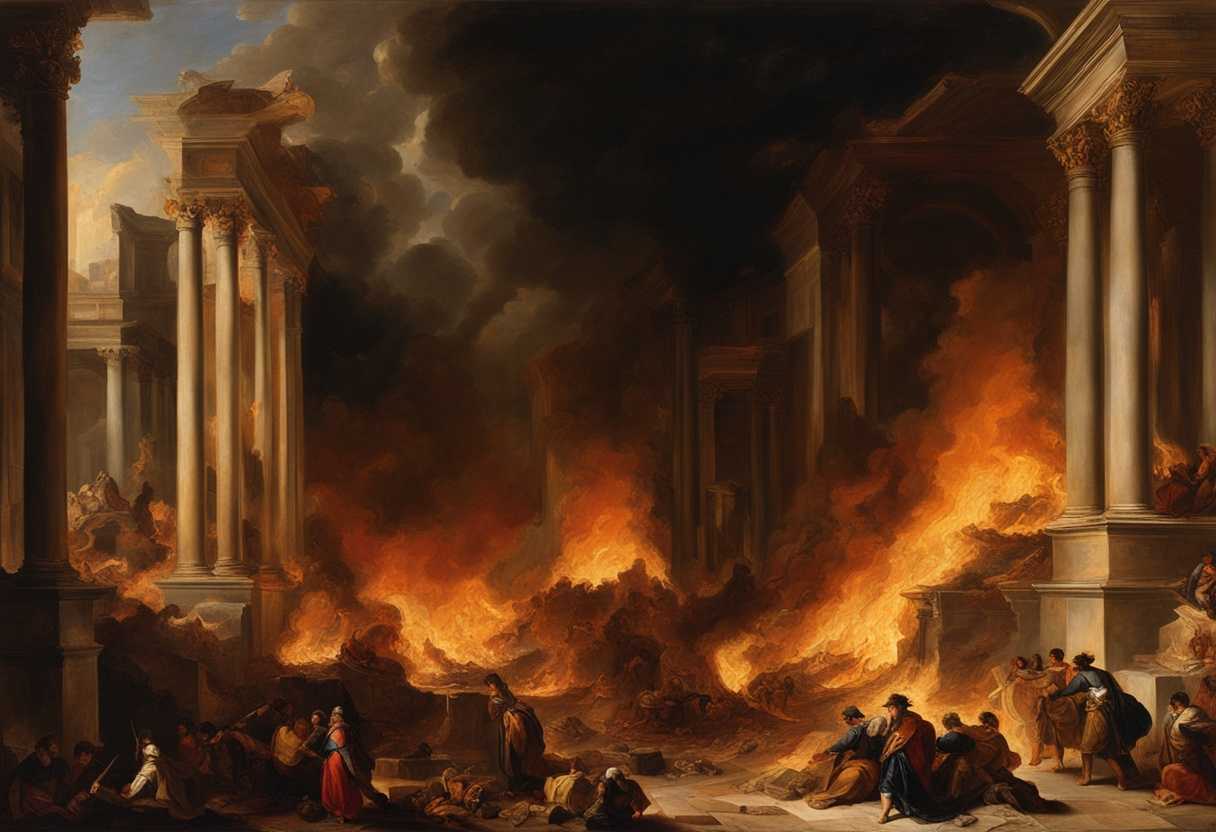
The scene in 2 Chronicles 36:19 depicts the destruction of Jerusalem by the Babylonians. The once magnificent city is now in ruins, with the temple of the Lord being destroyed and the walls of the city broken down. The people of Judah who were not killed in the siege are now being taken into captivity by the Babylonians.
In the midst of this chaos, we see King Nebuchadnezzar’s army carrying out his orders to destroy the city. The people of Judah, including King Zedekiah, are being led away in chains, their faces filled with despair and sorrow. The once bustling streets of Jerusalem are now filled with the sounds of destruction and the cries of the people.
As the smoke rises from the burning city, the scene is one of devastation and loss. The once proud city of Jerusalem now lies in ruins, a stark reminder of the consequences of turning away from the Lord. The people of Judah are now facing exile in Babylon, their homeland lost and their future uncertain.
What is 2 Chronicles 36:19 about?
The consequence of the people of Jerusalem’s disobedience and sinfulness is seen in this verse. The destruction of Jerusalem by fire and the captivity of its people to Babylon were the direct result of their actions. It serves as a powerful reminder of the importance of living according to God’s will and commandments.
Reflect on this verse: What does it teach us about the consequences of our actions? How should we strive to live our lives in accordance with God’s teachings to avoid similar punishments? Let this verse inspire you to reflect on your own actions and make conscious choices that align with faith, righteousness, and obedience. Let it serve as a cautionary tale and a call to repentance, reminding us of the importance of seeking forgiveness and striving to walk the path of righteousness.
Understanding what 2 Chronicles 36:19 really means
The verse 2 Chronicles 36:19 encapsulates a pivotal moment in Israel’s history, depicting the tragic fall of Jerusalem and the destruction of the Temple by the Babylonians. It serves as a stark reminder of the consequences that befall a nation when it strays from its moral and spiritual foundations. The burning of the house of God, the king’s house, and all the houses of Jerusalem, as described in Jeremiah 52:13, paints a picture of utter devastation and loss. The Lord’s rejection of His altar and abandonment of His sanctuary, as lamented in Lamentations 2:7, further emphasizes the severity of the situation.
In Daniel 9:11-12, we see Daniel acknowledging the calamity that has befallen Jerusalem as a fulfillment of God’s warnings. This narrative is not just a historical account but a timeless lesson on the repercussions of forsaking righteousness. It prompts us to reflect on the consequences of our actions, both individually and collectively. Just as Jerusalem faced destruction for turning away from God, individuals and societies today grapple with the fallout of their choices, be it environmental degradation, social injustices, or personal moral failings.
Consider a community that neglects its environment, leading to pollution and health crises. This scenario mirrors the destruction of Jerusalem, illustrating how neglect and poor decisions can culminate in dire outcomes. However, amidst the desolation, there is a glimmer of hope. The Bible speaks of restoration and renewal, offering a promise of a future and a hope, as articulated in Jeremiah 29:11. This message of redemption underscores the possibility of healing and rebuilding, even in the aftermath of devastation.
The phrases used in 2 Chronicles 36:19 carry profound symbolism. The burning of the house of God signifies not just physical destruction but the loss of a sacred space central to worship and community cohesion. The breaking down of Jerusalem’s wall symbolizes the collapse of protection and security, leaving the city vulnerable to further harm. The destruction of palaces with fire represents the shattering of societal structures and governance, plunging the nation into chaos. The loss of precious vessels, integral to worship and daily life, symbolizes the erosion of cultural and religious heritage, further deepening the sense of desolation.
As we contemplate this verse, we are prompted to evaluate our spiritual, moral, and communal responsibilities. It urges us to uphold these principles to avert similar devastation in our lives and communities. The narrative of Jerusalem’s fall serves as a cautionary tale, reminding us of the enduring relevance of moral rectitude and the enduring consequences of straying from it.
What lessons can we learn from God’s discipline?
From this verse, we can learn that God’s discipline is a form of correction and punishment for disobedience. When we continually ignore God’s commands and live in rebellion against Him, we should expect consequences for our actions. God’s discipline serves as a reminder that He is a just and righteous God who holds His people accountable for their actions.
Another lesson we can learn from this verse is the importance of humility and repentance. When God disciplines us, it is an opportunity for us to reflect on our ways, acknowledge our sins, and turn back to Him in humble repentance. Through this process, we can experience God’s forgiveness and restoration as we seek His mercy and grace. God ultimately expresses His love for us through His discipline. God disciplines us to lead us back to the right path and to strengthen our faith, just as a loving parent disciplines their child for their own good. It is a reminder of His faithfulness and His desire for us to walk in obedience and holiness.
Application
Consider the impact of straying from the path of goodness and the value of remaining loyal to God’s guidance. Let these words be a cautionary tale of the chaos that can arise when we lose sight of what is right. Will you pledge to hold fast to your beliefs and follow His wisdom unwaveringly?

Reverend Michael Johnson is an experienced Church Minister with a profound expertise in spirituality and guidance. With a serene presence and a compassionate heart, he has faithfully served his congregation for over 20 years, leading them on a spiritual journey towards inner peace and enlightenment. Reverend Johnson’s extensive knowledge of religious philosophies and profound understanding of human nature have made him a trusted confidant and mentor to many, as he seamlessly weaves his profound wisdom into life teachings. Reverend Johnson’s calming demeanor and empathetic nature continue to uplift and heal souls, nurturing a sense of unity and tranquility within his community.