
Jeremiah 52:13 is about the destruction of Jerusalem, highlighting the severity of God’s judgment as the Babylonian forces burn the temple and the city, symbolizing the loss of divine favor and the consequences of disobedience to God’s commandments.
13 And he burned the house of the Lord, and the king’s house and all the houses of Jerusalem; every great house he burned down.
Setting the Scene for Jeremiah 52:13
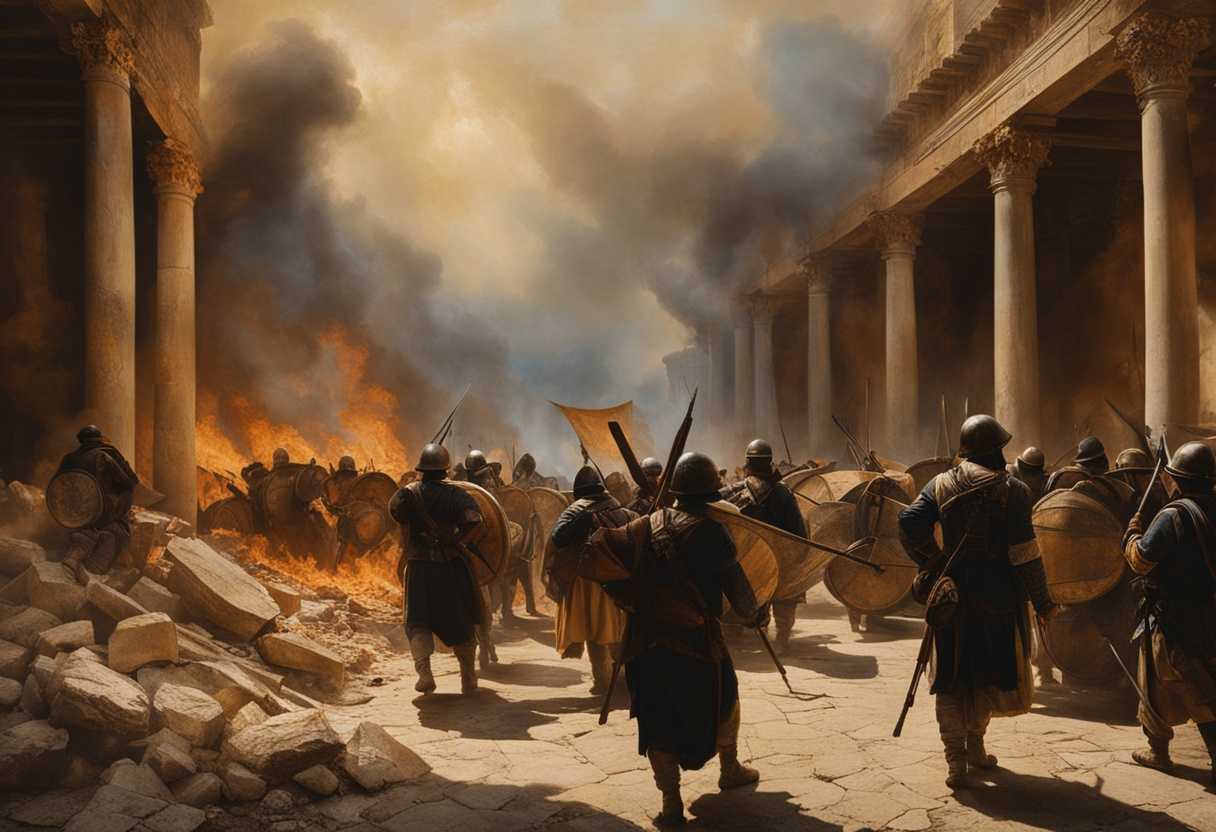
The scene unfolds in the heart of Jerusalem, a city that has been the center of Jewish life and worship for centuries. The air is thick with tension and despair as the once-mighty city lies in ruins, its walls breached and its people scattered. The sun hangs low in the sky, casting long shadows over the charred remains of homes and the smoldering ruins of the temple, a place that had been the dwelling of God among His people. Among the rubble, the remnants of a once-thriving community are evident, with broken pottery and torn banners fluttering in the wind, whispering tales of a glorious past now overshadowed by devastation.
In the midst of this desolation stands Nebuchadnezzar, the king of Babylon, a figure of authority and conquest. He has come to Jerusalem with his army, having laid siege to the city and ultimately capturing it. His presence is imposing, a stark reminder of the power that has crushed the hopes of the Israelites. The king’s soldiers, clad in armor and wielding weapons, patrol the streets, ensuring that no remnants of resistance remain. Among them is the commander of the guard, tasked with overseeing the destruction and ensuring that the city is thoroughly dismantled. The air is filled with the sounds of clanging metal and the distant cries of the defeated, echoing the sorrow that permeates the atmosphere.
As the sun sets, casting an orange glow over the ruins, the commander approaches the temple, now a shadow of its former glory. The sacred space, once filled with the praises of worshippers, is now a site of desecration. The commander, with a heavy heart, prepares to set fire to the temple, a final act of conquest that symbolizes the complete and utter defeat of the people of Judah. The flames begin to lick at the stone walls, consuming the remnants of a faith that had once been unshakeable. In this moment, the weight of history hangs heavily in the air, as the people of Jerusalem are left to grapple with the reality of their loss, their identity, and the uncertain future that lies ahead.
What is Jeremiah 52:13 about?
The vivid imagery of Jerusalem’s temple engulfed in flames in Jeremiah 52:13 carries profound significance. This moment does not merely represent the physical destruction of a structure but rather symbolizes the culmination of Israel’s journey—a stark representation of divine judgment and the consequences of prolonged disobedience. Have you ever considered how a building, once filled with sacred rituals and profound meaning, could become the focal point of such devastation? The temple was more than walls and stones; it was the very heart of the community, a place where heaven met earth, and where the people of Israel would seek connection with the divine.
With the temple’s destruction, we witness an end of an era, a turning point that signals a profound shift in the relationship between God and His people. This event serves as a sobering reminder that even the most sacred spaces can fall victim to the consequences of a collective turning away from faithfulness. How does this resonate in our own lives? Are there aspects of our spiritual journeys where we might also witness the smoldering remnants of what once was, urging us to reflect on our own choices? The heartbreak over Jerusalem’s temple is not simply an ancient story but also a call to examine the foundations of our beliefs and the places we hold sacred in our lives. Let us consider how we can cultivate resilience and adherence to our values to help our “temples,” both personal and communal, stand firm in the face of challenges.
Understanding what Jeremiah 52:13 really means
Jeremiah 52:13 states, “He burned the house of the Lord, and the king’s house; and all the houses of Jerusalem; and every great man’s house burned he with fire.” This verse encapsulates a pivotal moment in biblical history—the destruction of Jerusalem and the temple. Understanding this context is crucial. The temple was not merely a building; it was the very dwelling place of God among His people. Its destruction signifies a profound loss, both physically and spiritually, marking the culmination of Israel’s disobedience to God.
The themes of judgment and loss resonate deeply throughout this chapter. The burning of the temple represents the ultimate consequence of turning away from God. It serves as a stark reminder that disobedience has repercussions. Have you ever considered how our actions can lead to significant consequences in our lives? Just as the Israelites faced the fallout of their choices, we too must reflect on our paths and the potential outcomes of our decisions.
In parallel, Lamentations 1:1-2 captures the sorrow and desolation that followed this event. The emotional weight of loss is palpable in these verses, illustrating the spiritual void left in the wake of destruction. Similarly, Ezekiel 10:18-19 depicts the departure of God’s glory from the temple, emphasizing the seriousness of Israel’s sin. This separation from God is a theme that echoes through the ages. How often do we find ourselves feeling distant from God due to our own choices?
Yet, amidst this narrative of despair, there is a glimmer of hope. Romans 8:28 reassures us that God works all things for good for those who love Him. This New Testament promise reminds us that even in the face of destruction, God can bring about restoration. The story of Jeremiah is not just one of loss; it is also a testament to the possibility of renewal. Can we hold onto that hope in our own lives when faced with challenges?
Consider the analogy of a community recovering from a natural disaster. When a hurricane devastates a town, the immediate aftermath is filled with despair. However, as people come together to rebuild, they demonstrate resilience and hope. This mirrors the journey of the Israelites; though they faced destruction, they were eventually restored. In our own lives, we can find strength in community and faith, even when circumstances seem dire.
The phrases “the temple was burned” and “the walls were broken down” carry significant weight. They symbolize not only physical destruction but also spiritual desolation. When we stray from God, we risk losing our spiritual protection and becoming vulnerable to life’s trials. Reflecting on these phrases invites us to examine our own lives. Are there areas where we have allowed disobedience to take root, leaving us exposed?
In conclusion, Jeremiah 52:13 serves as a powerful reminder of the consequences of turning away from God. Yet, it also points to the hope of restoration. As we reflect on this verse, let us remember that even in our darkest moments, God is present, ready to guide us back to Him and rebuild our lives. How can we actively seek that restoration today?
What do we learn from our mistakes and losses?
From our mistakes and losses, we learn valuable lessons about humility and resilience. Each failure serves as a reminder of our human limitations and the unpredictability of life. These experiences teach us to reassess our decisions, encouraging critical thinking and better judgment moving forward. Reflecting on our errors can help us identify patterns in our behavior that may have contributed to negative outcomes, ultimately fostering personal growth and development.
Additionally, the weight of our losses often instills a greater appreciation for what we still possess. It’s through the experience of losing something significant that we gain clarity on our values and priorities. This perspective shift can lead to deeper connections with others, as we become more empathetic and understanding of their struggles. Such insights foster a sense of community and responsibility, prompting us to support those around us who may also be facing adversities.
Finally, mistakes and losses cultivate perseverance. They challenge us to rise above our circumstances and strive for improvement. Experiences of overcoming setbacks not only bolster our determination but also equip us with the tools to handle future challenges more effectively. Adversities become stepping stones on the path to success, reinforcing the idea that while setbacks are unavoidable, they can lead to greater achievements and self-discovery.
Application
Think of your life like a bustling city—your choices shape the skyline. Just like rebellion can lead to chaos and destruction, so can straying from what’s right steer you off course. Take a moment to look at your daily actions—are they building up your family and work life, or are they creating cracks in the foundation? Choose to build a life of integrity and goodness, and inspire those around you to do the same. Are you ready to uplift your community and stand firm for what truly matters?

Reverend Michael Johnson is an experienced Church Minister with a profound expertise in spirituality and guidance. With a serene presence and a compassionate heart, he has faithfully served his congregation for over 20 years, leading them on a spiritual journey towards inner peace and enlightenment. Reverend Johnson’s extensive knowledge of religious philosophies and profound understanding of human nature have made him a trusted confidant and mentor to many, as he seamlessly weaves his profound wisdom into life teachings. Reverend Johnson’s calming demeanor and empathetic nature continue to uplift and heal souls, nurturing a sense of unity and tranquility within his community.