
2 Chronicles 7:1-16 is about King Solomon completing the dedication of the temple and receiving a message from God promising blessings for obedience and consequences for disobedience.
1 As soon as Solomon finished his prayer, fire came down from heaven and consumed the burnt offering and the sacrifices, and the glory of the Lord filled the temple.
2 And the priests could not enter the house of the Lord, because the glory of the Lord filled the Lord’s house.
3 When all the people of Israel saw the fire come down and the glory of the Lord on the temple, they bowed down with their faces to the ground on the pavement and worshiped and gave thanks to the Lord, saying, “For he is good, for his steadfast love endures forever.”
4 Then the king and all the people offered sacrifices before the Lord.
5 King Solomon offered as a sacrifice 22,000 oxen and 120,000 sheep. So the king and all the people dedicated the house of God.
6 The priests stood at their posts; the Levites also, with the instruments for music to the Lord that King David had made for giving thanks to the Lord—for his steadfast love endures forever—whenever David offered praises by their ministry; opposite them the priests sounded trumpets, and all Israel stood.
7 Then Solomon consecrated the middle of the court that was before the house of the Lord, for there he offered the burnt offering and the fat of the peace offerings, because the bronze altar Solomon had made could not hold the burnt offering and the grain offering and the fat.
8 At that time Solomon held the feast for seven days, and all Israel with him, a very great assembly, from Lebo-hamath to the Brook of Egypt.
9 And on the eighth day they held a solemn assembly, for they had kept the dedication of the altar seven days and the feast seven days.
10 On the twenty-third day of the seventh month he sent the people away to their homes, joyful and glad of heart for the prosperity that the Lord had granted to David and to Solomon and to Israel his people.
11 Thus Solomon finished the house of the Lord and the king’s house. All that Solomon had planned to do in the house of the Lord and in his own house he successfully accomplished.
12 Then the Lord appeared to Solomon in the night and said to him: “I have heard your prayer and have chosen this place for myself as a house of sacrifice.
22 And they shall answer, “Because they have forsaken the Lord, the God of their fathers, who brought them out of the land of Egypt, and laid hold on other gods and worshiped them and served them. Therefore he has brought all this disaster on them.”
14 if my people who are called by my name humble themselves, and pray and seek my face and turn from their wicked ways, then I will hear from heaven and will forgive their sin and heal their land.
15 Now my eyes will be open and my ears attentive to the prayer that is made in this place.
16 For now I have chosen and consecrated this house that my name may be there forever. My eyes and my heart will be there for all time.
Setting the Scene for 2 Chronicles 7:1-16
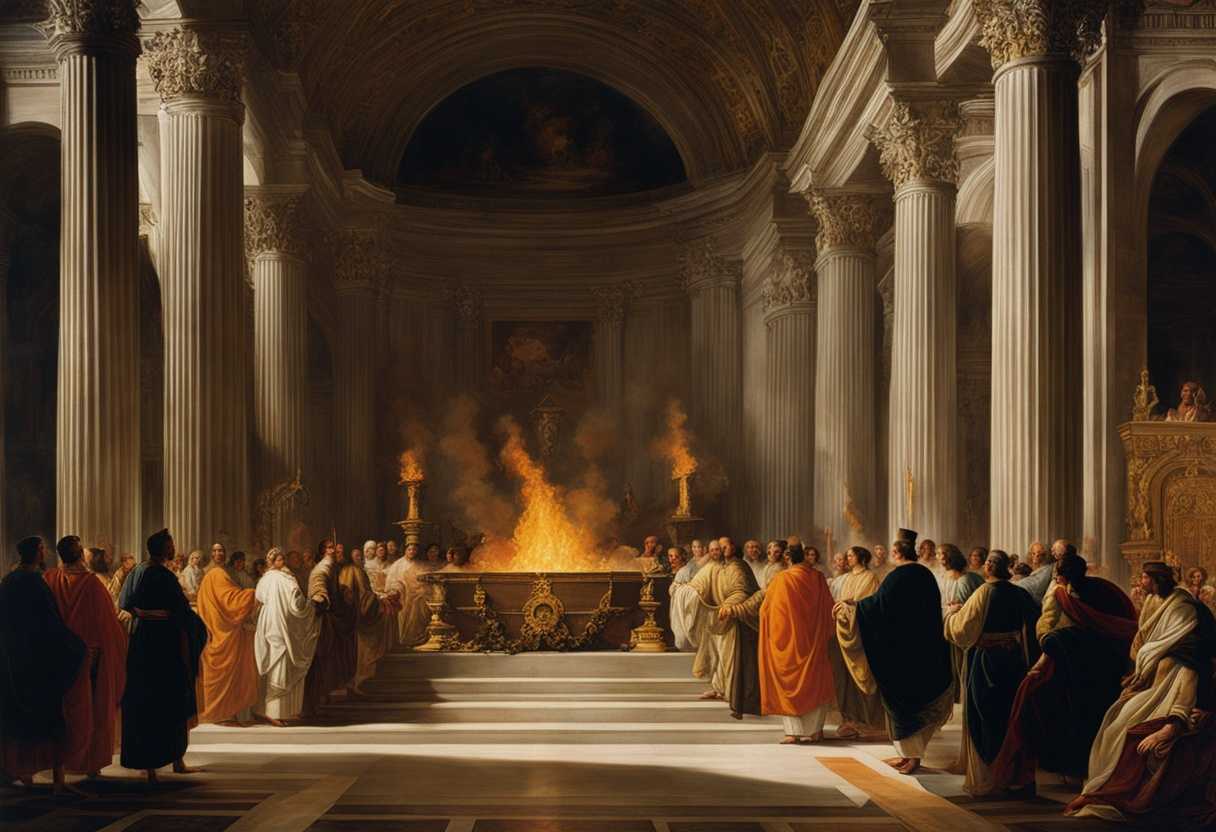
The scene in 2 Chronicles 7:1-16 takes place in Jerusalem, specifically at the newly built temple of the Lord. King Solomon has just finished overseeing the construction of this magnificent structure, which is now ready to be dedicated to God. The temple is a grand and awe-inspiring sight, with its intricate carvings, gold decorations, and massive pillars.
In attendance are King Solomon himself, along with the elders, leaders, and heads of tribes of Israel. The priests and Levites are also present, dressed in their sacred garments and ready to perform the necessary rituals. The atmosphere is one of reverence and anticipation as the people gather to witness the consecration of this holy place.
As the ceremony begins, sacrifices are offered, incense fills the air, and the sound of music and singing reverberates throughout the temple. Suddenly, the presence of the Lord descends in the form of a cloud, filling the temple with His glory. The people fall to their knees in worship and awe, recognizing the significance of this moment as God’s divine approval and acceptance of their efforts. It is a powerful and moving scene, as the entire assembly is overwhelmed by the tangible presence of the Almighty in their midst.
What is 2 Chronicles 7:1-16 about?
This verse conveys a powerful message about the presence and glory of God in the temple. It signifies a divine assurance to those who are obedient and faithful, promising blessings, guidance, and protection. The imagery of God’s glory filling the temple indicates a sense of awe and reverence, emphasizing the holiness and majesty of the divine presence. The verse also serves as a reminder of the consequences of disobedience. It warns us that straying from God’s will can lead to negative outcomes and separation from His blessings. This duality of blessings for obedience and consequences for disobedience highlights the importance of living a righteous and God-centered life. It prompts us to reflect on our actions and choices, urging us to align ourselves with God’s will to experience His abundant blessings and favor. Questions may arise within us as we ponder on this verse: How can we ensure that our actions are in line with God’s will? What steps can we take to cultivate obedience and faithfulness in our lives? Contemplating these teachings invites us to deepen our relationship with God, seek His guidance in all aspects of our lives, and strive to walk in obedience to His divine principles.
Understanding what 2 Chronicles 7:1-16 really means
The passage in 2 Chronicles 7:1-16 captures a pivotal moment in Israel’s history – the dedication of Solomon’s Temple and God’s response to Solomon’s prayer. As we delve into this passage, we encounter key themes such as divine presence, prayer, repentance, and God’s covenant with His people. The vivid imagery of fire descending from heaven to consume the sacrifices signifies God’s acceptance and presence among His people. The filling of the temple with the glory of the Lord symbolizes His approval and His desire to dwell in the midst of His chosen ones, echoing the continuity of God’s relationship with His people as seen in Exodus 40:34-35.
Moving forward, the passage unfolds to showcase the communal worship and dedication displayed by King Solomon and the people through offerings and sacrifices. The orderly worship led by the priests and Levites with musical instruments underscores the importance of reverence and praise in honoring God. This aligns with the psalmist’s exhortation in Psalm 150 to praise God with music and instruments, emphasizing the beauty of worship through various expressions.
The celebration and joy depicted in the consecration of the courtyard and the offering of a thousand burnt sacrifices reflect the magnitude of devotion and the completion of a sacred act. The assembly held on the eighth day signifies perfection and fulfillment, mirroring the sacred assembly during the Feast of Tabernacles as outlined in Leviticus 23:36. God’s response to Solomon’s prayer reaffirms His faithfulness and covenant with His people. The call to humility, prayer, repentance, and turning from wicked ways resonates with believers today, reminding us of the timeless need to seek God’s face and align our lives with His will.
The passage’s relevance today lies in its portrayal of divine presence, the significance of prayer and repentance, and God’s unwavering faithfulness. Just as God filled the temple with His glory, He desires to dwell within us through the Holy Spirit, as stated in 1 Corinthians 3:16. The call to humble ourselves, pray, and seek God’s face serves as a timeless reminder of the importance of turning to God in times of need. God’s promise to hear, forgive, and heal offers hope and assurance to believers, echoing the assurance in 1 John 1:9 that God is faithful to forgive and purify us when we confess our sins.
In a modern context, envision a community facing a severe drought coming together in humility, prayer, and seeking God’s intervention. Witnessing the miraculous restoration of the land through rain mirrors the promise in this passage, illustrating God’s faithfulness and response to genuine repentance in contemporary settings. The meaningful phrases within the passage, such as humbling ourselves, seeking God’s face, turning from wicked ways, God hearing from heaven, and forgiving sin to heal the land, encapsulate profound truths about our relationship with God and His redemptive work in our lives.
In conclusion, 2 Chronicles 7:1-16 continues to offer timeless lessons for believers today, urging us to seek God’s presence, engage in sincere worship, and trust in His promises. The historical and spiritual significance of this passage resonates across generations, inviting us to reflect on our own commitment to God, the power of prayer, and the transformative nature of His forgiveness and restoration.
How can we ensure our prayers are heard?
To ensure our prayers are heard, we should humble ourselves before God and seek His face. This means approaching prayer with sincerity, reverence, and a genuine desire to connect with Him. It involves acknowledging our dependence on God and recognizing His sovereignty over our lives. We demonstrate a posture of submission and surrender by humbling ourselves, allowing God to work in and through us.
Additionally, we should turn from our wicked ways. This requires confessing and repenting of our sins, seeking forgiveness, and making a conscious effort to live in a way that is pleasing to God. When we actively work to remove sin from our lives, we create space for God to hear our prayers and respond to them according to His will. Turning from wicked ways demonstrates a commitment to living in accordance with God’s commands and aligning our hearts with His purposes. We ultimately set the stage for a deeper, more intimate relationship with Him when we humble ourselves, seek God’s face, and turn from our wicked ways. We position ourselves to have our prayers heard by God by following these principles, confident that He is faithful to respond in accordance with His perfect timing and plan.
Application
Imagine your life as a busy city, full of work and family demands. In this city, there’s a power source—God—waiting for you to tap into it. The promise is clear: humble yourself, seek God genuinely, and your life will find a renewed energy. Take a moment each day to connect with this power through prayer and turning away from what’s holding you back. Will you flip the switch and let God’s power light up your life?

Reverend Michael Johnson is an experienced Church Minister with a profound expertise in spirituality and guidance. With a serene presence and a compassionate heart, he has faithfully served his congregation for over 20 years, leading them on a spiritual journey towards inner peace and enlightenment. Reverend Johnson’s extensive knowledge of religious philosophies and profound understanding of human nature have made him a trusted confidant and mentor to many, as he seamlessly weaves his profound wisdom into life teachings. Reverend Johnson’s calming demeanor and empathetic nature continue to uplift and heal souls, nurturing a sense of unity and tranquility within his community.