
Leviticus 23:36 is about the importance of days of rest and holy convocations for the Israelites as they gather to offer sacrifices and celebrate their relationship with God.
36 For seven days you shall present food offerings to the Lord. On the eighth day you shall hold a holy convocation and present a food offering to the Lord. It is a solemn assembly; you shall not do any ordinary work.
Setting the Scene for Leviticus 23:36
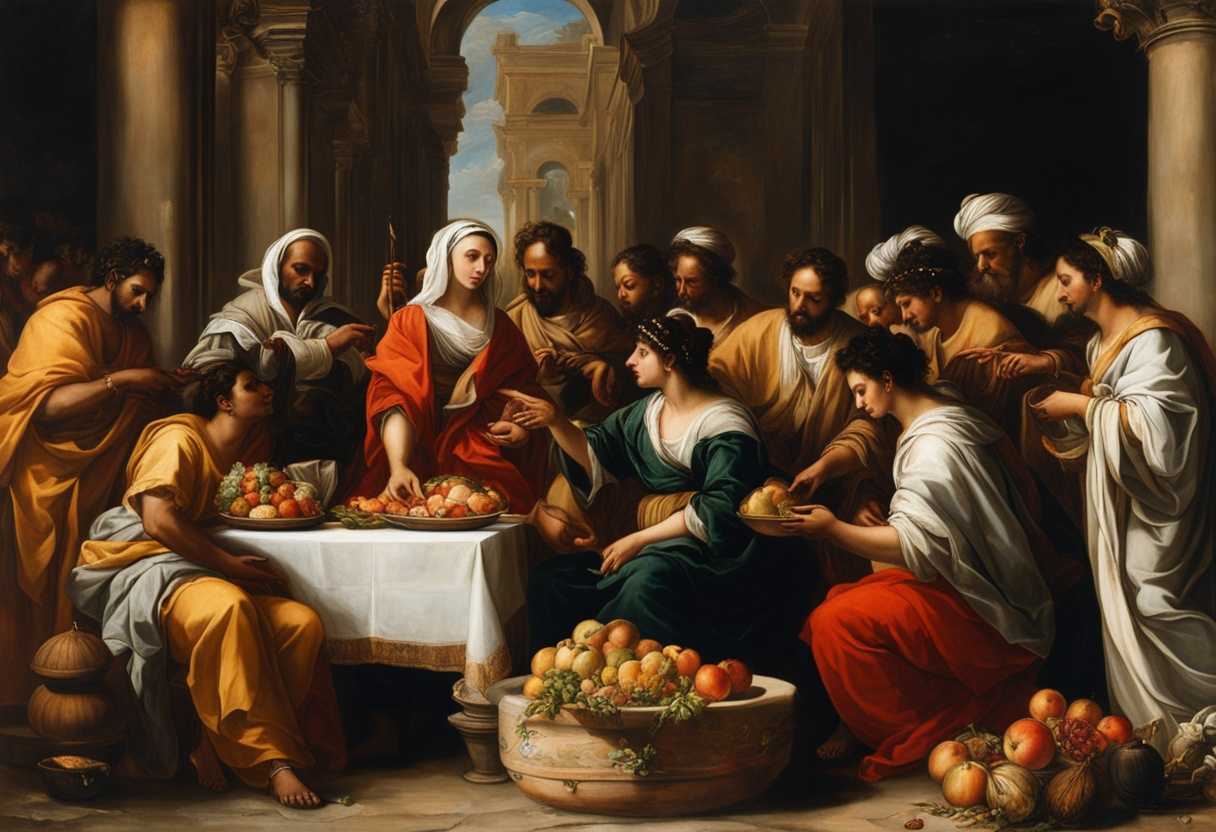
In Leviticus chapter 23, we find a scene set during the Feast of Tabernacles, also known as the Feast of Booths or Sukkot. The Israelites have gathered in Jerusalem to celebrate this important festival, as commanded by God. The atmosphere is one of joy and thanksgiving as families and individuals come together to commemorate the harvest and remember God’s provision during their time in the wilderness.
The scene is bustling with activity as people construct temporary shelters or booths made of branches and leaves, symbolizing the dwellings the Israelites lived in during their journey through the desert. The air is filled with the sounds of prayers, songs, and the rustling of leaves as the people prepare for a week of feasting and rejoicing. The scene is colorful and vibrant, with decorations adorning the booths and the streets filled with people carrying palm branches and citrons as part of the celebration.
Among the crowd, we see Moses, Aaron, and other leaders of the Israelites, guiding the people in their observance of the festival. They teach the laws and traditions associated with the Feast of Tabernacles, reminding the people of God’s faithfulness and the importance of obedience. As the sun sets and the first day of the feast begins, a sense of unity and reverence descends upon the gathering, setting the stage for a week of worship, fellowship, and reflection on God’s goodness.
What is Leviticus 23:36 about?
This verse is a beautiful reminder of the importance of taking time to celebrate and appreciate the blessings that we have been given. God is emphasizing the need for us to pause from our busy lives and dedicate time to rejoicing in His goodness and the abundance of blessings He has bestowed upon us by commanding a seven-day feast. This feast serves as a time of reflection, gratitude, and joy, allowing us to fully appreciate and celebrate the goodness of God in our lives.
Have you ever taken a moment to truly reflect on the blessings in your life and celebrate them in a meaningful way? Imagine setting aside seven whole days to focus on gratitude and joy, surrounded by loved ones and in a spirit of celebration. How would this intentional time of rejoicing impact your perspective and cultivate a deeper sense of gratitude in your heart? Consider how you can incorporate this practice of celebrating and rejoicing in God’s blessings into your own life to see the positive impact it could have on your spiritual journey.
Understanding what Leviticus 23:36 really means
Introduction
In Leviticus 23:36, we delve into the detailed instructions given to the Israelites regarding the Feast of Tabernacles, also known as Sukkot. This verse is part of a larger chapter that outlines various holy days and festivals, emphasizing the importance of observing these sacred times in the life of the community.
Context and Background
Leviticus 23:36 is nestled within the guidelines for the Feast of Tabernacles, a significant seven-day festival culminating in an eighth day of sacred assembly. This feast holds deep meaning in Jewish tradition as it commemorates the Israelites’ journey through the wilderness and God’s faithful provision throughout their wanderings.
Key Phrases and Their Meanings
“Seven days you shall offer an offering made by fire to the Lord”: This phrase underscores the centrality of offerings in the Old Testament as acts of worship and atonement, reflecting the Israelites’ devotion and gratitude towards God through sacrificial rituals.
“On the eighth day you shall have a holy convocation”: Here, the concept of a “holy convocation” is introduced, highlighting the importance of communal worship and gathering together as a faith community to honor God and strengthen their bond with one another.
“You shall do no customary work”: This directive emphasizes the significance of rest and refraining from work as a way of honoring God, echoing the broader biblical theme of Sabbath rest and its spiritual implications for the people of God.
Related Bible Passages
In Exodus 23:16, the Feast of Ingathering, synonymous with the Feast of Tabernacles, is discussed in the context of harvest and God’s provision. Nehemiah 8:18 recounts the rediscovery and celebration of the Feast of Tabernacles by the returning Israelites, highlighting the importance of obedience to God’s commands. John 7:37-38 portrays Jesus’ teachings during the Feast of Tabernacles, connecting the Old Testament festival to the fulfillment found in Christ in the New Testament era.
Relevance to People Today
The timeless principles of worship, rest, and community encapsulated in Leviticus 23:36 remain relevant in modern life. It underscores the importance of setting aside time for God, both individually and collectively, amidst the hustle and bustle of contemporary society.
Anecdote
Reflecting on the significance of rest and spiritual focus, consider a personal or relatable story where taking a break from the demands of work to engage in spiritual retreats or community worship events has brought about a profound positive impact on one’s life, fostering a deeper connection with God and fellow believers.
Conclusion
In conclusion, let us internalize the essence of Leviticus 23:36 by incorporating the principles of worship, rest, and community into our daily lives. May we find moments of sacred pause to commune with God and one another, experiencing His presence and provision in profound ways.
How can we celebrate and honor God’s appointed times?
We can celebrate and honor God’s appointed times by coming together as a community to observe these holy days. It is a time for us to gather with family and friends, reflecting on the significance of these occasions and remembering God’s faithfulness throughout history. We demonstrate our obedience and reverence for God by observing these appointed times, acknowledging His rightful place as the center of our lives.
Additionally, we can celebrate these appointed times through acts of worship and thanksgiving. This can include prayer, singing hymns, reading scripture, and engaging in meaningful discussions about the spiritual lessons and teachings associated with each festival. We cultivate a deep sense of connection with God and strengthen our faith as we draw closer to Him through these special moments by setting aside time to focus on these appointed times.
Furthermore, we can honor God’s appointed times by following the specific instructions given for each festival, such as participating in special rituals, observing dietary restrictions, and giving offerings as prescribed in the Bible. We demonstrate our commitment to living a life that is pleasing to God and fulfilling His commandments with sincerity and reverence by faithfully adhering to these practices. Thus, by celebrating and honoring God’s appointed times in these ways, we can experience a deeper spiritual connection with Him and grow in our understanding of His plan for our lives.
Application
Let the words of Leviticus 23:36 guide you towards deep reflection on the significance of honoring divine timings and showing your commitment to the Lord. Allow this verse to awaken a fire within you, urging you to put your spiritual growth at the forefront and pledge yourself to wholehearted worship. Are you willing to embrace the challenge of carving out a space for God in your busy modern life, following His calendar with genuine devotion and unwavering sincerity?

Reverend Michael Johnson is an experienced Church Minister with a profound expertise in spirituality and guidance. With a serene presence and a compassionate heart, he has faithfully served his congregation for over 20 years, leading them on a spiritual journey towards inner peace and enlightenment. Reverend Johnson’s extensive knowledge of religious philosophies and profound understanding of human nature have made him a trusted confidant and mentor to many, as he seamlessly weaves his profound wisdom into life teachings. Reverend Johnson’s calming demeanor and empathetic nature continue to uplift and heal souls, nurturing a sense of unity and tranquility within his community.