
2 Kings 17:10-12 is about the Israelites’ idolatrous practices, highlighting their abandonment of true worship through the construction of high places and the offering of sacrifices to false gods, which signifies a broader spiritual decline and disobedience to God’s commandments.
10 They set up for themselves pillars and Asherim on every high hill and under every green tree,
11 and there they made offerings on all the high places, as the nations did whom the Lord carried away before them. And they did wicked things, provoking the Lord to anger,
12 they served idols, of which the Lord had said to them, “You shall not do this.”
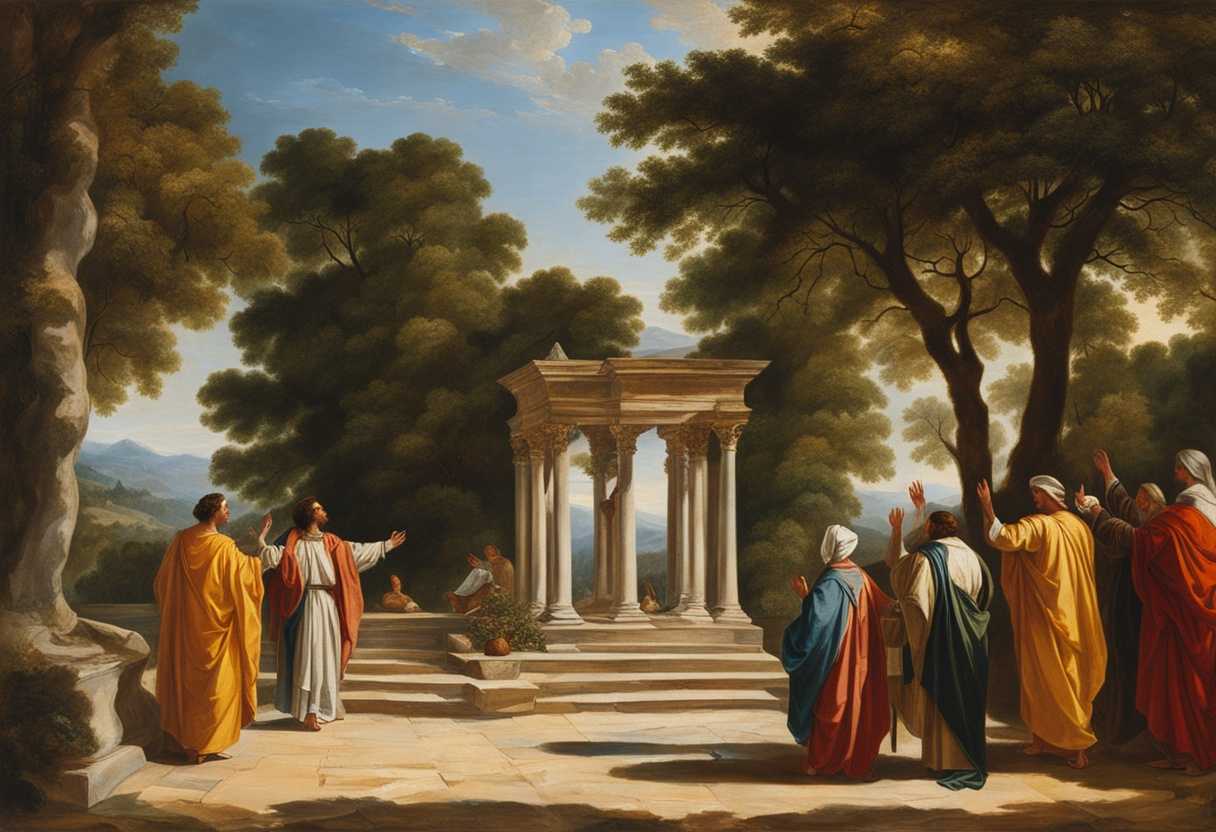
Setting the Scene for 2 Kings 17:10-12
In the ancient kingdom of Israel, the air was thick with tension and uncertainty as the people grappled with the consequences of their actions. The scene unfolds in the northern territories, where the remnants of the once-mighty Israelite nation were now scattered and vulnerable. The land, once fertile and bountiful, was marred by the scars of idolatry and disobedience. The Israelites had turned away from the worship of Yahweh, embracing the practices of the surrounding nations, which included the worship of Baal and Asherah. This shift had not gone unnoticed by the prophets and leaders of Israel, who lamented the spiritual decline of their people.
Among those present in this somber gathering were the priests and prophets of Israel, who had witnessed firsthand the decline of their nation. They stood in a makeshift assembly, perhaps in a clearing near the remnants of an ancient altar, surrounded by the crumbling stones that once served as a place of worship to the true God. The air was heavy with the scent of burnt offerings, remnants of sacrifices that had been made in vain. The priests, clad in their tattered robes, spoke with urgency, reminding the people of the covenant made with Yahweh and the dire consequences of their idolatrous practices. They recounted the warnings given by the prophets, urging the people to turn back to the one true God before it was too late.
As the sun began to set, casting a golden hue over the landscape, the people listened intently, their faces a mixture of fear and hope. They were aware of the impending judgment that loomed over them, as the prophets spoke of the destruction that would come if they did not repent. The echoes of their ancestors’ faithfulness rang in their ears, contrasting sharply with the reality of their current state. The scene was a poignant reminder of the choices that had led them to this moment, as the priests implored them to abandon their idols and return to the worship of Yahweh, the God who had delivered them from bondage and promised them a future filled with hope.
What is 2 Kings 17:10-12 about?
This verse serves as a critical reflection on the consequences of turning away from divine commandments, particularly within the context of the Israelites. When we consider the statement about the Israelites’ idolatrous practices, we are reminded of the importance of fidelity in our spiritual lives. It is not merely about the physical act of worship but also about the underlying values and priorities that guide our decisions. One might ask, what are the modern equivalents of these idols? Is it materialism, social status, or something else entirely? These questions are crucial because they compel us to examine what holds our allegiance in today’s fast-paced world.
The mention of their eventual exile underscores a fundamental truth about the relationship between actions and consequences. God had set forth clear guidelines for living in community and with Him, and as the Israelites chose to deviate from these teachings, they faced the repercussions of their choices. This raises an interesting point for personal reflection: Are we aware of the choices we make and their long-term implications? When we stray from what we know to be right, we too might face emotional, spiritual, or even physical ‘exiles’ just as the Israelites lost their homeland as a result of their actions. The story invites us to ponder the importance of staying true to our core values, recognizing that our worship—what we adore and prioritize—shapes not only our relationship with the divine but also our place in the world. We can begin to understand the depths of this ancient narrative and its relevance in our lives today by asking ourselves these reflective questions.
Understanding what 2 Kings 17:10-12 really means
In 2 Kings 17:10-12, we encounter a sobering depiction of the Israelites’ spiritual decline. During this period, they constructed “high places,” erected “sacred stones,” and set up “Asherah poles.” These actions signify a blatant departure from the worship of Yahweh, reflecting a time when the people chose to engage in practices that were contrary to the commandments given to them. This passage serves as a stark reminder of the consequences of disobedience and the seriousness of idolatry.
The term “high places” refers to elevated sites where worship occurred, often associated with pagan rituals. This shift away from centralized worship in the temple illustrates a broader trend of spiritual compromise. The Israelites were not merely neglecting their covenant with God; they were actively incorporating the worship of other deities into their practices. This dilution of faith raises an important question: How often do we allow distractions to infiltrate our own worship?
The “sacred stones” and “Asherah poles” symbolize the physical manifestations of this idolatry. They represent the tangible objects that the Israelites turned to for spiritual fulfillment, ultimately leading them away from the one true God. The phrase “provoked the Lord to anger” underscores the gravity of their actions. It signifies a breach of covenant and a direct challenge to God’s authority. What does it mean for us today when we consider the things that provoke God’s anger in our lives?
Related biblical passages, such as Deuteronomy 12:2-4 and Jeremiah 2:13, further illuminate the consequences of forsaking God. Deuteronomy warns against adopting the practices of surrounding nations, while Jeremiah laments the futility of seeking fulfillment outside of God. These scriptures remind us that turning away from God leads to emptiness and dissatisfaction. In our modern context, we must ask ourselves: What are the “high places” we have built in our lives?
Consider the story of a young man I once spoke with, who was deeply entrenched in his career. He often worked late, missing church and feeling unfulfilled despite his professional success. His “high place” was his job, which, while important, had overshadowed his spiritual life. This mirrors the choices of the Israelites, who prioritized worldly practices over their covenant with God. Are we, too, allowing our careers, relationships, or material possessions to take precedence over our relationship with Him?
Ultimately, this passage serves as a powerful reminder of the dangers of idolatry and the importance of remaining faithful to God. It calls us to examine our lives for any “high places” we may have erected and encourages us to return to the heart of worship, centered on God alone. The consequences of straying from Him are profound, yet His grace continually invites us back into a relationship with Him. How can we actively seek to dismantle our own high places and restore our focus on the true source of life?
What idols hinder my relationship with God?
The passage emphasizes the detrimental impact of turning to false idols, often represented through various physical forms, like carved images or sacred pillars. These representations detract from the true worship of God and promote distractions that can lead to spiritual decline. Idols that can hinder your relationship with God may vary in a modern context. This can include materialism, where the desire for possessions overshadows the pursuit of spiritual fulfillment, or even ambition for success that becomes an all-consuming focus, leaving little room for nurturing one’s faith.
Additionally, relationships can serve as significant idols. If you prioritize human approval or companionship over your relationship with God, you risk allowing those connections to compromise your values and commitments. Whether it’s the pressure to conform to societal standards or a dependence on others for emotional support, these attachments can distract you from seeking God’s wisdom and guidance. This shift can dilute your spiritual discernment, leading to choices that don’t align with your faith.
Finally, technology and entertainment also pose modern challenges, often serving as distractions that draw attention away from spiritual growth. Hours spent on social media, streaming platforms, or gaming can replace moments that could be used for prayer, meditation, or scriptural study. This disengagement weakens the bond with God and fosters an environment where superficial pursuits take precedence over deeper spiritual endeavors. To overcome these idols, it’s essential to regularly evaluate your priorities and make conscious efforts to align your life with the teachings and values of your faith.
Application
Imagine your life as a busy workday, where deadlines and distractions can easily pull you away from what truly matters. Just as a family needs attention to thrive, your relationship with God requires your focus. Take a moment to look at your daily habits—are there time sinks or influences that are leading you off course? It’s time to confront those distractions and prioritize your faith like you would a cherished project or loved one. What could your life look like if you fully committed to strengthening that bond?

Reverend Michael Johnson is an experienced Church Minister with a profound expertise in spirituality and guidance. With a serene presence and a compassionate heart, he has faithfully served his congregation for over 20 years, leading them on a spiritual journey towards inner peace and enlightenment. Reverend Johnson’s extensive knowledge of religious philosophies and profound understanding of human nature have made him a trusted confidant and mentor to many, as he seamlessly weaves his profound wisdom into life teachings. Reverend Johnson’s calming demeanor and empathetic nature continue to uplift and heal souls, nurturing a sense of unity and tranquility within his community.