
2 Kings 4:38-44 is about the prophet Elisha miraculously feeding a hundred people with only a few loaves of bread and some grain, demonstrating the abundance and provision that comes from trusting in God’s power.
38 And Elisha came again to Gilgal when there was a famine in the land. And as the sons of the prophets were sitting before him, he said to his servant, “Set on the large pot, and boil stew for the sons of the prophets.”
39 Then one went out into the field to gather herbs and found a wild vine and gathered from it his lap full of wild gourds, and came and cut them up into the pot of stew, not knowing what they were.
40 So they poured out for the men to eat. And when they ate of the stew, they cried out, “O man of God, there is death in the pot!” And they could not eat it.
41 But he said, “Then bring flour.” And he threw it into the pot and said, “Pour some out for the men, that they may eat.” And there was no harm in the pot.
42 A man came from Baal-shalishah, bringing the man of God bread of the firstfruits, twenty loaves of barley and fresh ears of grain in his sack. And Elisha said, “Give to the men, that they may eat.”
43 But his servant said, “How can I set this before a hundred men?” So he repeated, “Give them to the men, that they may eat, for thus says the Lord, ‘They shall eat and have some left.’”
44 So he set it before them. And they ate and had some left, according to the word of the Lord.
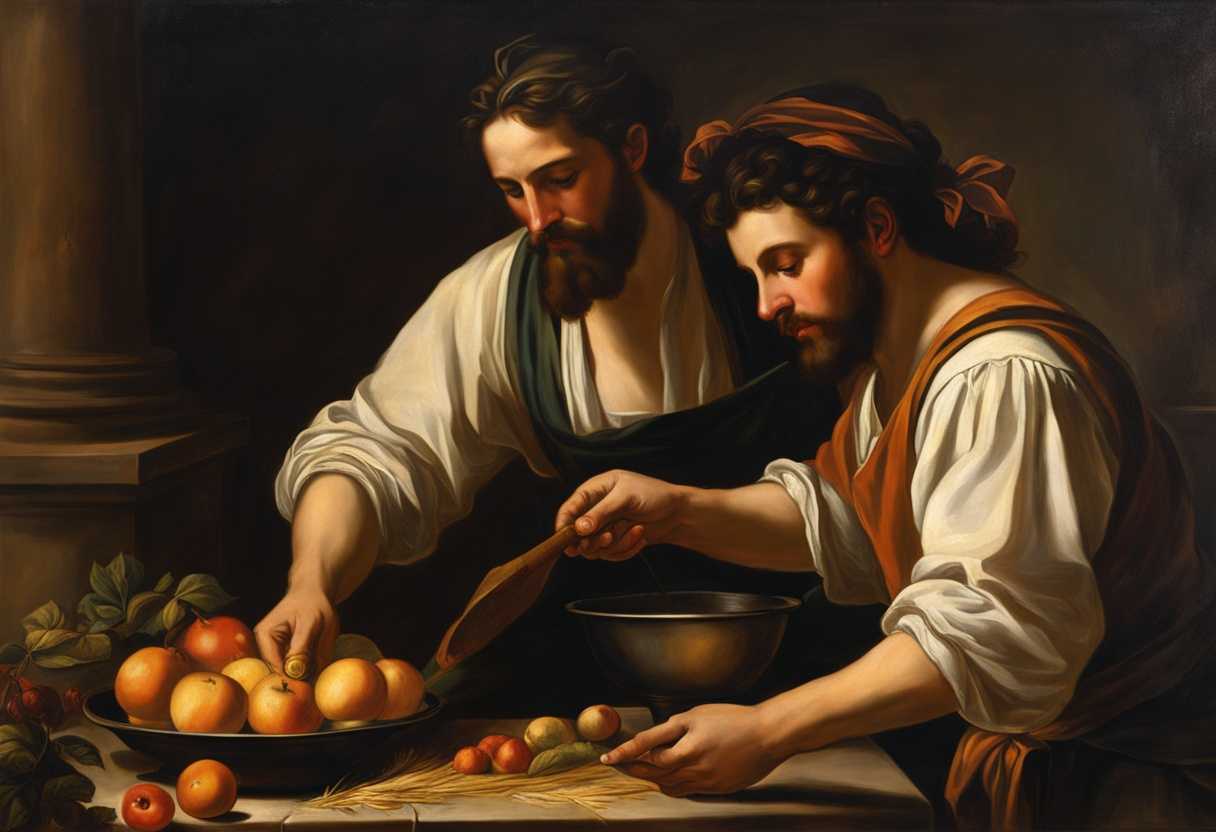
Setting the Scene for 2 Kings 4:38-44
In 2 Kings chapter 4, we find the prophet Elisha in the city of Gilgal during a time of famine. Elisha is gathered with a group of prophets, likely discussing the dire situation they are facing. The famine has brought scarcity, and the prophets are in need of sustenance. Elisha instructs his servant to prepare a large pot and make a stew for the group.
As the stew is being prepared, one of the prophets goes out into the field to gather herbs. However, in his haste, he unknowingly gathers a poisonous gourd and adds it to the stew. When the stew is served and the prophets begin to eat, they quickly realize that it is harmful. In a panic, they cry out to Elisha for help.
Elisha remains calm and asks for some flour to be brought to him. He then throws the flour into the pot, miraculously neutralizing the poison and making the stew safe to eat. The prophets are able to enjoy the meal without harm, a testament to Elisha’s connection to God and his ability to perform miracles.
What is 2 Kings 4:38-44 about?
Isn’t it fascinating to see how Elisha’s miraculous multiplication of food for a hundred men demonstrates God’s endless provision and abundance? This event reminds us that when we trust in God and rely on His power, we will never be in lack. Elisha’s actions showcase the incredible ways in which God can work through individuals to meet the needs of many.
Imagine witnessing this miracle firsthand – the amazement and gratitude that must have filled the hearts of those who were fed by the multiplied food. Reflecting on this verse encourages us to have faith in God’s ability to provide for us in ways that exceed our expectations. Just like Elisha, may we be vessels through which God’s abundance flows to bless others around us, showing His love and care in tangible ways.
Understanding what 2 Kings 4:38-44 really means
The passage in 2 Kings 4:38-44 recounts two remarkable miracles performed by the prophet Elisha, showcasing God’s provision and care for His people through His chosen vessel. In the first miracle, Elisha purifies a pot of stew that had been contaminated, symbolizing the dangers and corruptions that can infiltrate our lives, often unnoticed. The phrase “death in the pot” vividly captures the presence of harmful elements within what should be nourishing, serving as a cautionary reminder of the unseen perils that may lurk in the seemingly ordinary aspects of our existence.
Elisha’s directive to “bring some flour” to counteract the poison in the stew signifies the introduction of purity and wholesomeness to combat toxicity. This act reflects the power of God’s intervention to cleanse and heal, transforming what was tainted into something beneficial and life-giving. The subsequent declaration that “they will eat and have some left over” underscores God’s capacity to provide abundantly, surpassing human limitations and expectations. It echoes the theme of divine multiplication and provision, showcasing God’s generosity and sufficiency in the face of scarcity.
Drawing parallels with other biblical passages such as John 6:1-14, Exodus 16:4-5, and Psalm 23:1, we see a consistent thread of God’s miraculous provision and care for His people throughout Scripture. The feeding of the 5,000 by Jesus and the provision of manna in the wilderness for the Israelites mirror Elisha’s miracles, emphasizing God’s unwavering commitment to sustaining and nourishing His children. The familiar words of Psalm 23:1, “The Lord is my shepherd; I shall not want,” encapsulate the essence of divine provision and care, resonating with the miraculous deeds performed by Elisha.
In our contemporary context, where scarcity and harmful influences abound, the narrative of Elisha’s miracles offers a reassuring message of God’s ability to provide for our needs and cleanse our lives from impurities. It serves as a beacon of hope, encouraging us to place our trust in God’s provision and to remain open to His transformative work in our lives. Just as Elisha turned a dire situation into a display of God’s power and goodness, we are reminded that God can use unexpected means to meet our needs and demonstrate His faithfulness.
Consider a family facing financial hardship, unsure of how they will put food on the table. When a neighbor unexpectedly delivers groceries, embodying God’s provision through human hands, it mirrors the miraculous intervention seen in Elisha’s story. This anecdote illustrates how God often works through others to supply our needs and showcases His faithfulness in times of uncertainty and need.
In conclusion, the miracles of Elisha in 2 Kings 4:38-44 serve as poignant reminders of God’s unwavering ability to provide abundantly and purify thoroughly. They beckon us to place our confidence in His provision, knowing that He is ever-present, ready to transform scarcity into plenty and cleanse impurity into wholeness. Whether we face physical lacks or spiritual challenges, we can rest assured that God is with us, orchestrating moments of divine intervention for His glory and our well-being.
How can we trust God to provide abundantly?
God provided abundantly for a group of prophets through the prophet Elisha in 2 Kings 4:38-44. When there was a scarcity of food, Elisha instructed his servant to feed a large group of people with only a few loaves of bread. Despite the limited resources, God multiplied the bread, and there was more than enough to feed everyone with some left over.
This story teaches us that we can trust in God’s provision even when our resources are scarce. God can also provide abundantly for our needs, just as He miraculously multiplied the bread in this story. When we trust in God and rely on Him, He can work miracles in our lives and provide in ways that exceed our expectations.
Therefore, we can have faith that God will provide for us abundantly, even in times of need. We can trust in His faithfulness and ability to meet our needs, knowing that nothing is impossible for Him. We can experience God’s provision in abundance in every area of our lives by surrendering our worries and fears to Him and placing our trust in Him.
Application
Just like Elisha believed in the power of multiplication when resources were scarce, let’s have faith in the abundance that awaits us through God’s provision. Don’t dwell on limitations, but embrace the potential for blessings beyond measure. Trust in God’s ability to multiply our efforts and provide for us in ways that surpass our understanding. Will you take a leap of faith and trust in the boundless possibilities of God’s provision today?

Reverend Michael Johnson is an experienced Church Minister with a profound expertise in spirituality and guidance. With a serene presence and a compassionate heart, he has faithfully served his congregation for over 20 years, leading them on a spiritual journey towards inner peace and enlightenment. Reverend Johnson’s extensive knowledge of religious philosophies and profound understanding of human nature have made him a trusted confidant and mentor to many, as he seamlessly weaves his profound wisdom into life teachings. Reverend Johnson’s calming demeanor and empathetic nature continue to uplift and heal souls, nurturing a sense of unity and tranquility within his community.