
2 Kings 7:3 is about four men with leprosy taking a bold step to enter the enemy camp, which symbolizes faith and divine intervention in dire situations.
3 Now there were four men who were lepers at the entrance to the gate.
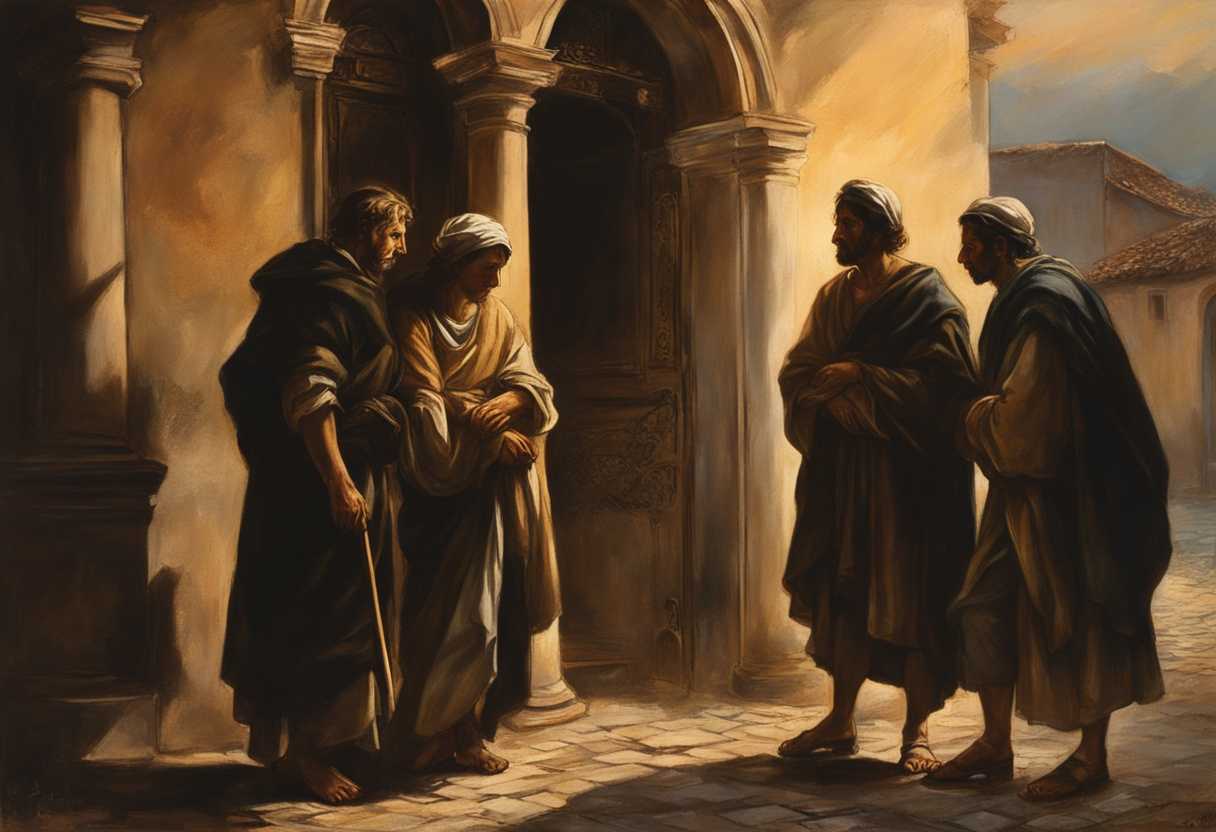
Setting the Scene for 2 Kings 7:3
In 2 Kings chapter 7, the scene unfolds outside the walls of Samaria, the capital of the northern kingdom of Israel. The city is under siege by the Aramean army, and the people inside are suffering from a severe famine. Four men afflicted with leprosy are sitting at the entrance of the city gate. These men are outcasts, forced to live outside the city due to their condition.
As they sit there, they come to a pivotal moment where they realize that they have nothing to lose by surrendering to the Arameans. They are desperate for food and decide to take their chances by going to the enemy camp. Little do they know that God has already caused the Arameans to hear the sound of chariots and horses, thinking that the king of Israel has hired other kings to fight against them. The Arameans flee in fear, leaving behind their tents, horses, and food.
The four men, upon entering the camp, find it deserted and full of provisions. They eat and drink to their heart’s content, then begin to gather silver, gold, and clothing. They realize the goodness of God in providing for them and rush back to the city to share the news of the abandoned camp with the gatekeepers. This pivotal moment marks a turning point in the siege of Samaria, as the famine ends and the city is saved from destruction.
What is 2 Kings 7:3 about?
Individuals overlooked and marginalized by society have a powerful impact in this verse. The four lepers, often shunned and left to fend for themselves, stumble upon an abandoned camp, filled with food and resources. Instead of keeping this incredible discovery to themselves, they choose to share the good news with the starving city. This act of generosity and compassion highlights the resilience and humanity of these individuals who could have easily chosen to hoard the resources for themselves. Let’s consider the important lesson this verse teaches us about the power of empathy and kindness as we reflect on it. Despite their own hardships, the lepers selflessly reach out to help others in need, demonstrating the transformative impact of acts of goodwill. This verse challenges us to think about how we can make a positive difference in the lives of those around us, no matter how small or marginalized we may feel. It prompts us to question our own actions and motivations, urging us to strive for a more compassionate and inclusive society where everyone has a voice and a chance to make a difference.
Understanding what 2 Kings 7:3 really means
In 2 Kings 7:3, we encounter a poignant scene amidst the backdrop of a severe famine in Samaria, where the city is besieged by the Arameans. The four men with leprosy, often shunned and marginalized, find themselves at the entrance of the city gate, a symbolic place of decision and transition. Their question, “Why stay here until we die?” resonates with anyone facing seemingly insurmountable challenges, prompting reflection on the need for action in the face of adversity.
These individuals with leprosy serve as a powerful representation of those who are overlooked and suffering in society. Their presence at the city gate signifies a moment of reckoning, where choices must be made to alter their grim circumstances. The urgency in their question underscores the importance of not resigning to fate but instead taking proactive steps towards change.
Drawing parallels from related biblical passages such as Luke 17:11-19 and John 5:1-9, we see a recurring theme of faith, action, and the transformative power of decision-making. James 2:17 further emphasizes the necessity of coupling faith with action, highlighting the vitality of moving forward with conviction in times of trial.
Today, the message of 2 Kings 7:3 remains relevant to individuals grappling with adversity, urging them to break free from stagnation and embrace a mindset of courage and initiative. Just as the lepers questioned their situation, prompting a shift in their actions, we are encouraged to confront our own circumstances with a similar resolve.
Consider a scenario where someone faces job loss and uncertainty, akin to the plight of the lepers. By echoing their question, “Why stay here until we die?” individuals can find the impetus to explore new avenues, fostering personal growth and resilience in the face of challenges. This anecdote serves as a tangible reminder of the verse’s timeless wisdom in prompting us to seek change and hope amidst despair.
In conclusion, 2 Kings 7:3 beckons us to confront our fears, make decisive choices, and trust in the possibility of transformation through faith-driven actions. It serves as a beacon of hope, reminding us that even in the darkest moments, there lies the potential for renewal and progress if we dare to step forward in faith.
How can we learn to trust in God’s provision?
Understanding the context in which the verse is set can help us learn to trust in God’s provision in 2 Kings 7:3. The verse tells the story of four men with leprosy who were facing starvation during a time of severe famine. Despite their desperate situation, they made a decision to step out in faith and surrender their circumstances to God. They experienced a miraculous deliverance by choosing to trust in God’s provision and plan. This story teaches us that when we place our trust in God and His promises, no situation is too dire for Him to provide for us.
Another way we can learn to trust in God’s provision is by acknowledging His faithfulness in the past. Reflecting on the times when God has come through for us in unexpected ways can strengthen our faith and confidence in His ability to provide for our needs. We can trust that God will provide for us in our times of need, just as He provided for the four men with leprosy in 2 Kings 7:3. A shift in our mindset from self-reliance to a reliance on God ultimately requires learning to trust in God’s provision. We can cultivate a deeper trust in His provision for our lives by surrendering our fears and doubts to Him and actively seeking His guidance through prayer and His Word. God is faithful and trustworthy, and when we place our reliance on Him, we can rest assured that He will meet our needs according to His perfect plan.
Application
Just as those four men took a leap of faith in the face of adversity, it’s time for us to trust in God’s plan and take courageous steps forward in our own challenges. Let’s not be paralyzed by fear but instead be moved by faith. Will you dare to trust in God’s strength and bravely step out of your comfort zone today?

Reverend Michael Johnson is an experienced Church Minister with a profound expertise in spirituality and guidance. With a serene presence and a compassionate heart, he has faithfully served his congregation for over 20 years, leading them on a spiritual journey towards inner peace and enlightenment. Reverend Johnson’s extensive knowledge of religious philosophies and profound understanding of human nature have made him a trusted confidant and mentor to many, as he seamlessly weaves his profound wisdom into life teachings. Reverend Johnson’s calming demeanor and empathetic nature continue to uplift and heal souls, nurturing a sense of unity and tranquility within his community.