
2 Samuel 12:24 is about King David and Bathsheba giving birth to their son Solomon, symbolizing redemption and the restoration of hope after David’s sin and the loss of their first child.
24 Then David comforted his wife, Bathsheba, and went in to her and lay with her, and she bore a son, and he called his name Solomon. And the Lord loved him
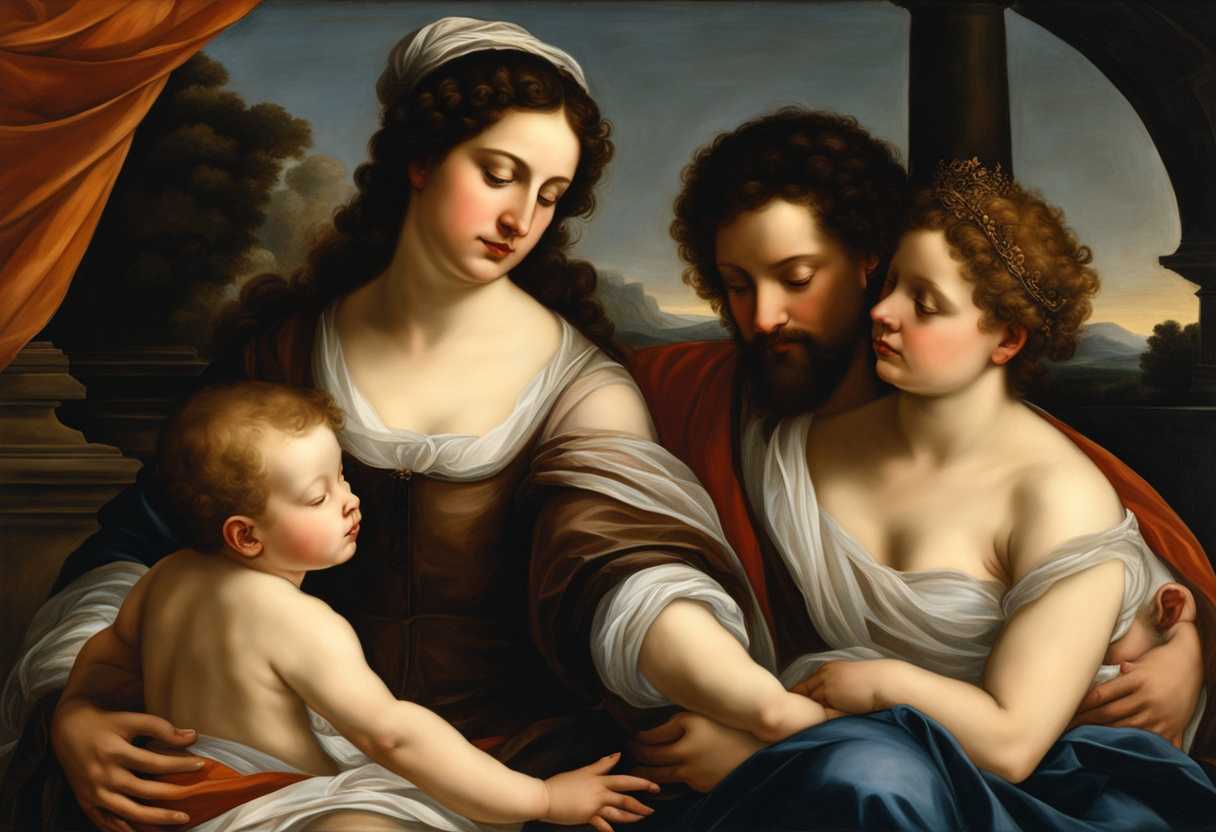
Setting the Scene for 2 Samuel 12:24
In 2 Samuel chapter 12, we find King David and his wife Bathsheba in a scene filled with both sorrow and hope. After their first child conceived in sin dies as a consequence of David’s affair with Bathsheba, they are now blessed with a new son, Solomon. The atmosphere is heavy with the weight of their past mistakes, yet there is a sense of redemption and new beginnings as they cradle their newborn son in their arms.
Surrounded by the opulence of the royal chambers in the palace, David and Bathsheba are joined by their trusted advisors and servants who witness this poignant moment. The room is adorned with rich tapestries, flickering candles casting a warm glow, and the faint scent of incense lingering in the air. Despite the grandeur of their surroundings, the focus is solely on the couple and their newborn son, a symbol of God’s mercy and grace in the midst of their brokenness.
As David looks into the innocent eyes of his newborn son, he is reminded of the forgiveness he has received from the Lord despite his grievous sins. Bathsheba, holding her precious child close, feels a mix of joy and sadness, grateful for this new life yet mindful of the pain they have endured. In this intimate moment, surrounded by those who have witnessed their journey of repentance and restoration, David and Bathsheba find solace in the promise of a future filled with hope and redemption.
What is 2 Samuel 12:24 about?
King David shows a moment of vulnerability and tenderness towards Bathsheba after the loss of their child, Solomon, in this verse. Despite their tumultuous past, including the scandalous circumstances of their relationship, David sets aside any personal turmoil to console Bathsheba in her grief. This act reflects a depth of compassion and understanding rarely seen in historical accounts of powerful leaders. It speaks to the capacity for growth and redemption even in the most complex and challenging relationships. David’s act of comfort is significant. What does it reveal about the depth of his love for Bathsheba and his capacity for empathy? How does this moment of compassion challenge our perceptions of historical figures like King David, known for his strength and military prowess? Reflect on the power of forgiveness and healing in relationships, even in the face of past mistakes and hardships. David’s gesture towards Bathsheba serves as a poignant reminder of the human capacity for kindness and understanding, even in the midst of pain and loss.
Understanding what 2 Samuel 12:24 really means
In 2 Samuel 12:24, we witness a pivotal moment in King David’s life, marked by the birth of Solomon. This event follows a dark chapter of David’s transgression with Bathsheba and the subsequent loss of their first child. Despite David’s grave mistakes, this verse showcases God’s unfathomable grace and His ability to bring forth something beautiful even from the ashes of sin. It serves as a beacon of hope, reminding us that God’s forgiveness knows no bounds and that He can turn our deepest sorrows into moments of profound joy and restoration.
The broader context of this verse is crucial in understanding its significance. It is part of the aftermath of David’s repentance for his sins, highlighting the redemptive power of God’s mercy. Through the birth of Solomon, we see God’s faithfulness in fulfilling His promises, as He had foretold the establishment of a kingdom through David’s offspring in 2 Samuel 7:12-13. This lineage ultimately leads to the birth of Jesus, as depicted in Matthew 1:6, emphasizing the continuity of God’s plan throughout generations.
The themes of grace, forgiveness, and restoration resonate deeply with people today. Just as David found solace in God’s forgiveness and witnessed the birth of Solomon as a symbol of hope and new beginnings, we too can experience God’s transformative power in our lives. This verse serves as a reminder that no mistake is too great for God to redeem, and that His love can bring about healing and blessings in the midst of our brokenness.
Consider the significance of the names and actions described in this verse. The naming of Solomon, which means “peace,” reflects a longing for tranquility and stability after a period of turmoil. It symbolizes the peace that God can bring into our lives, even amidst chaos and pain. Additionally, the mention of God’s love for Solomon underscores His favor and blessing, illustrating that His love transcends our failings and shortcomings.
Imagine someone grappling with feelings of guilt and unworthiness, much like David did after his sin. This verse offers them a glimmer of hope, showing that God’s mercy is boundless and that He can bring about new life and blessings in the midst of despair. It serves as a testament to the enduring nature of God’s love and His ability to work miracles in the most broken of circumstances.
In reflecting on 2 Samuel 12:24, we are reminded of the profound truth that God’s grace is greater than our sins, His plans are unshakeable, and His love is unwavering. May this verse inspire us to seek forgiveness, embrace hope, and trust in the promise of new beginnings that God graciously offers to all who turn to Him in repentance and faith.
How can we find peace after a loss?
Finding peace after a loss can be a challenging journey that requires time, reflection, and faith. We too can turn to our inner strength, beliefs, and support systems to navigate through the sorrow and emerge into a place of peace, just as King David did after experiencing a profound loss. We can gradually move towards acceptance and inner peace by acknowledging our grief, seeking comfort in our faith, and finding ways to honor the memory of what we have lost.
Allowing ourselves to grieve and process our emotions is crucial in finding peace after a loss. It’s essential to be patient with ourselves and seek support from loved ones or professional resources. Drawing strength from our faith, just as David did, can provide comfort and hope in times of distress. Through prayer, meditation, or finding meaning in the midst of pain, we can begin to heal and find peace within ourselves.
Honoring the memory of our loss can also be a healing practice that brings us peace. Whether through rituals, creating a memorial, or simply cherishing the moments we shared with what or who we lost, we can find a sense of closure and acceptance. Embracing the lessons learned from our grief and allowing it to transform us can ultimately lead us to a place of peace and restoration.
Application
Imagine you’ve missed a crucial deadline at work or had a fight with a loved one – what would you do next? Just like King David, when he owned up to his mistakes, it’s time we come clean and seek forgiveness. Admit your wrongs, clear the air, and let healing begin. The power of real relationships, at home or with God, lies in our willingness to mend them. Will you take the step to seek forgiveness and strengthen your bond with God today?

Reverend Michael Johnson is an experienced Church Minister with a profound expertise in spirituality and guidance. With a serene presence and a compassionate heart, he has faithfully served his congregation for over 20 years, leading them on a spiritual journey towards inner peace and enlightenment. Reverend Johnson’s extensive knowledge of religious philosophies and profound understanding of human nature have made him a trusted confidant and mentor to many, as he seamlessly weaves his profound wisdom into life teachings. Reverend Johnson’s calming demeanor and empathetic nature continue to uplift and heal souls, nurturing a sense of unity and tranquility within his community.