
Matthew 1:6 is about the genealogy of Jesus, tracing his lineage back to King David through Solomon, emphasizing his royal Messianic heritage.
6 and Jesse the father of David the king.
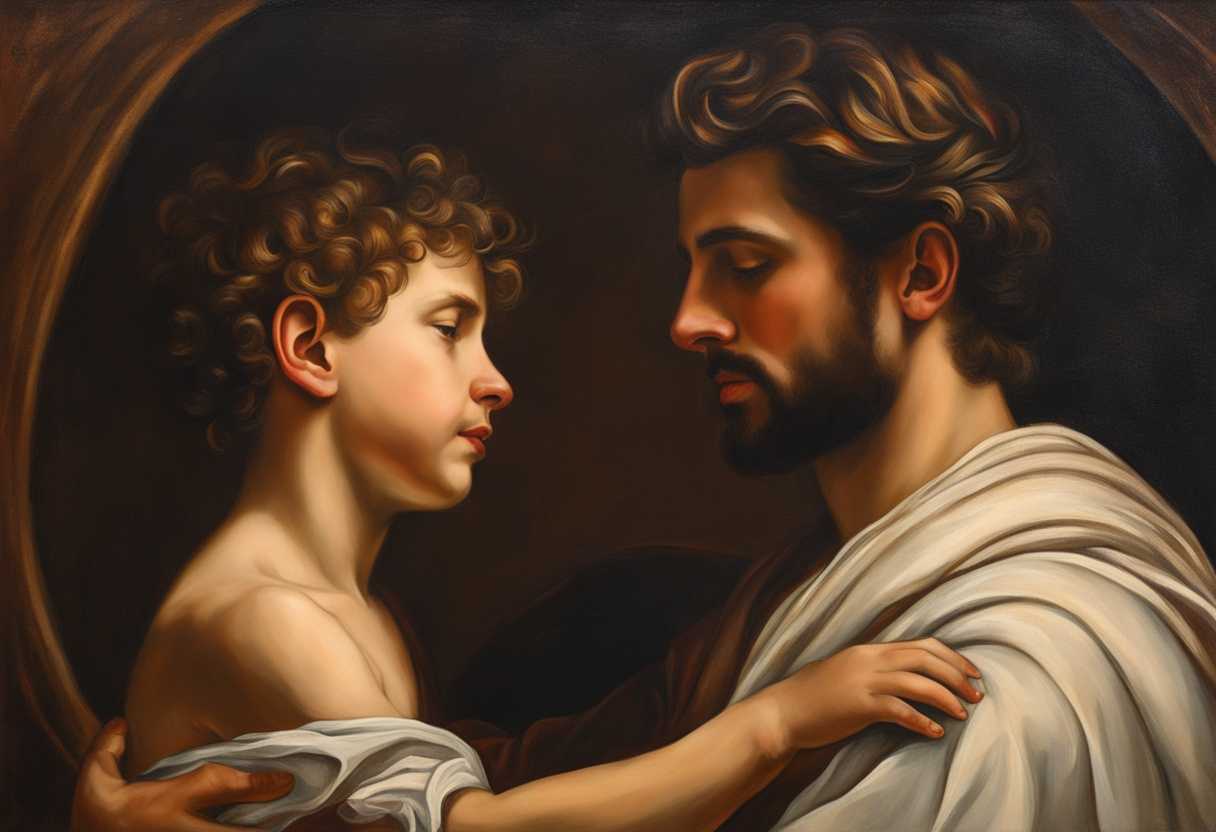
Setting the Scene for Matthew 1:6
In Matthew chapter 1, we find the genealogy of Jesus Christ, tracing his lineage back to King David. The scene is set in a bustling marketplace in Jerusalem, where a group of Jewish scholars and scribes are gathered together, poring over ancient scrolls and discussing the prophecies of the Messiah. Among them is a man named Jesse, a respected elder known for his knowledge of scripture and his devotion to God.
As they study the genealogy of Jesus, they come across the name of King David, a pivotal figure in Jewish history. Jesse’s eyes light up with recognition as he realizes the significance of this lineage and how it fulfills the prophecies of the coming Messiah. The scholars engage in a lively debate, sharing insights and interpretations of the scriptures as they seek to understand the divine plan unfolding before them.
Surrounded by the sights and sounds of the marketplace, with merchants haggling over goods and the aroma of spices filling the air, Jesse and his fellow scholars are immersed in a profound moment of revelation and discovery. They are filled with awe and wonder as they contemplate the mystery of God’s plan for salvation, as foretold by the prophets and now coming to fruition in the birth of Jesus Christ.
What is Matthew 1:6 about?
The verse traces the genealogy of Jesus back to David through Jesse, his father. Jesse is a significant figure in this lineage because he is directly linked to David, who was one of the most renowned kings in the history of Israel. The verse is highlighting the royal lineage of Jesus by mentioning Jesse as the father of King David. This connection to the lineage of David is crucial because it fulfills the prophecy that the Messiah would come from the line of David. Reflect on this verse as you consider the significance of lineage and ancestry in determining one’s identity and purpose. The verse emphasizes the importance of Jesus’ royal heritage and his role as the long-awaited Messiah by establishing Jesus’ lineage through Jesse and David. It also underscores the meticulous planning and providence of God in fulfilling ancient prophecies through the intricate details of Jesus’ genealogy. So, next time you read this verse, ponder on the rich heritage and divinely orchestrated plan that culminates in Jesus being the rightful King in the line of David.
Understanding what Matthew 1:6 really means
In Matthew 1:6, we delve into the genealogy of Jesus Christ, a lineage intricately connected to King David. The mention of “David the king” not only underscores the royal heritage but also highlights David’s pivotal role in Jewish history. This lineage serves as a fulfillment of Old Testament prophecies regarding the Messiah, emphasizing the divine orchestration of Jesus’ ancestry.
Within this verse, the reference to “the wife of Uriah” directs our attention to Bathsheba, a poignant reminder of the complex and flawed human narratives woven into Jesus’ lineage. The story of David and Bathsheba in 2 Samuel 11-12 provides context to this reference, showcasing the intertwining of human frailty and divine purpose in the unfolding of God’s plan.
Isaiah 11:1 prophesies about the Messiah’s lineage from David, symbolized by a shoot from the stump of Jesse, while Romans 1:3 reaffirms Jesus’ descent from David, solidifying the connection between the Old Testament prophecies and the fulfillment in Christ. These passages further illuminate the significance of Jesus’ lineage and the intricate tapestry of God’s redemptive plan.
In contemplating the relevance of this verse today, we are confronted with the profound themes of human imperfection and divine purpose. The inclusion of flawed individuals like David and Bathsheba in Jesus’ genealogy serves as a powerful reminder that God can work through imperfect vessels to accomplish His will. Their stories reflect the tension between human failings and God’s redemptive power, offering hope and encouragement to all who feel unworthy or inadequate.
Imagine someone burdened by past mistakes, struggling with feelings of unworthiness before God. The narrative of David and Bathsheba in Matthew 1:6 serves as a beacon of hope, illustrating God’s capacity to redeem and repurpose even the most broken aspects of our lives for His glory. Just as their stories were intricately woven into the lineage of Christ, so too can our lives be part of God’s greater narrative, filled with grace and purpose.
In conclusion, Matthew 1:6 stands as a testament to God’s sovereignty and grace, inviting us to trust in His divine plan despite our shortcomings. It reassures us that God’s redemptive power transcends human failings, offering a fresh start and a renewed purpose to all who seek Him. This verse serves as a poignant reminder that our past does not dictate our future in the eyes of a loving and merciful God.
How can God use imperfect people in His plans?
God uses imperfect people in His plans by including them in the lineage of Jesus Christ, as seen in Matthew 1:6. The verse mentions a woman named Rahab who was a prostitute, yet she was still part of Jesus’ family tree. This shows us that God can work through anyone, regardless of their past mistakes or imperfections.
Through the example of Rahab, we come to understand that God’s grace and mercy extend to all, not just those who appear to be perfect. He can use even the most unlikely individuals to accomplish His purposes and bring about His redemption and salvation for all people. This serves as a reminder that God’s ways are not our ways, and His plans are far greater than we can imagine.
So, as we reflect on the inclusion of imperfect individuals in the genealogy of Jesus, we are encouraged to remember that God can use us, too, despite our flaws and shortcomings. It is not our perfection that qualifies us for God’s work, but rather our willingness to be used by Him and our faith in His power to work through us for His glory.
Application
Reflect on the timeless lesson in Matthew 1:6 that echoes through generations, reminding us of the power of faithfulness and promises kept. Just as King David’s lineage is a testament to God’s faithfulness, consider the legacy you are building for your family and the world. Are you ready to embrace the challenge of faith and obedience, or will you turn away from the path set before you? Take this opportunity to make a difference and let your life be a story of unwavering faith. Will you rise to the occasion and carry on the legacy of faith for tomorrow?

Reverend Michael Johnson is an experienced Church Minister with a profound expertise in spirituality and guidance. With a serene presence and a compassionate heart, he has faithfully served his congregation for over 20 years, leading them on a spiritual journey towards inner peace and enlightenment. Reverend Johnson’s extensive knowledge of religious philosophies and profound understanding of human nature have made him a trusted confidant and mentor to many, as he seamlessly weaves his profound wisdom into life teachings. Reverend Johnson’s calming demeanor and empathetic nature continue to uplift and heal souls, nurturing a sense of unity and tranquility within his community.