
2 Samuel 18:10 is about Absalom, King David’s rebellious son, meeting his end in the forest as he hung from a tree by his hair before being killed by Joab’s men, symbolizing the tragic consequences of pride and defiance against God and authority.
10 And a certain man saw it and told Joab, “Behold, I saw Absalom hanging in an oak.”
Setting the Scene for 2 Samuel 18:10
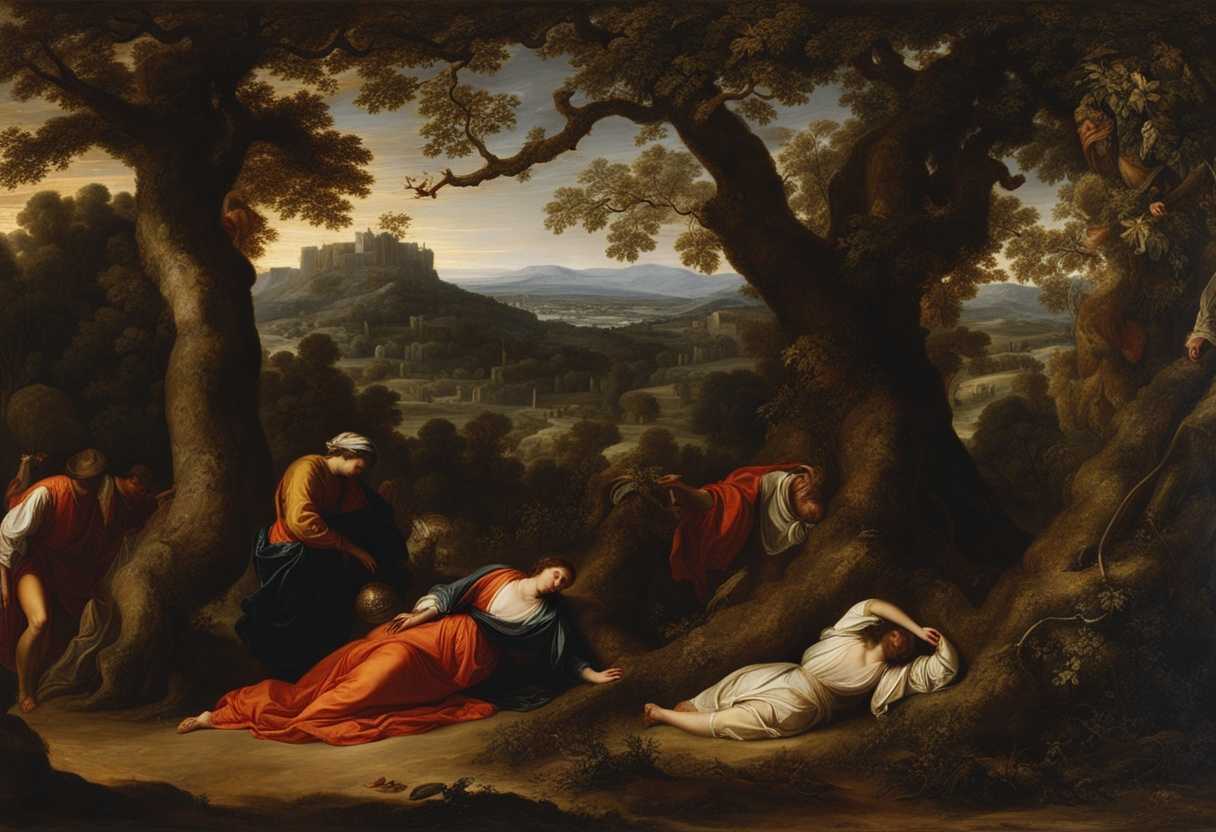
The scene in 2 Samuel 18:10 takes place during the tumultuous time of Absalom’s rebellion against his father, King David. Absalom had gathered a considerable following and was seeking to overthrow David and take the throne for himself. As the conflict escalated, a fierce battle ensued in the forest of Ephraim. The setting is chaotic, with the sounds of war echoing through the trees and the clash of swords filling the air.
Among those present in this scene are Absalom himself, a handsome and ambitious prince who had turned against his own father, and Joab, the commander of David’s army. Absalom, riding on his mule, finds himself caught in the thick branches of a great oak tree, his long hair entangled in its branches. Vulnerable and exposed, Absalom becomes an easy target for Joab’s men, who seize the opportunity to strike him down despite David’s explicit orders to spare his life.
The forest of Ephraim is dense and foreboding, with shafts of sunlight filtering through the canopy above. The ground is uneven and strewn with fallen leaves, adding to the chaos of the battle. As the clash between David’s loyalists and Absalom’s rebels rages on, the outcome of the conflict hangs in the balance, with the fate of the kingdom resting on the outcome of this decisive moment.
What is 2 Samuel 18:10 about?
We witness the consequences of Absalom’s rebellion against his father, King David, in the story of Absalom’s death in the book of 2 Samuel. Absalom’s rebellion was fueled by his desire for power and his lack of respect for authority. His death at the hands of Joab’s men while caught in a tree symbolizes the downfall of those who challenge rightful authority and seek to undermine it through deceit and betrayal. It serves as a cautionary tale of the dangers of pride, ambition, and unchecked ambition. Reflecting on Absalom’s demise reminds us of the importance of humility, obedience, and respect for authority. The verse teaches us that actions have consequences, and those who seek to subvert authority will ultimately face the consequences of their actions. It challenges us to consider our own attitudes towards authority and power, and to approach them with reverence and humility. Absalom’s tragic end ultimately serves as a powerful reminder of the timeless truth that those who sow rebellion and deceit will reap destruction and downfall.
Understanding what 2 Samuel 18:10 really means
- Context and Background
-
In the tumultuous narrative of Absalom’s rebellion against his father, King David, the verse 2 Samuel 18:10 captures a pivotal moment. Absalom, in his bid for power, finds himself ensnared in a tree during the battle in the forest of Ephraim. This event is a culmination of the familial and political strife that has been brewing, showcasing themes of justice, mercy, and the repercussions of sin.
-
Key Phrases and Their Meanings
- “A certain man saw it and told Joab”: This simple statement underscores the significance of witnesses and messengers in the unfolding drama. It highlights the crucial role of communication and the transmission of information, especially in times of crisis.
-
“Behold, I saw Absalom hanging in an oak”: The imagery of Absalom suspended in an oak tree is laden with symbolism. It represents the downfall of pride and rebellion, where even symbols of strength can become instruments of demise, illustrating the paradoxical nature of weaknesses emerging from one’s perceived strengths.
-
Related Biblical Passages
- Proverbs 16:18: The verse “Pride goes before destruction, a haughty spirit before a fall” directly correlates with Absalom’s tragic fate, emphasizing the consequences of unchecked pride and ambition.
- Galatians 6:7: “A man reaps what he sows” resonates with Absalom’s rebellion and subsequent retribution, illustrating the biblical principle of accountability for one’s actions.
-
Romans 12:19: David’s choice to refrain from seeking revenge on Absalom aligns with the scriptural directive to leave room for God’s justice, showcasing a profound trust in divine retribution over personal vengeance.
-
Relevance to People Today
- The narrative of Absalom serves as a cautionary tale for contemporary audiences, warning against the pitfalls of pride, rebellion, and the far-reaching consequences of our choices.
- It also underscores the enduring importance of mercy and forgiveness, as exemplified by David’s complex emotions towards his wayward son.
-
In a world where ambition often collides with integrity, this verse prompts reflection on the significance of humility and the potential repercussions of our actions in both personal and societal contexts.
-
Anecdote for Illustration
-
Imagine a scenario where a driven professional sacrifices ethics to advance in their career, only to face eventual downfall due to their compromised integrity. This modern parallel to Absalom’s narrative serves as a stark reminder that moral shortcuts and hubris can lead to self-inflicted ruin, echoing the timeless lessons embedded in biblical accounts.
-
Conclusion
- Through the lens of 2 Samuel 18:10 and its interconnected themes, we glean enduring insights on pride, justice, and the virtues of humility. By delving into this verse alongside complementary scriptures, we unearth wisdom to navigate our own journeys with integrity and a steadfast reliance on divine justice. May the lessons from Absalom’s tragedy inspire us to tread paths of righteousness, cognizant of the profound impact of our choices on ourselves and those around us.
How can we cope when the ones we love suffer?
When we see our loved ones suffering, it can be incredibly difficult to cope with the pain and helplessness that we feel. We should lean on our faith and trust that God is always present, even in the midst of suffering. We can find comfort in knowing that God is a compassionate and loving God who understands our pain and walks with us through every trial.
Finding support from our community and being a source of strength for our loved ones can also help us cope during challenging times. We can draw strength and solace from each other’s experiences and prayers by coming together with others who share our faith and beliefs. Offering a listening ear, a helping hand, or a simple act of kindness can go a long way in providing comfort and support to those who are suffering. Knowing that God is in control and that His plans are far greater than we can imagine ultimately brings us peace. We can navigate through the darkest moments with faith and hope by placing our trust in Him and seeking His guidance, knowing that He is working all things for our good.
Application
Life is like a busy highway—full of unexpected turns and sudden stops. Reflect on 2 Samuel 18:10 and understand how fragile our journey truly is. Cherish your loved ones, fix what’s broken, and forgive before it’s too late. In the hustle and bustle of work and family, will you take steps today to mend broken connections and spread kindness?

Reverend Michael Johnson is an experienced Church Minister with a profound expertise in spirituality and guidance. With a serene presence and a compassionate heart, he has faithfully served his congregation for over 20 years, leading them on a spiritual journey towards inner peace and enlightenment. Reverend Johnson’s extensive knowledge of religious philosophies and profound understanding of human nature have made him a trusted confidant and mentor to many, as he seamlessly weaves his profound wisdom into life teachings. Reverend Johnson’s calming demeanor and empathetic nature continue to uplift and heal souls, nurturing a sense of unity and tranquility within his community.