
Acts 10:25-26 is about Peter’s encounter with Cornelius, a Roman centurion, where he realized that God shows no favoritism and that all people, regardless of their background, are equally welcomed by Him.
25 When Peter entered, Cornelius met him and fell down at his feet and worshiped him.
26 But Peter lifted him up, saying, “Stand up; I too am a man.”
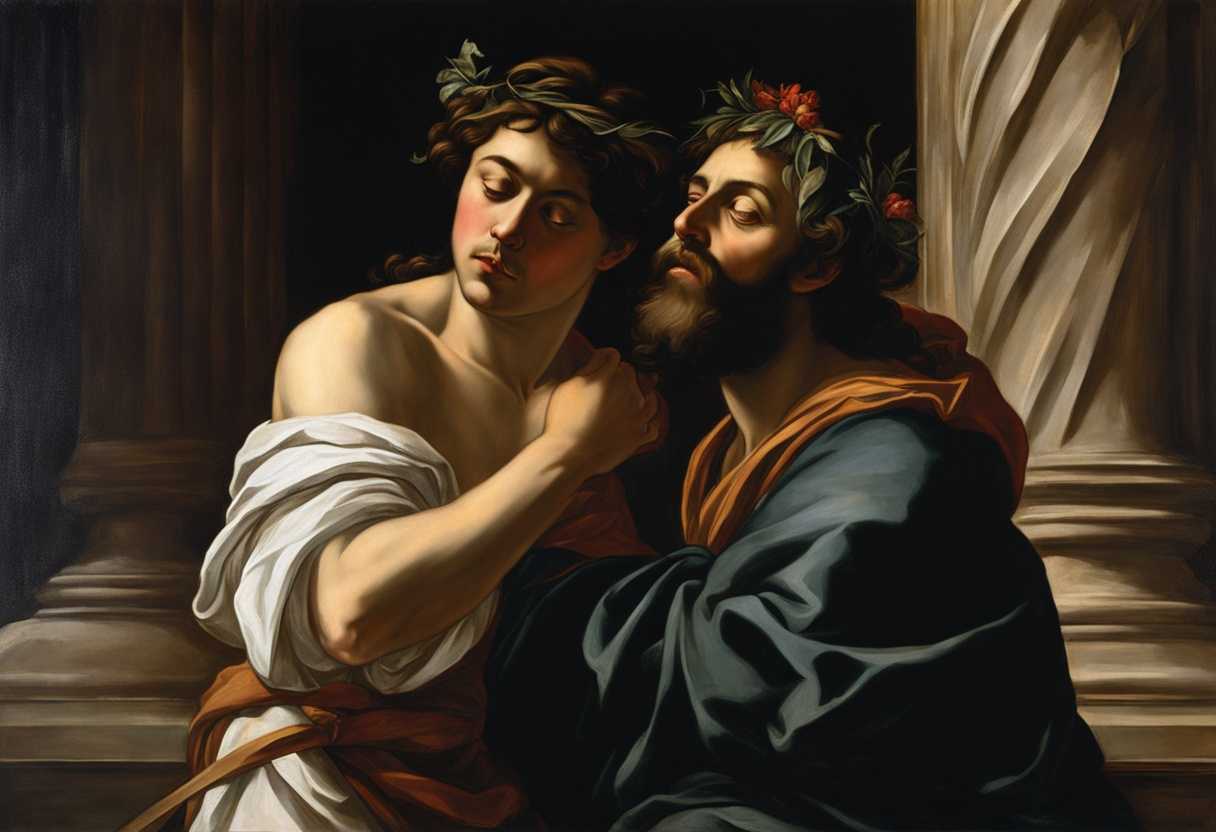
Setting the Scene for Acts 10:25-26
In Acts chapter 10, we find Peter, a devout follower of Jesus, visiting the house of a Roman centurion named Cornelius in the city of Caesarea. Cornelius, a God-fearing man, had a vision from an angel instructing him to send for Peter. Meanwhile, Peter also had a vision from God, preparing him to meet with Cornelius and share the message of Jesus with him and his household.
As Peter enters Cornelius’ house, he is greeted with great respect and reverence. Cornelius falls at Peter’s feet in humility and awe, showing his deep reverence for the man of God who has come to share the good news with him. This moment is significant as it marks a turning point in the early Christian church, as Peter begins to understand that the message of Jesus is not just for the Jewish people but for all nations.
The scene is set in a grand Roman household, with servants bustling about and the aroma of a lavish feast filling the air. Peter and Cornelius stand face to face, representing two different worlds coming together under the guidance of the Holy Spirit. The tension and anticipation in the room are palpable as Peter prepares to share the life-changing message of Jesus with Cornelius and his household.
What is Acts 10:25-26 about?
This verse emphasizes a key principle in Christian faith – humility and giving all glory to God. Peter’s response to being worshiped shows his understanding that worship and adoration should be reserved for God alone. Peter demonstrates his recognition of God’s supreme power, authority, and glory by rejecting worship and redirecting it to God.
This verse challenges us to examine our own attitudes towards recognition and praise. Are we seeking glory for ourselves, or are we sincerely desiring to honor and uplift God? It prompts us to reflect on our actions and motives, urging us to emulate Peter’s humility and prioritization of God’s greatness above all else. It serves as a reminder that true fulfillment and significance come not from seeking praise for ourselves, but from acknowledging and magnifying the glory of God in all that we do.
Understanding what Acts 10:25-26 really means
Acts 10:25-26 unfolds a crucial moment in the early Christian church, where Peter encounters Cornelius, a Roman centurion, following a divine vision. This encounter signifies a significant shift towards the inclusion of Gentiles in the Christian faith, breaking down barriers that once separated different groups of people.
As Peter enters Cornelius’s house, the scene unfolds with Cornelius falling at Peter’s feet in reverence, acknowledging Peter’s spiritual authority and the divine message he carries. This act of humility from Cornelius underscores his recognition of the higher power at work through Peter, highlighting the importance of respect and reverence in spiritual interactions.
However, Peter’s response is equally profound as he instructs Cornelius to stand up, emphasizing his own humanity and the equality shared by all individuals before God. This moment encapsulates the Christian principle that worship is reserved for God alone, and no human should be exalted to a position of divine worship.
Drawing parallels from related biblical passages such as Matthew 4:10, Romans 3:23, and Galatians 3:28, the themes of worshiping God alone, acknowledging human fallibility, and embracing unity among believers regardless of background are reinforced. These passages collectively emphasize the core values of humility, equality, and inclusivity that are central to the Christian faith.
In today’s world, Acts 10:25-26 remains relevant as it challenges us to embody humility and recognize the inherent worth of every individual. It prompts us to show respect to spiritual leaders while remembering that ultimate reverence belongs to God alone. The inclusivity displayed in the inclusion of Cornelius reminds us of the universal nature of God’s love and salvation, transcending societal divisions and embracing the diversity of humanity.
To illustrate the message of humility and equality, envision a scenario where a renowned humanitarian visits a community. Despite admiration for their work, the humanitarian insists on being treated as an equal, emphasizing the collective effort in making a difference. This mirrors Peter’s humility, redirecting glory to God and promoting unity among all individuals.
Acts 10:25-26 serves as a timeless lesson on humility, reverence, and inclusivity, urging us to look beyond societal distinctions and embrace the shared humanity and worth of every individual. It challenges us to emulate Peter’s humility and Cornelius’s reverence, fostering a spirit of unity and respect in our interactions with others.
How can we humbly receive honor due to God?
In Acts 10:25-26, a valuable lesson is learned on how to humbly receive honor due to God. The passage shows Peter’s immediate response to Cornelius, a Roman centurion, who fell down at his feet to worship him. Peter immediately told Cornelius to stand up and not bow down to him, as he is just a man like Cornelius. This response reflects Peter’s understanding and humility in acknowledging that any honor or glory belongs solely to God and not to a mere human being. We can also practice humility by following Peter’s example and redirecting any recognition or praise we receive back to God. Instead of taking credit for our accomplishments, we can acknowledge God’s role in our successes and give Him the honor and glory He deserves. This attitude helps us stay grounded in our faith, recognizing that God is the source of all blessings and that any honor or praise we receive should ultimately be directed towards Him. Recognizing our own limitations and imperfections while magnifying God’s greatness and goodness is the key to humbly receiving honor due to God. This mindset allows us to remain humble in the face of praise or recognition, always pointing others towards God’s glory rather than seeking it for ourselves. We can demonstrate our reverence and respect for God by following the example set in Acts 10:25-26, giving Him the honor and adoration that rightfully belong to Him.
Application
Let’s embody the humility and respect found in Acts 10:25-26 as we engage with each other in our daily lives. Let’s make a conscious effort to treat others with kindness and appreciation, acknowledging the value they hold as individuals. How can we show respect and honor to those we encounter today?

Reverend Michael Johnson is an experienced Church Minister with a profound expertise in spirituality and guidance. With a serene presence and a compassionate heart, he has faithfully served his congregation for over 20 years, leading them on a spiritual journey towards inner peace and enlightenment. Reverend Johnson’s extensive knowledge of religious philosophies and profound understanding of human nature have made him a trusted confidant and mentor to many, as he seamlessly weaves his profound wisdom into life teachings. Reverend Johnson’s calming demeanor and empathetic nature continue to uplift and heal souls, nurturing a sense of unity and tranquility within his community.