
Acts 11:1-18 is about Peter explaining to the early Christian community in Jerusalem how God had revealed to him through a vision that the Gentiles should not be considered unclean, emphasizing the universality of God’s salvation and breaking down barriers between different groups of people.
1 Now the apostles and the brothers who were throughout Judea heard that the Gentiles also had received the word of God.
2 So when Peter went up to Jerusalem, the circumcision party criticized him, saying,
3 saying, “You went to uncircumcised men and ate with them.”
4 But Peter began and explained it to them in order:
5 “I was in the city of Joppa praying, and in a trance I saw a vision, something like a great sheet descending, being let down from heaven by its four corners, and it came down to me.”
6 And when I had fixed my gaze on it and was observing it I saw the four-footed animals of the earth and the wild beasts and the crawling creatures and the birds of the air.
7 And I heard a voice saying to me, ‘Rise, Peter; kill and eat.’
8 But I said, ‘By no means, Lord; for nothing common or unclean has ever entered my mouth.’
9 But the voice answered a second time from heaven, ‘What God has made clean, do not call common.’
10 This happened three times, and all was drawn up again into heaven.
11 And behold, at that very moment three men arrived at the house in which we were, sent to me from Caesarea.
12 And the Spirit told me to go with them, making no distinction. These six brothers also accompanied me, and we entered the man’s house.
13 And he told us how he had seen the angel stand in his house and say, ‘Send to Joppa and bring Simon who is called Peter;
14 he will declare to you a message by which you will be saved, you and all your household.
11 When they heard these things they fell silent. And they glorified God, saying, “Then to the Gentiles also God has granted repentance that leads to life.”
16 And I remembered the word of the Lord, how he said, ‘John baptized with water, but you will be baptized with the Holy Spirit.’
17 If then God gave the same gift to them as he gave to us when we believed in the Lord Jesus Christ, who was I that I could stand in God’s way?”
18 When they heard these things they fell silent. And they glorified God, saying, “Then to the Gentiles also God has granted repentance that leads to life.”
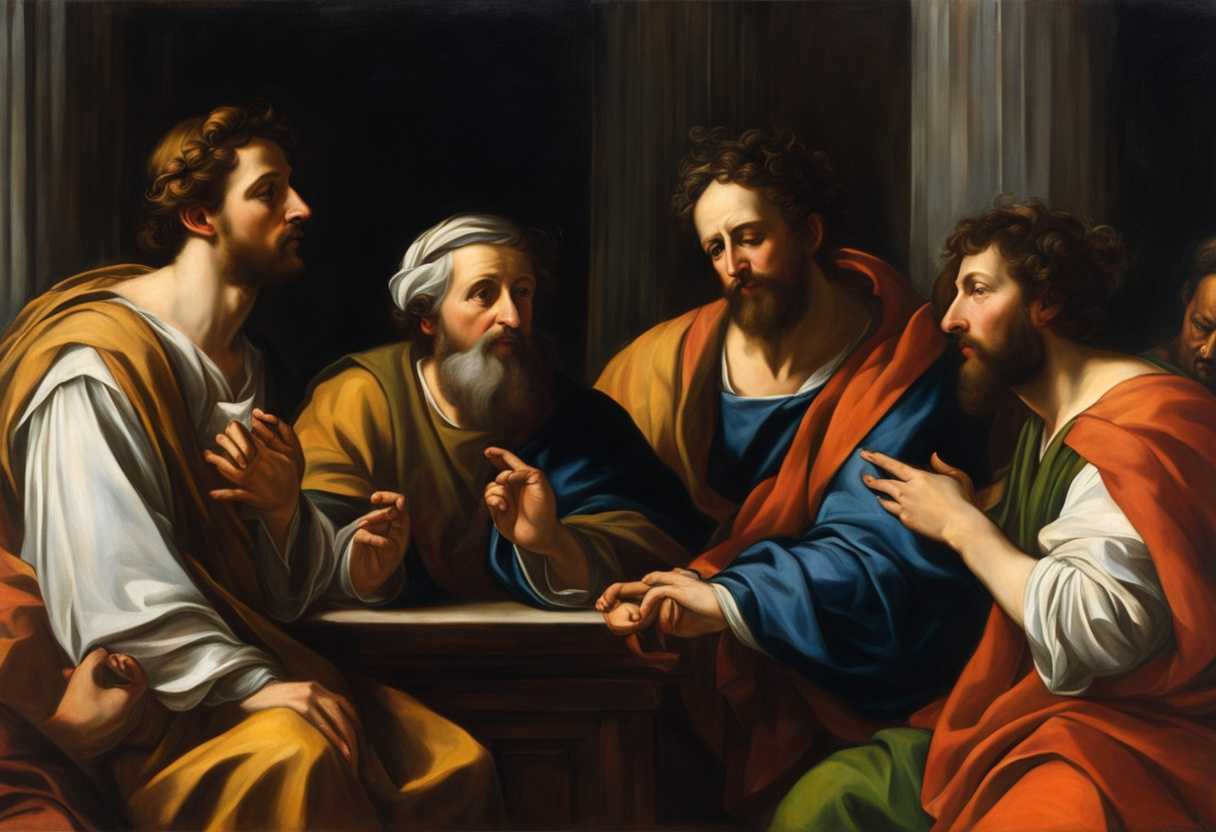
Setting the Scene for Acts 11:1-18
In Acts chapter 11, we find Peter recounting his experience with the conversion of the Gentiles to the other apostles and believers in Jerusalem. The scene is set in a large room in Jerusalem, likely a meeting place for the early Christian community. The room is filled with a mix of apostles, elders, and other believers, all gathered to hear Peter’s account.
Peter begins by explaining how he was in Joppa when he had a vision from God, instructing him not to call anything impure that God has made clean. He then describes how he was summoned to the house of a Roman centurion named Cornelius in Caesarea, a Gentile who was seeking to know more about God. Peter shares how he preached the Gospel to Cornelius and his household, and how the Holy Spirit fell upon them, just as it had upon the Jewish believers at Pentecost.
The atmosphere in the room is tense as Peter recounts his interactions with the Gentiles, as this was a controversial topic among the early Jewish Christians. However, as Peter explains how God had clearly shown His acceptance of the Gentiles by giving them the Holy Spirit, the room falls silent, and the believers begin to praise God for His inclusive love and salvation for all people. This pivotal moment marks a significant shift in the early church’s understanding of God’s plan for all nations to be included in His kingdom.
What is Acts 11:1-18 about?
This verse from Acts 10:34-35 carries a profound message about the inclusivity of God’s love and salvation. Peter, a devout Jew, had a vision where God showed him that he should not consider any person unclean or unworthy. This realization led Peter to understand that God does not show favoritism but accepts people from every nation who fear Him and do what is right.
This passage challenges us to reflect on our own biases and prejudices. Are there people we consider unworthy of God’s love and grace? Are there individuals we overlook or exclude based on their background or ethnicity? Through Peter’s vision, we learn that God’s love knows no boundaries and that His grace is available to everyone, regardless of their heritage or social status. It serves as a reminder for us to embrace diversity, treat all individuals with respect and love, and recognize the inherent worth of every person in the eyes of God.
Understanding what Acts 11:1-18 really means
In Acts 11:1-18, we witness a pivotal moment in the early church as Peter recounts his encounter with Cornelius, a Gentile, to the Jewish believers in Jerusalem. This passage serves as a beacon of inclusivity, showcasing how the Gospel transcends cultural boundaries and welcomes all into God’s family. The purpose here is clear: to emphasize the breaking down of barriers between Jews and Gentiles, highlighting the universal reach of God’s love and salvation.
One key phrase that resonates from this passage is “God has granted repentance that leads to life” (v. 18). This succinct statement underscores that repentance and the path to eternal life are gifts bestowed by God, available to all, irrespective of their background. It reinforces the notion that salvation is not limited by ethnicity or heritage but is extended to all who turn to God in faith. Similarly, when Peter declares, “The Holy Spirit fell on them just as on us at the beginning” (v. 15), it signifies the equal acceptance of Gentile believers by God, mirroring the outpouring of the Spirit on the Jewish believers at Pentecost.
Acts 11:1-18 finds resonance in other biblical passages that echo the theme of inclusivity and unity in Christ. Acts 10:34-35 emphasizes God’s impartiality, stating that anyone who reveres Him and acts righteously is acceptable, regardless of nationality. Galatians 3:28 and Ephesians 2:14 further reinforce the idea of oneness in Christ, transcending societal divisions and fostering unity among believers.
The relevance of this passage extends to contemporary society, urging believers to embrace inclusivity and unity amidst diversity. In a world marked by divisions, Acts 11:1-18 serves as a poignant reminder of God’s all-encompassing love, calling us to break down barriers and extend grace to all. It challenges us to view every individual as a cherished member of God’s family, irrespective of their background or status, fostering a spirit of unity and love.
Consider a scenario where a diverse congregation gathers in a bustling urban setting, representing various cultures and traditions. Initially, differences may cause friction and misunderstandings. However, as they share their faith journeys and witness the transformative work of the Holy Spirit in each other’s lives, barriers dissolve, and a profound unity emerges. This unity becomes a compelling testimony to the transformative power of God’s love, drawing others to experience the inclusive embrace of the Gospel.
Acts 11:1-18 stands as a testament to God’s inclusive love and the transformative impact of the Gospel in breaking down barriers. It beckons us to embody this inclusive love, extending grace and acceptance to all, and to heed the guiding voice of the Holy Spirit in our lives. As we reflect on this passage, may we be inspired to embrace diversity, foster unity, and embody the inclusive love of Christ in our interactions with others.
How can we overcome prejudice and embrace diversity?
One way to overcome prejudice and embrace diversity is by focusing on the common humanity shared by all individuals. We can start to appreciate the differences that make each person unique by recognizing that we are all part of the same human family. We too can broaden our perspectives and open our hearts to those who may be different from us, just as Peter learned in Acts 11.
Another approach is through education and exposure to different cultures and beliefs. We can challenge our own preconceived notions and biases by actively seeking out opportunities to learn about and engage with diverse communities. This can lead to greater understanding, empathy, and acceptance of others. Diversity enriches our lives and communities, and it is important to remember that ultimately. Rather than fearing or rejecting what is unfamiliar, we can choose to celebrate the richness that comes from embracing different perspectives, backgrounds, and experiences. We can work towards building a more inclusive and harmonious society for all.
Application
Think of your life as an office where teamwork is crucial. We all have colleagues we’ve written off without truly knowing them. Acts 11:1-18 reminds us to shatter these mental barriers. Extend an open hand, just as God does, embracing everyone without bias. Will you break down your walls and foster unity, understanding, and acceptance today?

Reverend Michael Johnson is an experienced Church Minister with a profound expertise in spirituality and guidance. With a serene presence and a compassionate heart, he has faithfully served his congregation for over 20 years, leading them on a spiritual journey towards inner peace and enlightenment. Reverend Johnson’s extensive knowledge of religious philosophies and profound understanding of human nature have made him a trusted confidant and mentor to many, as he seamlessly weaves his profound wisdom into life teachings. Reverend Johnson’s calming demeanor and empathetic nature continue to uplift and heal souls, nurturing a sense of unity and tranquility within his community.