
Acts 11:1-3 is about the early Christian community questioning Peter’s decision to associate with uncircumcised Gentiles, highlighting the tension between traditional Jewish laws and the inclusive nature of the Gospel message.
1 Now the apostles and the brothers who were throughout Judea heard that the Gentiles also had received the word of God.
2 So when Peter went up to Jerusalem, the circumcision party criticized him, saying,
3 saying, “You went to uncircumcised men and ate with them.”
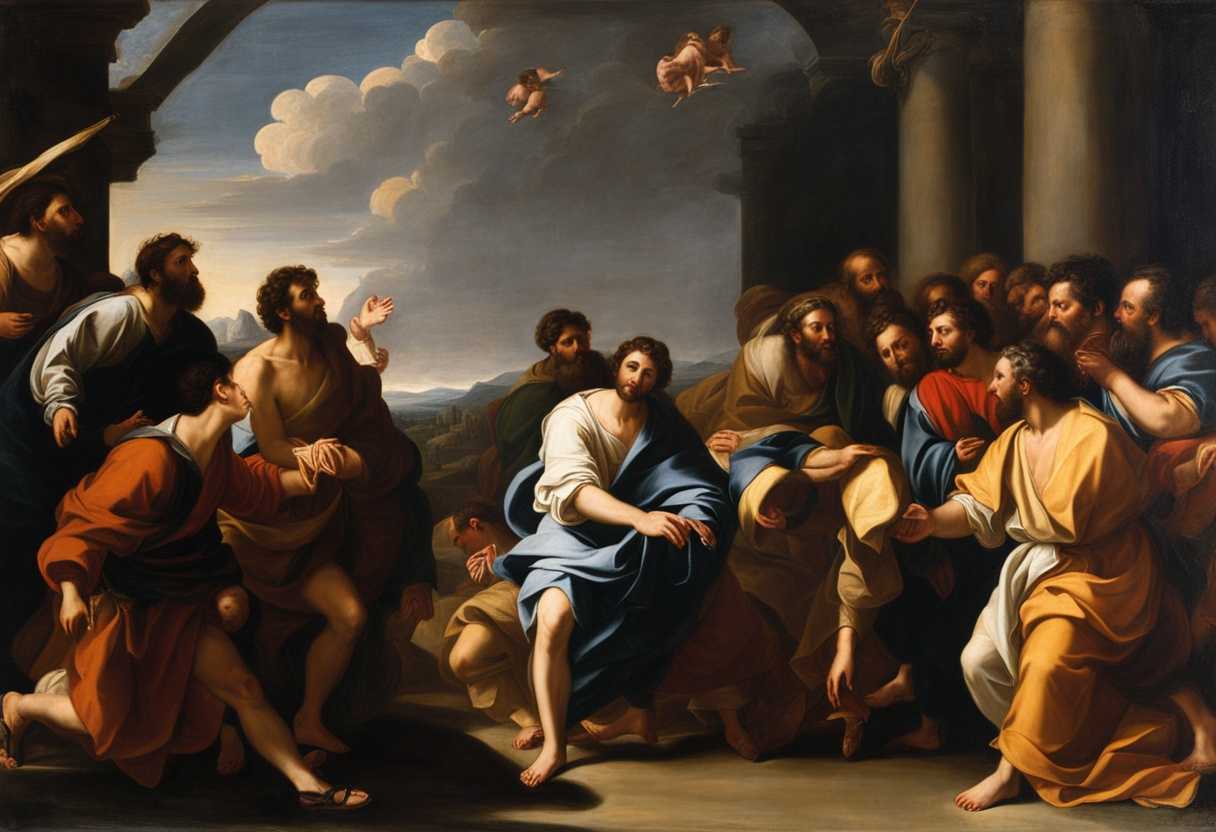
Setting the Scene for Acts 11:1-3
In Acts chapter 11, we find a scene where the apostle Peter returns to Jerusalem after having preached to and baptized the Gentiles. The setting is a tense and apprehensive atmosphere as Peter is met with criticism and questioning from the Jewish believers in Jerusalem. The Jewish Christians were taken aback by Peter’s actions of associating with the Gentiles, as it was a departure from the traditional Jewish customs and beliefs.
Among those present in this scene are Peter, the apostle known for his impulsive nature yet unwavering faith, and the Jewish believers who were skeptical and disapproving of Peter’s actions. The surroundings are likely a gathering place within Jerusalem, perhaps a meeting hall or a courtyard where the believers have come together to discuss and debate the recent events.
Peter, in his defense, recounts his vision from God and how he was instructed to not call anything impure that God has made clean. This pivotal moment in the early Christian church marks a significant shift towards the inclusion of the Gentiles in the faith, breaking down barriers and expanding the reach of the gospel beyond the Jewish community. The scene captures a crucial turning point in the spread of Christianity and the acceptance of all people, regardless of their background or ethnicity.
What is Acts 11:1-3 about?
Peter is likely recounting his decision to interact with and preach to the Gentiles, which was considered controversial among the Jewish believers in Jerusalem in this verse. The Jewish community at the time strictly followed traditions that separated them from non-Jews. Peter’s actions challenged these conventions and prompted him to explain his actions to the Jewish believers. Peter likely wanted to convey that his interactions with Gentiles were guided by the divine message of love and inclusion preached by Jesus. It was a crucial moment in the early Christian community as it transitioned from a primarily Jewish sect to a more universal movement. We might ask ourselves as we ponder this verse: How important is it for us to challenge societal norms for the sake of spreading love and understanding? How can we navigate moments of tension within our communities by appealing to shared values and beliefs? Peter’s actions serve as a reminder that sometimes, faith requires us to step outside our comfort zones and embrace unfamiliar perspectives to truly embody the teachings of love and compassion. It reminds us that unity and inclusivity are essential in building a strong community based on mutual respect and understanding.
Understanding what Acts 11:1-3 really means
The Book of Acts, penned by Luke, serves as a historical account of the early church’s growth and the spread of the Gospel following Jesus’ ascension. Acts 11:1-3 delves into Peter’s return to Jerusalem post his encounter with Cornelius, a Gentile, and the subsequent backlash he faces from Jewish believers. The phrase “The apostles and the believers throughout Judea heard that the Gentiles also had received the word of God” underscores the groundbreaking nature of Gentiles receiving the Gospel, initially deemed exclusive to Jews. As Peter faces criticism from the circumcised believers in Jerusalem, the tension between old traditions and the new inclusive message of Christianity becomes evident.
The term “circumcised believers” in Acts 11:1-3 refers to Jewish Christians adhering to Jewish customs and laws. The accusation that Peter “went into the house of uncircumcised men and ate with them” highlights the radical departure from Jewish laws prohibiting close association with Gentiles. Acts 10:34-35 lays the theological foundation for Peter’s actions, emphasizing God’s impartial acceptance of all who fear Him. Galatians 3:28 reinforces unity in Christ, transcending societal divisions, while Ephesians 2:14 speaks to the reconciliation between Jews and Gentiles through Christ.
This passage challenges contemporary readers to confront their biases and dismantle barriers hindering full acceptance of others. It advocates for inclusivity and acceptance, mirroring the universal essence of the Gospel. In a world marked by racial, cultural, and social divides, Acts 11:1-3 serves as a poignant reminder of the unity and equality found in Christ. Consider a diverse urban church where initial discomfort due to cultural disparities transforms into appreciation through shared experiences, echoing Peter’s journey towards inclusivity.
Reflect on a pastor’s account of initiating a community outreach program encompassing individuals from varied socioeconomic backgrounds. Despite initial resistance, building relationships and sharing stories led to a profound sense of unity and purpose within the church, akin to the early church’s embrace of Gentiles. Acts 11:1-3 stands as a pivotal moment urging us to dismantle barriers and embrace the all-encompassing nature of the Gospel. It prompts introspection on our attitudes, fostering a community reflecting Christ’s love and unity. By imbibing these teachings, we can strive towards a more inclusive and compassionate world, akin to the early Christians’ endeavors.
How can stereotypes hinder spiritual growth and unity?
Stereotypes can hinder spiritual growth and unity as they often lead to prejudice, bias, and division among people. The Jewish believers in the context of Acts 11:1-3 initially hesitated to accept the Gentiles into their community because of preconceived stereotypes and cultural biases. These stereotypes created barriers that prevented the growth of understanding, acceptance, and unity among believers.
When individuals hold onto stereotypes, they are unable to see others as fellow human beings created in the image of God. This mentality hinders empathy, compassion, and the ability to build meaningful relationships with others. Spiritual growth and unity require individuals to move beyond stereotypes, recognize the inherent dignity of every person, and embrace diversity within the community of faith. Challenging stereotypes and actively seeking to understand and appreciate the differences among believers can help spiritual growth flourish and strengthen unity within the body of Christ. Overcoming stereotypes allows for a deeper connection with others, fosters a sense of belonging and acceptance, and opens the door for God to work through diverse individuals for the advancement of His kingdom.
Application
Let’s unite in our Christian community, just like a well-oiled team at work or a close-knit family at home. Embrace differences with empathy and compassion, following the example of Barnabas. Together, let’s nurture a culture of unity, respect, and love among our fellow believers. How can we make this unity tangible in our church and community right now?

Reverend Michael Johnson is an experienced Church Minister with a profound expertise in spirituality and guidance. With a serene presence and a compassionate heart, he has faithfully served his congregation for over 20 years, leading them on a spiritual journey towards inner peace and enlightenment. Reverend Johnson’s extensive knowledge of religious philosophies and profound understanding of human nature have made him a trusted confidant and mentor to many, as he seamlessly weaves his profound wisdom into life teachings. Reverend Johnson’s calming demeanor and empathetic nature continue to uplift and heal souls, nurturing a sense of unity and tranquility within his community.