
Acts 12:5-17 is about the miraculous escape of Peter from prison, illustrating God’s power to deliver his followers from persecution and demonstrating the importance of persistent prayer in times of crisis.
5 So Peter was kept in prison, but earnest prayer for him was made to God by the church.
6 Now when Herod was about to bring him out, on that very night, Peter was sleeping between two soldiers, bound with two chains, and sentries before the door were guarding the prison.
7 And behold, an angel of the Lord stood next to him, and a light shone in the cell. He struck Peter on the side and woke him, saying, “Get up quickly.” And the chains fell off his hands.
8 And the angel said to him, “Dress yourself and put on your sandals.” And he did so. And he said to him, “Wrap your cloak around you and follow me.”
9 And he went out and followed him. He did not know that what was being done by the angel was real, but thought he was seeing a vision.
10 When they had passed the first and the second guard, they came to the iron gate leading into the city. It opened for them of its own accord, and they went out and went along one street, and immediately the angel left him.
11 When Peter came to himself, he said, “Now I am sure that the Lord has sent his angel and rescued me from the hand of Herod and from all that the Jewish people were expecting.”
12 When he realized this, he went to the house of Mary, the mother of John whose other name was Mark, where many were gathered together and were praying.
13 And when he knocked at the door of the gateway, a servant girl named Rhoda came to answer.
14 Recognizing Peter’s voice, in her joy she did not open the gate but ran in and reported that Peter was standing at the gate.
15 They said to her, “You are out of your mind.” But she kept insisting that it was so. They kept saying, “It is his angel!”
16 But Peter continued knocking, and when they opened, they saw him and were amazed.
17 But motioning to them with his hand to be silent, he described to them how the Lord had brought him out of the prison. And he said, “Tell these things to James and to the brothers.” Then he departed and went to another place.
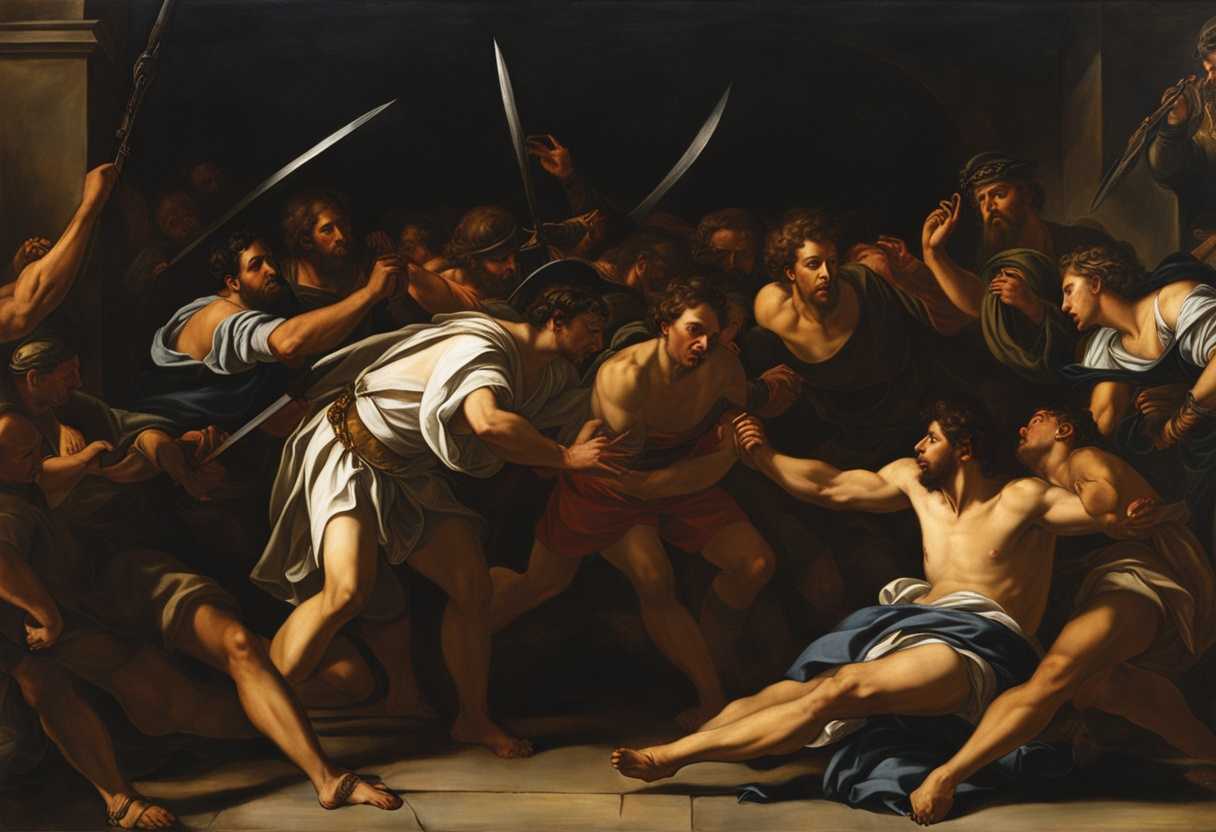
Setting the Scene for Acts 12:5-17
In Acts chapter 12, we find the apostle Peter in a precarious situation. King Herod Agrippa had just executed James, the brother of John, and seeing that it pleased the Jews, he decided to also arrest Peter. Peter was put in prison, guarded by four squads of soldiers, with the intention of bringing him out to the people after Passover.
The night before Peter was to be brought out, he was sleeping between two soldiers, bound with two chains, while sentries stood guard at the entrance. Suddenly, an angel of the Lord appeared, and a light shone in the prison. The angel struck Peter on the side to wake him up and instructed him to quickly get up and follow him. Peter’s chains fell off, and they passed by the guards unnoticed. They came to the iron gate that led to the city, which opened for them on its own accord. Peter found himself free and alone on the street outside the prison.
Realizing that he had been miraculously freed, Peter made his way to the house of Mary, the mother of John Mark, where many believers had gathered and were praying for him. A servant girl named Rhoda was so overjoyed to hear Peter’s voice at the gate that she forgot to open it for him and ran back to tell the others that Peter was there. The believers, in disbelief, thought she was out of her mind. Peter continued to knock, and when they finally opened the door, they were amazed to see him standing before them, a living testimony to the power of God’s deliverance.
What is Acts 12:5-17 about?
What an incredible moment this must have been for Peter and the disciples! Can you imagine the shock and awe they must have felt when they saw Peter miraculously freed from prison by an angel? This event truly showcases the power of faith and the divine intervention of God. It is a powerful reminder that even in our darkest moments, God is always with us, working miracles beyond our imagination.
The disciples’ astonishment and gratitude in this verse serve as a testament to the unwavering faith they had in God’s plan. Despite the challenges and obstacles they faced, they continued to trust in Him and witnessed His incredible power at work. This verse is a reminder to all of us that no matter what struggles we may encounter, God has the power to free us from our prisons, both literal and metaphorical, and guide us towards freedom and victory. It is a message of hope, resilience, and the eternal presence of God’s grace in our lives.
Understanding what Acts 12:5-17 really means
The passage in Acts 12:5-17 recounts the miraculous escape of Peter from prison, showcasing the potency of prayer and divine intervention. As Peter was held captive, the church fervently prayed for his deliverance, underscoring the collective faith and unity of the early Christian community. The sudden appearance of an angel and the illumination in the cell symbolize God’s intervention in moments of despair, shedding light on His omnipotent presence in dire circumstances. The angel’s command for Peter to rise and the subsequent falling off of his chains signify liberation from physical and spiritual bondage through God’s divine power, emphasizing the transformative nature of faith.
In James 5:16, we are reminded that the prayer of a righteous person is potent and effective, reinforcing the notion that prayer can lead to extraordinary outcomes. Psalm 34:7 further elucidates the concept of divine protection and deliverance, illustrating God’s encampment around those who revere Him. Matthew 18:19-20 underscores the strength of communal prayer and the assurance of God’s presence among believers when they gather in His name, highlighting the significance of unity in faith.
Today, individuals face various forms of “prisons” such as illness, addiction, or financial struggles, akin to Peter’s predicament. This passage serves as a beacon of hope, assuring believers that God can intervene miraculously in their lives. The narrative also underscores the power of community, as seen in the early church’s unwavering support through prayer for Peter’s release. In contemporary society, communal prayer and solidarity can offer solace and optimism in times of adversity.
Reflecting on personal experiences, consider a time when a community rallied together in prayer for someone in need, witnessing unexpected improvements in their circumstances. For instance, a congregation praying for a member’s recovery from a severe illness and witnessing a miraculous healing. Such anecdotes exemplify the transformative impact of collective faith and intercession. Encourage readers to engage in communal prayer, fostering trust in God’s ability to work marvels in their lives, even amidst seemingly insurmountable challenges.
In conclusion, the narrative in Acts 12:5-17 underscores the efficacy of prayer, the significance of community support, and the reality of divine intervention. Encourage introspection among readers, prompting them to contemplate how they can lean on faith and communal bonds during times of adversity, trusting in God’s ability to bring about remarkable transformations.
How can we recognize God’s miraculous intervention in our lives?
We can recognize God’s miraculous intervention in our lives by observing the ways in which He answers our prayers in unexpected and powerful ways. We may experience divine interventions that defy logical explanations and demonstrate God’s providence, just as in the verse where Peter is miraculously freed from prison with the help of an angel.
When we encounter situations where the odds are stacked against us or when we face seemingly insurmountable challenges, and yet we are delivered from them in ways we could not have foreseen, it is a clear sign of God’s miraculous involvement in our lives. We too may witness God’s hand at work in extraordinary circumstances that can only be attributed to His divine intervention, just as Peter experienced supernatural deliverance from his imprisonment. God’s miraculous intervention often brings about a sense of awe and gratitude in our hearts, leading us to give thanks and praise to God for His intervention in our lives. We can strengthen our faith and trust in God’s power to work wonders in our lives by acknowledging and reflecting on these moments of divine intervention.
Application
In Acts 12:5-17, we witness the incredible power of unwavering faith and the undeniable strength of prayer. Just like the early church fervently prayed for Peter’s deliverance, imagine the possibilities if we approached our challenges with the same unwavering determination. Take a moment to reflect on the transformative impact of prayer in your life and in the lives of those you care about. Will you dare to believe in the extraordinary outcomes that await when we embrace the power of prayer, connecting us deeply to something greater than ourselves?

Reverend Michael Johnson is an experienced Church Minister with a profound expertise in spirituality and guidance. With a serene presence and a compassionate heart, he has faithfully served his congregation for over 20 years, leading them on a spiritual journey towards inner peace and enlightenment. Reverend Johnson’s extensive knowledge of religious philosophies and profound understanding of human nature have made him a trusted confidant and mentor to many, as he seamlessly weaves his profound wisdom into life teachings. Reverend Johnson’s calming demeanor and empathetic nature continue to uplift and heal souls, nurturing a sense of unity and tranquility within his community.