
Acts 13:13-14 is about Paul and his companions departing from Paphos and arriving in Perga, symbolizing the journey and mission of spreading the word of God to new places despite challenges and opposition.
13 Now Paul and his companions set sail from Paphos and came to Perga in Pamphylia. And John left them and returned to Jerusalem,
14 but they went on from Perga and came to Antioch in Pisidia. And on the Sabbath day they went into the synagogue and sat down.
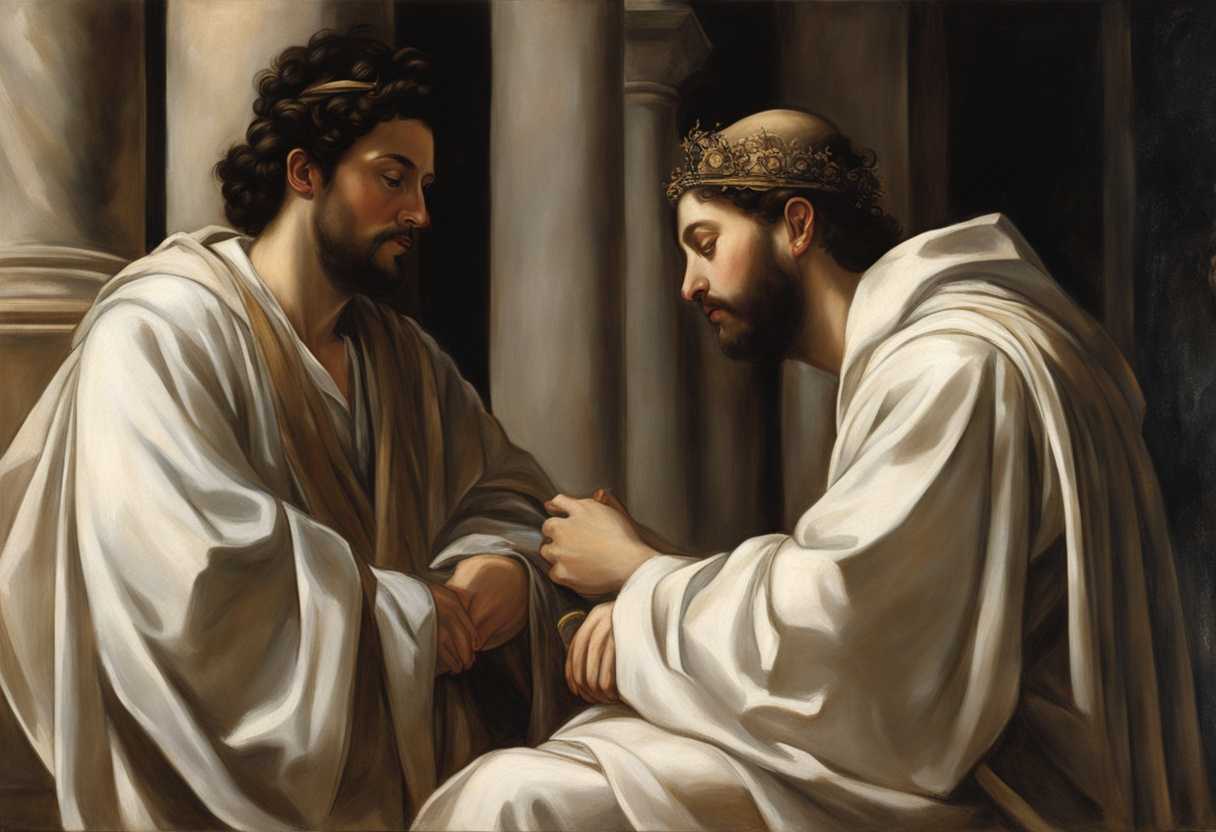
Setting the Scene for Acts 13:13-14
In Acts chapter 13, we find the apostle Paul and his companions on their first missionary journey. The scene unfolds as they set sail from Paphos in Cyprus and arrive at Perga in Pamphylia. The group consists of Paul, Barnabas, John Mark, and other believers who have joined them on this journey to spread the Gospel.
As they disembark from the ship, the travelers find themselves in the bustling port city of Perga. The sun beats down on the dusty streets lined with merchants selling their wares and locals going about their daily activities. The group of missionaries, led by Paul and Barnabas, make their way through the city, seeking opportunities to share the message of Jesus Christ with the people they encounter.
Amidst the sounds of the marketplace and the chatter of the crowds, Paul and his companions are filled with a sense of purpose and determination as they continue on their mission to bring the good news of salvation to all who will listen. The scene is set for the next chapter in their journey as they press on in faith, trusting in God to guide their steps and open doors for them to proclaim the message of hope and redemption.
What is Acts 13:13-14 about?
Paul continues his mission to spread the message of Jesus Christ in this verse. Paul and his companions actively engage in evangelism and share the teachings of Jesus with others by sailing to Perga in Pamphylia and preaching in the synagogue. This verse underscores the importance of actively taking the message of love, redemption, and salvation to different communities and cultures.
It’s fascinating to imagine the dedication and courage it took for Paul and his companions to travel by sea to a new place, ready to proclaim their faith in a synagogue. Their actions remind us of the importance of stepping out of our comfort zones and sharing our beliefs with others, even in unfamiliar or potentially challenging environments. It’s a powerful example of spreading positivity and hope in the world, even when faced with potential obstacles or opposition. This verse is a reminder of the transformative power of faith and the significance of actively participating in the work of spreading love and compassion to all corners of the earth.
Understanding what Acts 13:13-14 really means
In Acts 13:13-14, we catch a glimpse of Paul and Barnabas embarking on their first missionary journey, a pivotal moment in the early Christian movement. As they set sail from Paphos and arrived at Perga in Pamphylia, we witness the geographical spread of the Gospel and the strategic approach they took in reaching different regions. However, the departure of John Mark, one of their companions, and his return to Jerusalem, adds a layer of complexity to their mission. This departure becomes a point of contention later on, highlighting the challenges that can arise even among devoted followers of Christ.
The phrase “Paul and his companions” underscores the communal and collaborative nature of early Christian missions, emphasizing the importance of working together in spreading the message of Christ. Their journey from Paphos to Perga and then to Antioch in Pisidia showcases their perseverance and unwavering commitment to their mission, despite facing obstacles along the way. This dedication serves as a model for us today, reminding us of the importance of staying steadfast in our spiritual journeys, even when faced with difficulties.
The departure of John Mark and the subsequent reconciliation between him, Paul, and Barnabas, as seen in Acts 15:38-39 and 2 Timothy 4:11, teaches us valuable lessons about handling disagreements and the power of forgiveness in ministry. Just as Paul and Barnabas were able to reconcile with John Mark, we are called to navigate conflicts with grace and seek restoration in our relationships, both within the church and beyond. This narrative challenges us to reflect on how we handle disagreements and the role forgiveness plays in fostering unity and growth.
The relevance of Acts 13:13-14 extends beyond the historical account of Paul and Barnabas’s journey; it speaks to us today in our own spiritual walk. The story serves as a reminder of the importance of community and collaboration in our faith journeys. The phrase “Paul and his companions” prompts us to consider the significance of walking alongside fellow believers, supporting one another, and sharing the burdens and joys of the Christian life. Just as Paul, Barnabas, and John Mark worked together despite their differences, we are called to cultivate a spirit of unity and cooperation in our communities.
In reflecting on this passage, imagine a group of friends on a road trip, united in a common purpose but facing challenges along the way. When one friend decides to part ways temporarily, the others continue on their journey, eventually reconciling and understanding each other’s paths. This anecdote mirrors the journey of Paul, Barnabas, and John Mark, illustrating the themes of perseverance, understanding, and reconciliation present in Acts 13:13-14. It prompts us to consider how we handle disagreements, the importance of forgiveness, and the beauty of restoration in our relationships and ministries.
Acts 13:13-14 serves as a poignant reminder of the dedication required in our spiritual missions, the significance of community and collaboration, and the grace needed to navigate disagreements and conflicts. It challenges us to remain committed to our calling, to work together in unity, and to always be open to reconciliation and restoration. As we journey in faith, may we draw inspiration from the example set by Paul, Barnabas, and John Mark, striving to emulate their perseverance, humility, and commitment to spreading the Gospel to all nations.
How can we discern and respond to God’s call?
We can look to the examples set for us in the Bible in discerning and responding to God’s call. Paul and his companions respond to God’s call by traveling to a certain place to preach the word of God in this particular verse. Similarly, we can discern God’s call for our own lives through prayer, studying the Bible, seeking wise counsel from fellow believers, and listening to the promptings of the Holy Spirit.
When we feel a sense of direction or conviction towards a particular path or action, we can test it against the principles and teachings found in the Bible. If it aligns with God’s word and promotes His kingdom, it may be a call worth pursuing. Additionally, seeking confirmation through prayer and seeking counsel from mature Christians can provide further clarity on God’s call for our lives. Responding to God’s call ultimately requires faith, trust, and obedience. It may require stepping out of our comfort zones, making sacrifices, and being willing to follow wherever God leads us. We can more clearly discern His call and boldly respond in faith by staying close to God in prayer and aligning our hearts with His will.
Application
Reflect on Acts 13:13-14 and feel the stirring within to spread the message of salvation urgently. Like Paul and his companions sailing to Perga, be ready to journey both physically and spiritually in sharing Jesus Christ’s good news. The calling is distinct – go out and preach the Gospel to all nations just as Christ instructed. Are you ready to respond to this divine task and engage in spreading God’s love with those near you?

Reverend Michael Johnson is an experienced Church Minister with a profound expertise in spirituality and guidance. With a serene presence and a compassionate heart, he has faithfully served his congregation for over 20 years, leading them on a spiritual journey towards inner peace and enlightenment. Reverend Johnson’s extensive knowledge of religious philosophies and profound understanding of human nature have made him a trusted confidant and mentor to many, as he seamlessly weaves his profound wisdom into life teachings. Reverend Johnson’s calming demeanor and empathetic nature continue to uplift and heal souls, nurturing a sense of unity and tranquility within his community.