
Acts 14:13-15 is about the apostles Paul and Barnabas being mistaken for gods by the people of Lystra due to their miraculous healing of a lame man, and they use this opportunity to redirect the praise towards the one true God rather than accepting it for themselves.
13 And the priest of Zeus, whose temple was at the entrance to the city, brought oxen and garlands to the gates and wanted to offer sacrifice with the crowds.
14 But when the apostles Barnabas and Paul heard of it, they tore their garments and rushed out into the crowd, crying out,
15 “Men, why are you doing these things? We also are men, of like nature with you, and we bring you good news, that you should turn from these vain things to a living God, who made the heaven and the earth and the sea and all that is in them.”
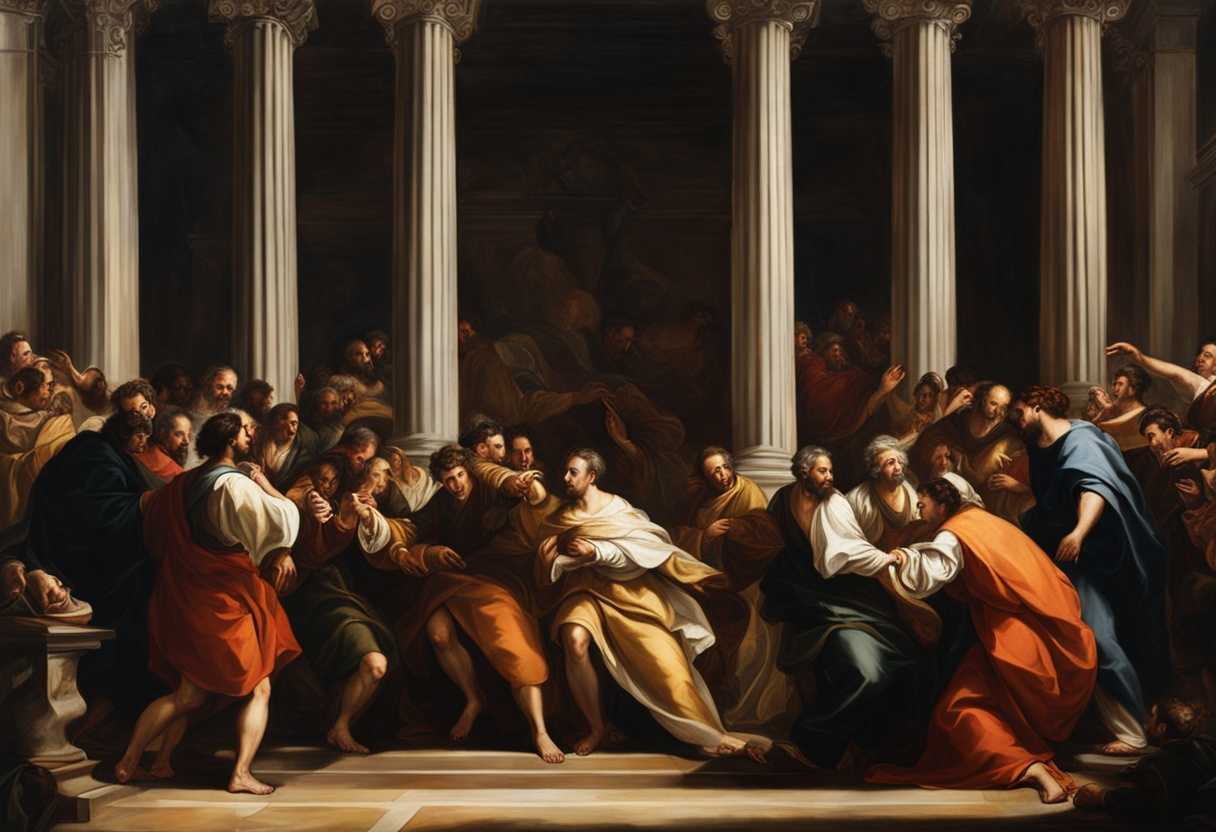
Setting the Scene for Acts 14:13-15
In Acts chapter 14, we find the apostles Paul and Barnabas on one of their missionary journeys, spreading the gospel in various cities. The scene in Acts 14:13-15 takes place in the city of Lystra, a Roman colony in the region of Lycaonia. Paul and Barnabas had just healed a man who had been lame from birth, causing a commotion among the people who witnessed the miracle.
As the crowd gathered in amazement at the healing, they began to attribute divine qualities to Paul and Barnabas, mistaking them for gods. The priest of Zeus, the patron god of the city, brought oxen and garlands to offer sacrifices to Paul and Barnabas, believing them to be gods in human form. Paul and Barnabas, horrified by this misunderstanding, tore their clothes and rushed into the crowd, urging them to turn away from these vain offerings and recognize the one true God who created the heavens, the earth, and all that is in them.
The scene is set in a bustling marketplace in Lystra, with the sounds of merchants haggling, animals braying, and the aroma of incense wafting through the air. The sun beats down on the cobblestone streets as Paul and Barnabas stand amidst the crowd, their faces filled with both concern and determination to redirect the people’s worship towards the living God. The tension is palpable as the apostles strive to convey the message of salvation amidst the backdrop of pagan idolatry.
What is Acts 14:13-15 about?
Paul and Barnabas demonstrate humility and a deep understanding of their mission as messengers of the living God in this verse. Despite being praised and revered by the people in Lystra, they refuse to accept worship as gods. Instead, they redirect the attention and adoration towards the true source of their power and message – the living God. This act showcases their devotion to God and their commitment to spreading the good news without seeking personal glory or recognition.
Paul and Barnabas’ rejection of worship as gods also serves as a powerful reminder for us today. It prompts us to reflect on our own motives and intentions in our actions. Are we seeking validation and praise for ourselves, or are we pointing others towards the greatness of God? It challenges us to prioritize God’s glory above our own desires for recognition or status. We can strive to live a life that glorifies God and shines a light on His truth by following their example, just as Paul and Barnabas did in rejecting worship as gods.
Understanding what Acts 14:13-15 really means
Acts 14:13-15 recounts a fascinating incident where Paul and Barnabas, in the midst of their missionary journey, are mistaken for gods by the people of Lystra. This misunderstanding arises from the performance of a miracle, which prompts the locals, steeped in their pagan beliefs, to attempt offering sacrifices to the two men, believing them to be the gods Zeus and Hermes. The response of Paul and Barnabas is crucial in this scenario, as they vehemently reject the adoration, emphasizing their humanity and redirecting the glory to the living God.
The key phrases in this passage hold significant meanings that shed light on the core message being conveyed. When Paul questions the people, “Men, why are you doing these things?”, he is highlighting the confusion and misdirection of their worship. By asserting, “We also are men, of like nature with you,” Paul and Barnabas stress their humble humanity, making it clear that they are not divine beings deserving of worship. Their proclamation, “We bring you good news, that you should turn from these vain things to a living God,” underscores the essence of the Gospel, urging people to forsake idolatry and embrace the one true God.
Drawing connections to other biblical passages enriches our understanding of the themes at play. Exodus 20:3-5, the Ten Commandments, explicitly warn against idolatry and the worship of false gods. Romans 1:25, as articulated by Paul, addresses the human tendency to exchange the truth of God for lies and worship created things rather than the Creator. In 1 Corinthians 8:4-6, Paul clarifies the Christian belief in one God amidst the existence of various so-called gods.
The relevance of this narrative to contemporary society is striking. While physical idol worship still exists, idolatry manifests in diverse forms today, such as the idolization of celebrities, material possessions, or even ideologies. This passage serves as a poignant reminder to redirect our worship solely towards God, recognizing the emptiness of placing ultimate value in anything else.
Consider a scenario where a celebrity is idolized to the point of being seen as flawless, only for their humanity to be exposed, leading to disillusionment. Similarly, Paul and Barnabas’s reaction serves as a powerful reminder that no human, regardless of their talents or accomplishments, should be elevated to a divine status reserved for God alone.
Reflect on your own life and ponder if there are areas where you might be giving undue importance to things or individuals, potentially elevating them to a position meant only for God. Contemplate how you can shift your focus and adoration towards God, acknowledging His supremacy and embracing the transformative message of the Gospel. By delving into the context and significance of Acts 14:13-15, we gain a deeper appreciation for the imperative of directing our worship and reverence solely to God, steering clear of the snares of contemporary idolatry.
What is the true object of our worship?
The true object of our worship is the living God who made the heavens, the earth, the sea, and everything in them. He is the Creator of all things and the source of life itself. This verse reminds us that our worship should be directed towards God, who deserves all honor and glory.
When we recognize God as the true object of our worship, we acknowledge His sovereignty over all creation and the importance of revering Him above all else. Our worship should be centered on praising and glorifying God for His mighty works and His presence in our lives. We align ourselves with His will and purpose for our lives by focusing our worship on the living God.
Therefore, let us fix our hearts and minds on the true object of our worship, the one who deserves our adoration and devotion. We honor God as the Creator and sustainer of all things by doing so, and we find fulfillment in living a life that is rooted in reverence and awe of Him.
Application
Harness the power of God’s Word in your life. Dive deep into the scriptures, let them mold you in ways that work and family cannot. Take action, let the words transform you, guiding your every step. How will you allow God’s message to shape your life today?

Reverend Michael Johnson is an experienced Church Minister with a profound expertise in spirituality and guidance. With a serene presence and a compassionate heart, he has faithfully served his congregation for over 20 years, leading them on a spiritual journey towards inner peace and enlightenment. Reverend Johnson’s extensive knowledge of religious philosophies and profound understanding of human nature have made him a trusted confidant and mentor to many, as he seamlessly weaves his profound wisdom into life teachings. Reverend Johnson’s calming demeanor and empathetic nature continue to uplift and heal souls, nurturing a sense of unity and tranquility within his community.