
Acts 15:1-6 is about the debate among early Christians regarding the requirement of circumcision for Gentile converts, highlighting the tension between upholding Jewish laws and embracing Gentile believers in the early Christian community.
1 But some men came down from Judea and were teaching the brothers, “Unless you are circumcised according to the custom of Moses, you cannot be saved.”
2 And after Paul and Barnabas had no small dissension and debate with them, Paul and Barnabas and some of the others were appointed to go up to Jerusalem to the apostles and the elders about this question.
3 So, being sent on their way by the church, they passed through both Phoenicia and Samaria, describing in detail the conversion of the Gentiles, and brought great joy to all the brothers.
4 When they came to Jerusalem, they were welcomed by the church and the apostles and the elders, and they declared all that God had done with them.
5 But some believers who belonged to the party of the Pharisees rose up and said, “It is necessary to circumcise them and to order them to keep the law of Moses.”
6 The apostles and the elders were gathered together to consider this matter.
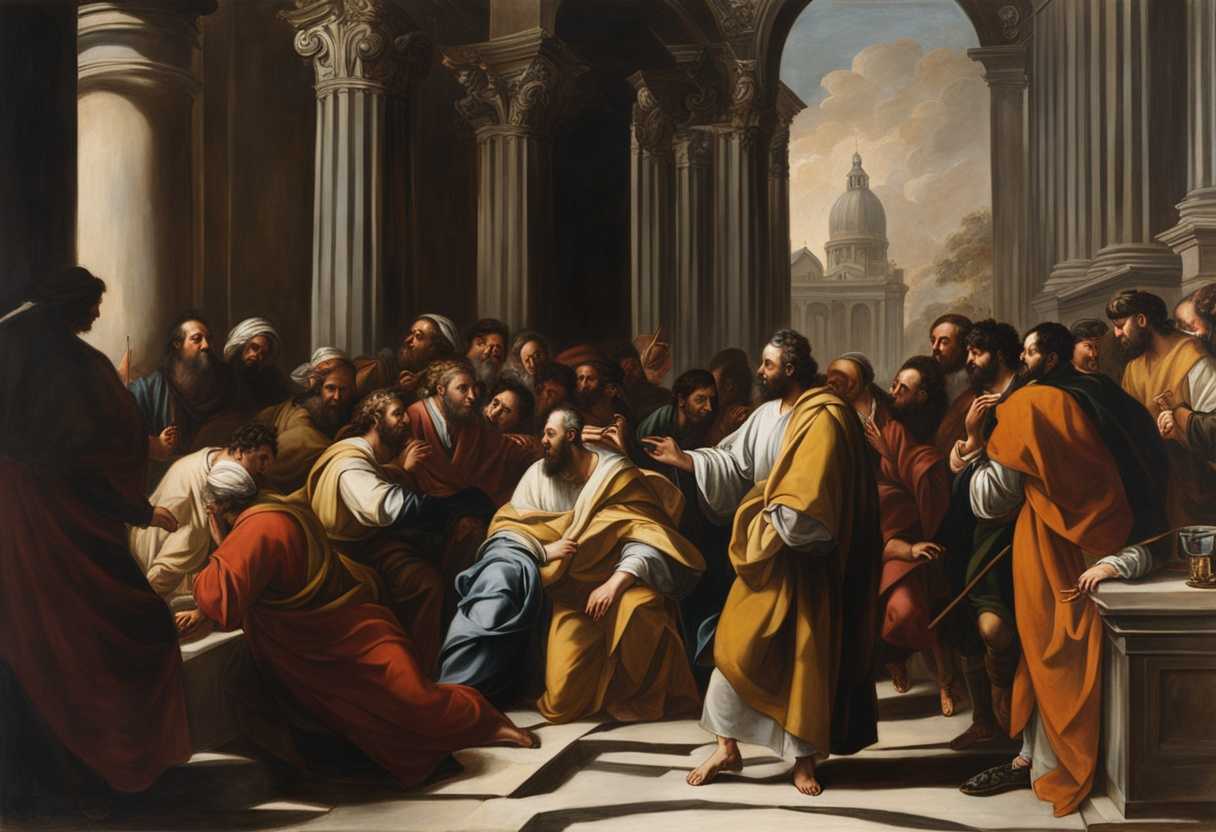
Setting the Scene for Acts 15:1-6
The scene in Acts 15:1-6 takes place in Jerusalem, in a bustling meeting room filled with early Christian leaders. The room is adorned with simple wooden furniture and lit by oil lamps, casting a warm glow over the gathering. The air is thick with anticipation and tension as the leaders have gathered to address a pressing issue that threatens to divide the young Christian community.
Among those present are prominent figures such as Peter, Paul, and James, the brother of Jesus. They have come together to discuss the question of whether Gentile converts to Christianity should be required to follow Jewish customs, particularly the rite of circumcision. The debate is intense, with passionate arguments being made on both sides. The leaders listen attentively, their faces reflecting the weight of the decision they must make for the future of the faith.
As the discussion unfolds, it becomes clear that this meeting will be a pivotal moment in the history of Christianity. The leaders must navigate delicate theological and cultural issues to ensure the unity and growth of the early church. The outcome of this meeting will shape the direction of the Christian movement and determine how it will interact with the wider world.
What is Acts 15:1-6 about?
This verse highlights a pivotal moment in the history of the early Christian church when leaders grappled with the question of whether Gentile believers had to adhere to the Jewish practice of circumcision. The decision not to require circumcision marked a significant shift in the church’s approach towards inclusivity and the integration of different cultural backgrounds within the Christian faith. This decision emphasized the message of grace and unity in Christ, transcending cultural or traditional practices that might have otherwise divided believers.
Have you ever thought about how different cultural practices and traditions can influence our understanding of faith? How does this decision to not mandate circumcision for Gentile believers reflect the core values of Christianity, such as love, acceptance, and unity? Reflecting on this verse reminds us of the importance of embracing diversity within the church and recognizing that our faith transcends cultural and traditional boundaries. Let us follow the example set by the early church leaders and extend grace and inclusion to all believers, regardless of their background or cultural practices.
Understanding what Acts 15:1-6 really means
The early church faced a significant challenge as Gentile converts were being integrated into the community. Jewish Christians, known as Judaizers, were advocating for the Gentiles to adhere to Mosaic Law, including circumcision. This tension led to a crucial moment in church history, setting the stage for the Jerusalem Council. In Acts 15:1-6, we see certain individuals from Judea coming to Antioch, emphasizing the influence of Judaizers and the spread of early Christian teachings. The statement, “Unless you are circumcised, according to the custom taught by Moses, you cannot be saved,” underscores the clash between Jewish customs and the new covenant in Christ.
The passage also highlights the importance of doctrinal clarity and the willingness to engage in debates to confront false teachings. Paul and Barnabas found themselves in sharp dispute with these individuals, showing the necessity of defending the core tenets of the faith. The subsequent gathering of the apostles and elders to deliberate on this matter demonstrates the early church’s commitment to communal discernment and shared leadership. This communal decision-making process reflects the value placed on unity and consensus within the early Christian community.
In modern times, the struggle between tradition and new understanding remains relevant. Acts 15:1-6 encourages believers to prioritize the central message of the Gospel over cultural or traditional differences, fostering unity in diversity. It serves as a reminder to address conflicts within the church through dialogue and communal decision-making, seeking God’s guidance in resolving disputes. The passage prompts us to reflect on how we handle doctrinal disagreements within our own faith communities, emphasizing the importance of approaching such issues with grace and wisdom.
An illustrative anecdote could be a contemporary church grappling with differing preferences in worship styles. Some members advocate for traditional hymns, while others prefer contemporary music. The church leadership decides to convene a meeting to discuss and pray about the matter. Through open dialogue and seeking God’s guidance, they find a way to honor both traditions, promoting unity and mutual respect among the congregation.
Acts 15:1-6 ultimately teaches us the significance of addressing doctrinal disputes with grace and wisdom. It underscores that the core message of the Gospel transcends cultural and traditional boundaries, urging us to seek unity and understanding within the body of Christ. By valuing each member’s perspective while holding fast to the truth of the Gospel, we can navigate differences and strengthen the unity of the church.
How can we discern the guidance of the Holy Spirit?
We can discern the guidance of the Holy Spirit by paying attention to the unity and agreement among believers. The early church in Acts 15:1-6 faces a disagreement about a theological matter. However, after much discussion and debate, the apostles and elders came together to reach a decision that was in line with the guidance of the Holy Spirit. This unity and agreement among the leaders of the church can be seen as a sign of the Holy Spirit’s guidance, as He brings believers together in harmony and truth.
Furthermore, discerning the guidance of the Holy Spirit involves seeking wisdom and counsel from other believers. The apostles and elders in Jerusalem came together in the passage to discuss the matter at hand and seek God’s will through prayer and reflection on Scripture. We can better discern the leading of the Holy Spirit in our own lives and communities by involving others in the decision-making process and seeking godly counsel.
Lastly, discerning the guidance of the Holy Spirit also requires humility and openness to God’s leading. The early church leaders were willing to set aside personal preferences and agendas in order to follow the direction that the Holy Spirit was leading them. This demonstrates the importance of being humble and open to God’s leading, even if it may go against our own desires or beliefs. We can more clearly discern the leading of the Holy Spirit in our lives and communities by being willing to submit to God’s will and seek His guidance with an open heart.
Application
Think of the church as your workplace or family, where unity and cooperation are key to success and happiness. When there’s a disagreement, imagine it as a team challenge that requires everyone’s input to solve. Like in Acts 15, the early believers showed us the power of coming together with love and understanding to find resolutions. Take action today: pursue peace and harmony in your church community. How will you be the catalyst for unity?

Reverend Michael Johnson is an experienced Church Minister with a profound expertise in spirituality and guidance. With a serene presence and a compassionate heart, he has faithfully served his congregation for over 20 years, leading them on a spiritual journey towards inner peace and enlightenment. Reverend Johnson’s extensive knowledge of religious philosophies and profound understanding of human nature have made him a trusted confidant and mentor to many, as he seamlessly weaves his profound wisdom into life teachings. Reverend Johnson’s calming demeanor and empathetic nature continue to uplift and heal souls, nurturing a sense of unity and tranquility within his community.