
Acts 15:22-35 is about the importance of unity and reconciliation within the early Christian community, demonstrated through the resolution of a significant dispute regarding the adherence to Jewish customs by Gentile believers.
22 Then it seemed good to the apostles and the elders, with the whole church, to choose men from among them and send them to Antioch with Paul and Barnabas. They sent Judas called Barsabbas, and Silas, leading men among the brothers,
23 They sent this letter by them: “The apostles and the elders, your brothers, To the brothers who are of the Gentiles in Antioch and Syria and Cilicia, greetings.
24 Since we have heard that some persons have gone out from us and troubled you with words, unsettling your minds, although we gave them no instructions,
25 it has seemed good to us, having come to one accord, to choose men and send them to you with our beloved Barnabas and Paul,
26 men who have risked their lives for the name of our Lord Jesus Christ.
27 We have therefore sent Judas and Silas, who themselves will tell you the same things by word.
28 For it has seemed good to the Holy Spirit and to us to lay on you no greater burden than these requirements:
29 that you abstain from what has been sacrificed to idols, and from blood, and from what has been strangled, and from sexual immorality. If you keep yourselves from these, you will do well. Farewell.”
30 So when they were sent off, they went down to Antioch, and having gathered the congregation together, they delivered the letter.
31 And when they had read it, they rejoiced because of its encouragement.
32 And Judas and Silas, who were themselves prophets, encouraged and strengthened the brothers with many words.
33 And after they had spent some time, they were sent off in peace by the brothers to those who had sent them.
34 But it seemed good to Silas to remain there.
35 But Paul and Barnabas remained in Antioch, teaching and preaching the word of the Lord, with many others also.
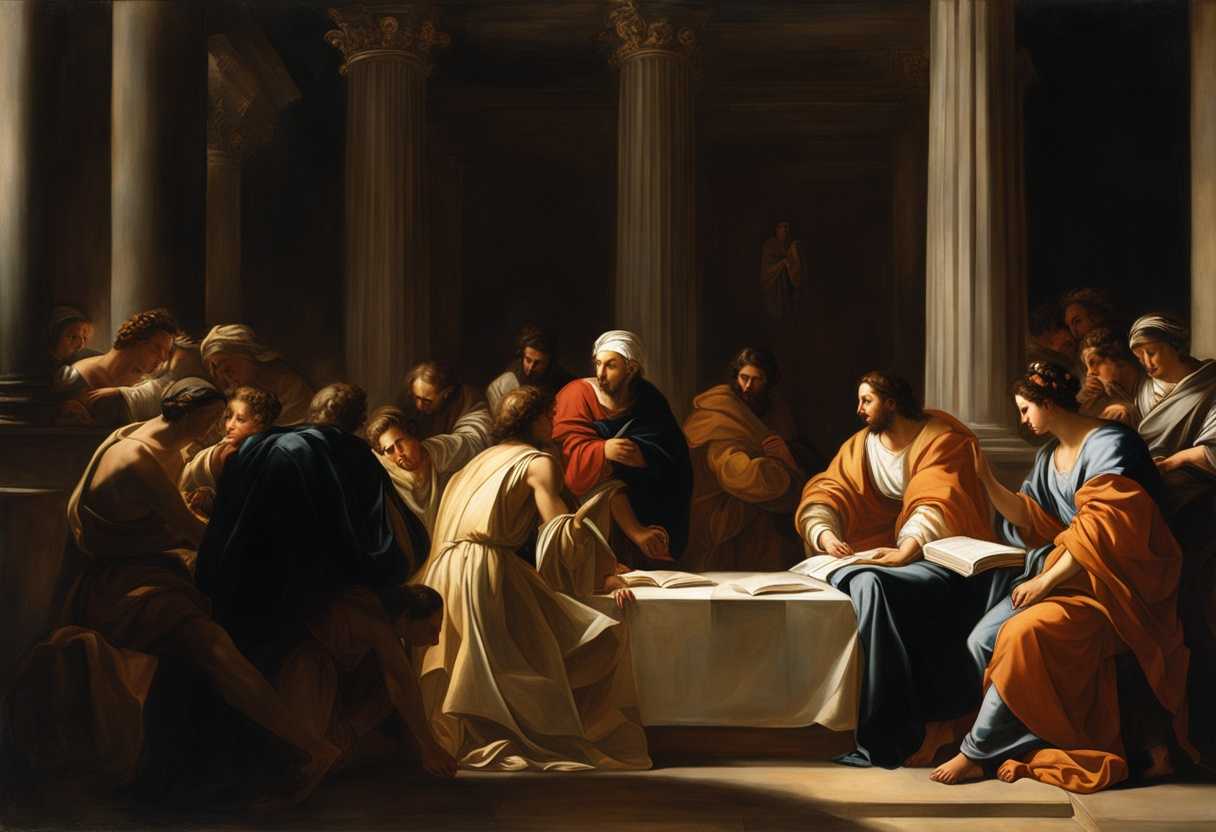
Setting the Scene for Acts 15:22-35
The scene in Acts 15:22-35 takes place in Jerusalem, following a significant meeting of the early Christian leaders to address the issue of whether Gentile believers needed to be circumcised according to the law of Moses. The meeting was called the Council of Jerusalem and included prominent figures such as James, Peter, and Paul.
After much discussion and prayer, it was decided that Gentile believers did not need to be circumcised but should abstain from food sacrificed to idols, from blood, from the meat of strangled animals, and from sexual immorality. The decision was communicated to the Gentile believers through a letter, which was entrusted to Judas Barsabbas and Silas, who were chosen as representatives to deliver the message.
In this particular scene, we see Judas Barsabbas and Silas traveling from Jerusalem to Antioch to deliver the letter and share the decision of the council with the Gentile believers there. The journey would have taken them through various towns and villages, allowing them to interact with other believers and share the news of the council’s decision, bringing unity and clarity to the early Christian community.
What is Acts 15:22-35 about?
This verse from the Bible is a powerful reminder of the core belief in Christianity that salvation is a gift of God’s grace, received through faith in Jesus Christ, and not by our own works or efforts. The Jerusalem Council, comprised of early church leaders, reaffirmed this foundational truth to combat false teachings that emphasized the need for adhering to specific laws or performing certain rituals to earn salvation.
Think about it like this: God’s love and mercy are freely given to us, not because of anything we do or don’t do, but because of His abundant grace. Our acceptance of this gift is not based on our achievements or good deeds, but on our trust and belief in the saving work of Jesus on the cross. The Jerusalem Council wanted to ensure that believers understood that God’s unmerited favor saves us, not our own efforts to earn His approval, by emphasizing salvation by grace through faith.
So, next time you find yourself swamped with trying to earn your way into God’s favor or feeling burdened by the weight of trying to be “good enough,” remember this verse. Let it be a source of comfort and reassurance that your salvation is secure in God’s grace, and all you need to do is place your trust in Him.
Understanding what Acts 15:22-35 really means
The passage in Acts 15:22-35 takes us back to the early days of the Christian church, specifically to the Council of Jerusalem. This council was a pivotal moment as it addressed the question of whether Gentile converts needed to adhere to Jewish law, particularly the practice of circumcision. The decision reached was significant; a letter was to be sent to the Gentile believers, clarifying that while they were not required to follow the entirety of Jewish law, they were urged to abstain from certain practices. This decision was not made lightly but was a result of collective discernment by the apostles, elders, and the whole church.
“It seemed good to the apostles and the elders, with the whole church” underscores the unity and consensus-building process within the early church leadership. The phrase “To choose men from among them and send them to Antioch with Paul and Barnabas” highlights the importance of trusted messengers in conveying important messages and maintaining unity among believers. The statement “It seemed good to the Holy Spirit and to us” emphasizes the belief that the decision was guided by divine inspiration, not merely human wisdom. The council aimed to simplify the requirements for Gentile believers, as seen in the phrase “To lay upon you no greater burden than these essentials,” focusing on core principles rather than burdensome laws.
In related biblical passages, we see the ongoing struggle to integrate Gentiles into the Christian community, as illustrated in Galatians 2:11-14. Ephesians 2:14-16 emphasizes the unity in Christ that transcends cultural and ethnic divides. Acts 10:34-35 showcases Peter’s realization that God shows no partiality, welcoming all who fear Him and do what is right, regardless of nationality.
The relevance of Acts 15:22-35 to contemporary believers is profound. It underscores the importance of unity and inclusivity within the Christian community, reminding us to focus on core principles of love, faith, and moral integrity rather than unnecessary rules. The decision-making process of the early church, characterized by consultation, prayer, and consensus, can serve as a model for resolving conflicts and making decisions in modern communities.
To illustrate this relevance, imagine a modern church grappling with how to welcome and integrate new members from diverse cultural backgrounds. By following a process akin to the early church’s decision-making, involving prayer, discussion, and a focus on core values, the church can navigate the issue with unity and inclusivity, strengthening the community in the process.
Acts 15:22-35 teaches us valuable lessons about unity, inclusivity, and prioritizing the essentials of faith. It encourages us to seek divine guidance in our decision-making processes and to prioritize love and moral integrity over rigid adherence to rules. This message remains as pertinent today as it was in the early church, urging us to build communities that are welcoming and united in their core beliefs.
Are we willing to surrender our plans for God’s?
The verse emphasizes the importance of surrendering our own plans to follow God’s will. It illustrates how the early church leaders were open to changing their plans and decisions as they sought guidance from the Holy Spirit. This flexibility and willingness to submit to God’s leading resulted in unity and harmony among believers. We may have our own agendas and plans in our lives, but it is crucial to align them with God’s purposes. Surrendering our plans to God allows His will to be accomplished in our lives and brings about deeper satisfaction and fulfillment. We can experience God’s peace, guidance, and provision in ways that far exceed our own limited understanding by following His leading. Surrendering our plans to God ultimately requires trust and faith that He knows what is best for us. When we are willing to lay down our own desires and ambitions in exchange for His perfect will, we can experience the joy of walking in alignment with God’s purposes for our lives.
Application
Join forces with your church family to create a stronger bond and build a community that is unbreakable. Just like a well-oiled machine at work, let’s come together and lift each other up in our faith journey. Let’s align our hearts and minds towards a shared purpose, much like a family that thrives on love and support. How will you play your part in creating a united and cohesive church community that shines brightly to the world?

Reverend Michael Johnson is an experienced Church Minister with a profound expertise in spirituality and guidance. With a serene presence and a compassionate heart, he has faithfully served his congregation for over 20 years, leading them on a spiritual journey towards inner peace and enlightenment. Reverend Johnson’s extensive knowledge of religious philosophies and profound understanding of human nature have made him a trusted confidant and mentor to many, as he seamlessly weaves his profound wisdom into life teachings. Reverend Johnson’s calming demeanor and empathetic nature continue to uplift and heal souls, nurturing a sense of unity and tranquility within his community.