
Acts 16:25-26 is about Paul and Silas praying and singing hymns to God in prison, which leads to an earthquake that opens the prison doors and sets them free, symbolizing the power of faith and worship in overcoming adversity and experiencing divine intervention.
25 About midnight Paul and Silas were praying and singing hymns to God, and the prisoners were listening to them,
26 and suddenly there was a great earthquake, so that the foundations of the prison were shaken.
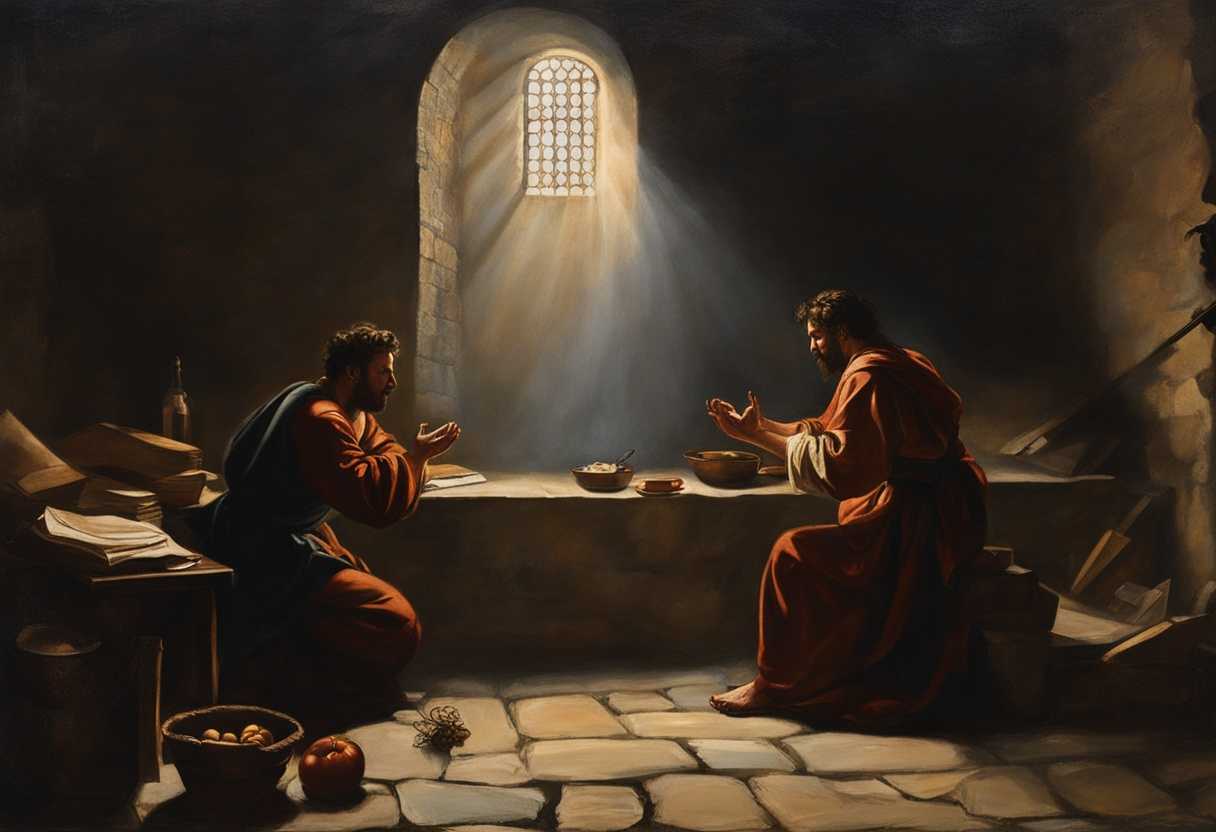
Setting the Scene for Acts 16:25-26
In Acts chapter 16, we find the apostle Paul and Silas in Philippi, a Roman colony in Macedonia. The scene unfolds in a dark and damp prison cell, where Paul and Silas have been thrown after being severely beaten and falsely accused of inciting a riot. Despite their dire circumstances, the two men are not despairing but are instead praying and singing hymns to God in the dead of night.
Their voices echo off the cold stone walls, reaching the ears of the other prisoners who are listening intently. Suddenly, a violent earthquake shakes the foundations of the prison, causing the doors to swing open and the prisoners’ chains to fall off. The jailer, awakened from his sleep by the commotion, rushes in and sees the open doors, assuming that the prisoners have escaped. Paul, sensing the jailer’s desperation and about to take his own life for fear of punishment, calls out to him, assuring him that all the prisoners are still there. This miraculous event leads to the jailer and his household coming to faith in Jesus Christ, as Paul and Silas share the message of salvation with them.
What is Acts 16:25-26 about?
This verse from Acts 16:25 is a powerful example of the transformative power of faith and praise, even in the midst of challenging circumstances. Paul and Silas found themselves in the darkest and most hopeless of situations – imprisoned and in chains in this story. However, instead of giving in to despair or bitterness, they chose to turn to prayer and praise. They found solace and comfort and demonstrated their unwavering trust in God by lifting their voices in hymns of worship and devotion.
The earthquake that followed their prayers and songs symbolizes the divine intervention and miraculous power that can be unleashed when we align our hearts with God’s will. It serves as a reminder that no situation is too hopeless or impossible for God to intervene in, and that our faith and worship have the ability to shake the very foundations of our struggles. This verse challenges us to reflect on our own response to adversity – do we grumble and complain, or do we choose to praise and trust in God’s plan, even when it seems incomprehensible? It urges us to remember that our faith has the power to break chains, both literal and metaphorical, and to bring about new beginnings and freedom.
Understanding what Acts 16:25-26 really means
In Acts 16:25-26, we find Paul and Silas in a challenging situation, imprisoned in Philippi for their actions. Despite the darkness of their circumstances, they chose to pray and sing hymns to God. This act of worship in the midst of adversity speaks volumes about their unwavering faith and trust in God, setting an example for believers today.
The phrase “About midnight Paul and Silas were praying and singing hymns to God” underscores the depth of their faith, showing that even in the darkest hours, they turned to God in prayer and worship. Their actions were not in vain, as “the other prisoners were listening to them,” witnessing the power of faith in action. This serves as a reminder that our faith and worship can impact those around us, becoming a testimony to God’s work in our lives.
The sudden and violent earthquake that shook the foundations of the prison symbolizes divine intervention. “All the prison doors flew open, and everyone’s chains came loose,” illustrating liberation and the breaking of physical and spiritual bonds through faith. This miraculous event showcases the power of God to bring about change in the most unexpected ways.
Drawing from related Bible passages such as Psalm 42:8, Philippians 4:6-7, and James 5:13, we see a consistent theme of turning to prayer and worship in all circumstances. These verses emphasize the importance of maintaining a connection with God through prayer, regardless of our situation. Just as Paul and Silas found solace in worship, we too can find peace and strength through our faith.
The story of Paul and Silas resonates with people today in various ways. It teaches us about the resilience of faith in adversity, the transformative power of worship, and the impact of our actions on those around us. Like a modern-day scenario where someone’s unwavering faith inspires others in the face of hardship, our faith can serve as a beacon of hope and strength to those in need.
In conclusion, the narrative of Paul and Silas in prison is a timeless reminder of God’s presence in our lives, especially during challenging times. Their story encourages us to trust in God, pray without ceasing, and worship Him in all circumstances. As we reflect on their example, may we find comfort in knowing that God is always with us, ready to bring about miraculous changes and offer hope in the midst of trials.
How can we find peace and worship in suffering?
Paul and Silas found peace and worshiped God by praying and singing hymns despite being imprisoned and experiencing suffering in Acts 16:25-26. Their unwavering faith and trust in God allowed them to transcend their physical circumstances and rejoice in the midst of their suffering. This demonstrates that true peace can be found in turning to God, even in times of hardship. Paul and Silas experienced a deep connection with God that brought them comfort and strength by focusing on worship and prayer. Their worship was a powerful testimony to the transformative power of faith in the face of adversity. We can find peace in our suffering by fixing our eyes on God, turning to Him in prayer, and worshiping Him in the midst of our trials. Paul and Silas ultimately remind us that suffering can be an opportunity to draw closer to God and experience His presence in a profound way. Through worship and prayer, we can find solace, strength, and peace even in the midst of our darkest moments. Our suffering does not have to define us; rather, it can be a catalyst for deepening our relationship with God and experiencing His love and comfort in a tangible way.
Application
Imagine you’re facing a tough day at work or dealing with family struggles. Just like Paul and Silas, who prayed and sang during their darkest hour, you too can find power in turning to God. Will you lift your voice in prayer and praise, trusting that God is right there with you, ready to bring the breakthrough you need?

Reverend Michael Johnson is an experienced Church Minister with a profound expertise in spirituality and guidance. With a serene presence and a compassionate heart, he has faithfully served his congregation for over 20 years, leading them on a spiritual journey towards inner peace and enlightenment. Reverend Johnson’s extensive knowledge of religious philosophies and profound understanding of human nature have made him a trusted confidant and mentor to many, as he seamlessly weaves his profound wisdom into life teachings. Reverend Johnson’s calming demeanor and empathetic nature continue to uplift and heal souls, nurturing a sense of unity and tranquility within his community.