
Acts 16:26-30 is about the power of faith and prayer to bring about miraculous interventions in times of trouble, demonstrating God’s sovereignty and the importance of spiritual guidance in making life-altering decisions.
26 and suddenly there was a great earthquake, so that the foundations of the prison were shaken.
27 When the jailer woke and saw that the prison doors were open, he drew his sword and was about to kill himself, supposing that the prisoners had escaped.
28 But Paul cried with a loud voice, “Do not harm yourself, for we are all here.”
29 And the jailer called for lights and rushed in, and trembling with fear he fell down before Paul and Silas.
30 Then he brought them out and said, “Sirs, what must I do to be saved?”
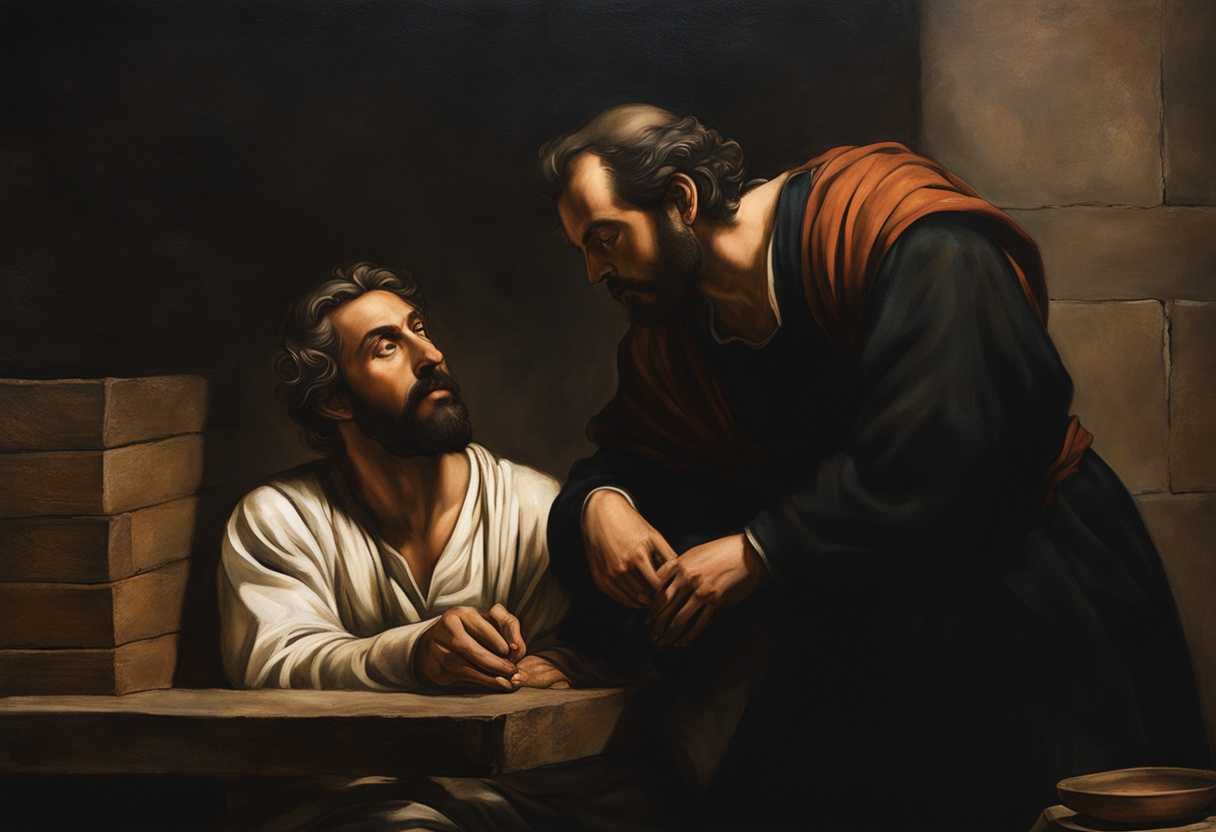
Setting the Scene for Acts 16:26-30
In Acts chapter 16, we find the apostle Paul and Silas imprisoned in Philippi. The scene is set in a dark and damp dungeon, with chains binding their hands and feet. The air is heavy with the stench of despair and hopelessness as the two men sit in the darkness, their bodies aching from the beatings they received earlier.
Their presence in this dire situation came about because of their commitment to spreading the gospel. While in Philippi, they had cast out a spirit of divination from a slave girl, which angered her owners who made false accusations against them. As a result, Paul and Silas were dragged before the authorities, beaten, and thrown into prison.
Despite their physical suffering and the seemingly hopeless circumstances, Paul and Silas chose to worship and pray to God in the midst of their trials. Their faith and devotion were so strong that even in the darkest hour of the night, an earthquake shook the prison, opening the doors and loosening their chains. This miraculous event led to the conversion of the jailer and his household, illustrating the power of God to bring light into the darkest of situations.
What is Acts 16:26-30 about?
The jailor’s question to Paul and Silas in this powerful verse from the Book of Acts delves deeply into matters of salvation and faith. The jailor’s inquiry reflects the universal human desire for redemption and transformation, as he seeks guidance on how to find salvation amidst the tumult of his circumstances.
The jailor’s question prompts us to reflect on our own spiritual journeys and the pursuit of salvation. It raises essential questions about the nature of salvation, the path to redemption, and the transformative power of faith. “I must ask, ‘What must I do to be saved?’”” the jailor exemplifies the yearning for spiritual enlightenment and offers us an opportunity to explore our own beliefs and convictions. We are encouraged to consider the significance of faith, repentance, and grace in our own lives as we ponder the jailor’s question alongside Paul and Silas. How do we cultivate a sense of salvation and hope in the midst of challenges and uncertainties? What actions can we take to align ourselves with divine purpose and experience spiritual liberation? The jailor’s question serves as a poignant reminder of the enduring quest for salvation and the profound impact of seeking guidance and support from fellow believers on our journey towards spiritual growth and renewal.
Understanding what Acts 16:26-30 really means
In Acts 16:26-30, we witness a profound moment in the lives of Paul and Silas, where divine intervention disrupts the physical and spiritual confines of a prison in Philippi. The violent earthquake that shakes the foundations of the prison symbolizes God’s power and presence, reminiscent of other biblical instances where natural phenomena signify divine actions. The imagery of the prison doors flying open and chains breaking loose speaks to the themes of liberation and freedom, echoing Jesus’ mission to bring freedom to the captives.
The reaction of the jailer, on seeing the open prison doors, reflects a deep sense of despair and hopelessness, leading him to contemplate taking his own life. This response underscores the severity of Roman law and the weight of personal responsibility felt by individuals in that context. However, Paul’s intervention, urging the jailer not to harm himself, reveals a profound sense of compassion and value for human life. It showcases the transformative power of faith and love in reaching out to those in distress.
Drawing parallels with other biblical passages such as Psalm 107:14, Isaiah 61:1, and John 8:36, we see a consistent theme of liberation and freedom from darkness and captivity. These verses emphasize the ultimate freedom that comes through Christ, resonating with the liberation experienced by the prisoners in Philippi. The relevance of this narrative to contemporary audiences lies in its message of spiritual liberation, hope in times of despair, and the importance of community and compassion.
Consider a scenario where an individual struggles with addiction, feeling trapped and hopeless, akin to the jailer in the story. Through the support of a faith community and the transformative power of God, they can break free from the chains of addiction and find a new beginning. Just as the earthquake shattered physical chains, God’s love and grace can bring about spiritual liberation, leading to a life of purpose and freedom.
In conclusion, Acts 16:26-30 serves as a poignant reminder of God’s intervention in our lives, breaking chains of bondage and offering hope in seemingly hopeless situations. It challenges us to trust in God’s power, extend compassion to others, and believe in the possibility of redemption and transformation. As we reflect on this narrative, may we be inspired to seek liberation from our own prisons, offer hope to the despairing, and foster a community marked by love and grace.
What must I do to be saved?
To be saved, believe in the Lord Jesus. It is through faith in Him that you will be saved. Jesus is the way, the truth, and the life, and no one comes to the Father except through Him. Confess with your mouth that Jesus is Lord and believe in your heart that God raised Him from the dead, and you will be saved. It is by God’s grace through faith that you are saved, not by your own works.
Repentance is also important for salvation. Turn away from your sins and turn towards God. Repentance involves a change of heart and a turning away from a life of sin. Ask for forgiveness of your sins, and God, who is faithful and just, will forgive you. Believe that Jesus died for your sins and that He is the only way to eternal life. Accept His gift of salvation and have faith in Him.
Application
In times of trials, praising God shines a light in darkness, offering strength and guidance. Embrace this power to trust His divine plans and find peace amid challenges. Allow Acts 16:26-30 to awaken a fiery spirit within, strengthening your faith and making you a beacon of His love. Will you choose to stand tall in belief, letting your heart resonate with joy even in the toughest times?

Reverend Michael Johnson is an experienced Church Minister with a profound expertise in spirituality and guidance. With a serene presence and a compassionate heart, he has faithfully served his congregation for over 20 years, leading them on a spiritual journey towards inner peace and enlightenment. Reverend Johnson’s extensive knowledge of religious philosophies and profound understanding of human nature have made him a trusted confidant and mentor to many, as he seamlessly weaves his profound wisdom into life teachings. Reverend Johnson’s calming demeanor and empathetic nature continue to uplift and heal souls, nurturing a sense of unity and tranquility within his community.