
Acts 17:1 is about the Apostle Paul and Silas traveling to Thessalonica to share the gospel of Jesus Christ.
1 Now when they had passed through Amphipolis and Apollonia, they came to Thessalonica, where there was a synagogue of the Jews.
Setting the Scene for Acts 17:1
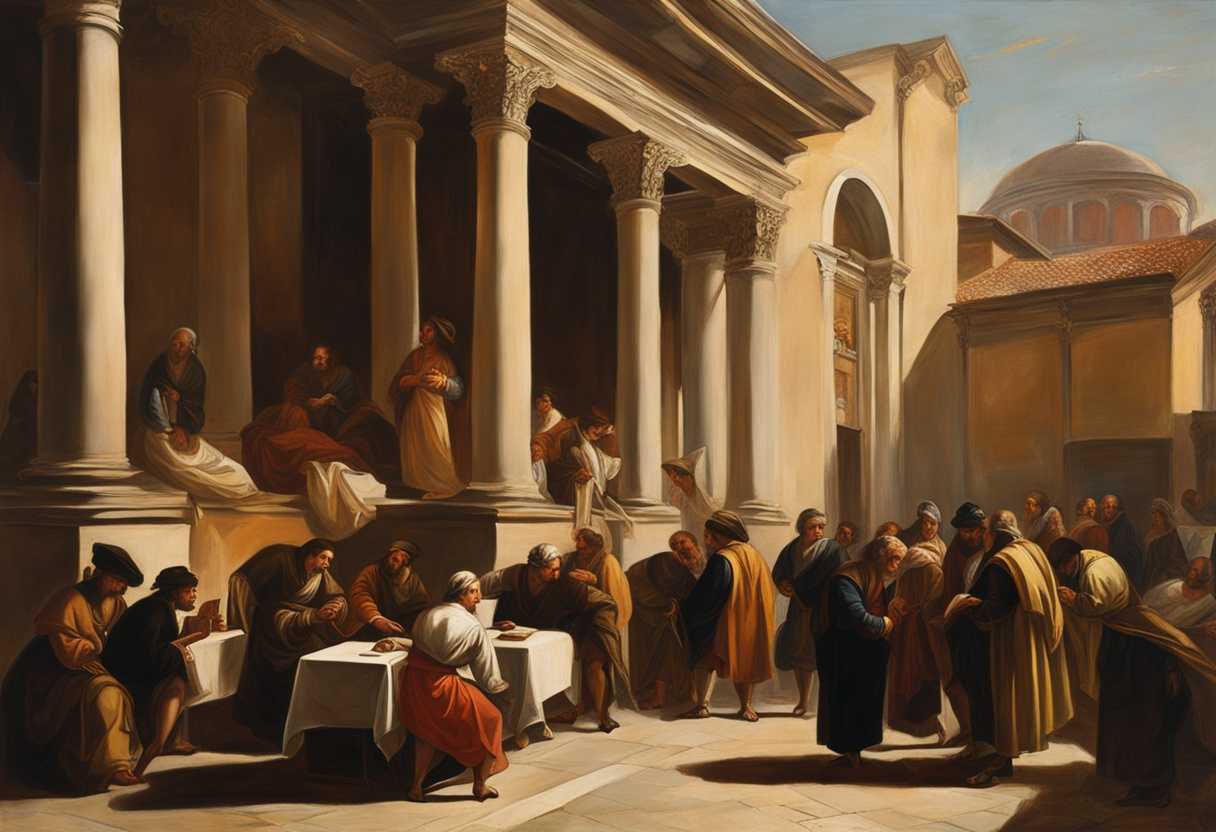
In Acts 17:1, we find the apostle Paul and his companions in the city of Thessalonica. They had just left Philippi, where they faced opposition and were even imprisoned for their preaching. As they arrived in Thessalonica, they went to the Jewish synagogue, as was Paul’s custom, to reason with the Jews and the God-fearing Greeks.
The scene is set in the synagogue, a place of worship and study for the Jewish community. The room is filled with devout Jews and Greeks who have come to hear Paul speak. The atmosphere is tense as Paul begins to preach about Jesus as the Messiah, using the Scriptures to explain and prove his points. Some of the Jews are receptive to Paul’s message, but others become jealous and incite a mob to cause trouble for Paul and his companions.
Paul’s companions in this scene include Silas and Timothy, who have been traveling with him on his missionary journeys. They have witnessed firsthand the challenges and triumphs of spreading the gospel in various cities. As the events unfold in Thessalonica, they stand by Paul’s side, supporting him in the face of opposition and persecution. The scene in Acts 17:1 captures the intensity and passion of Paul’s mission to share the good news of Jesus Christ, even in the midst of adversity.
What is Acts 17:1 about?
Paul engages in dialogue and debate with both Jewish and Greek audiences in Thessalonica, utilizing the Scriptures as a basis for his arguments in this verse. This exemplifies Paul’s approach of catering his message to the specific beliefs and backgrounds of his audience, showing his adaptability and wisdom in communication. Paul seeks to persuade his listeners through logical arguments and interpretation of scripture rather than simply imposing his beliefs on them by reasoning with them. We, as educators, can learn from Paul’s approach in engaging with diverse audiences and adapting our teaching strategies to meet the needs of different learners. We can create a more meaningful and impactful learning experience by reasoning with our students and drawing connections to their existing knowledge and beliefs. Paul’s example challenges us to actively listen, engage in dialogue, and tailor our teaching methods to effectively communicate our message. So, how can we apply Paul’s approach in our own teaching practice to reach and engage all students, regardless of their background or beliefs?
Understanding what Acts 17:1 really means
Acts 17:1 takes us back to a pivotal moment in Paul’s second missionary journey, where he embarks on a journey to Thessalonica, a crucial city in Macedonia. This verse serves as a precursor to the challenges and opportunities that awaited Paul in this new location, emphasizing the importance of understanding the historical and geographical context to grasp the significance of his mission.
In Acts 16:9-10, we witness Paul’s vision leading him to Macedonia, setting the stage for his arrival in Thessalonica. The subsequent correspondence in 1 Thessalonians 1:1-10 provides insight into Paul’s reflections on his time in Thessalonica, offering a deeper understanding of the impact of his ministry in that region. Acts 17:2-4 further elaborates on Paul’s approach to engaging with the Jews in the synagogue, showcasing his method of reasoning and preaching.
The journey to Thessalonica serves as a metaphor for the ongoing mission of spreading the Gospel, resonating with the challenges and triumphs faced by modern-day Christians. It underscores the significance of perseverance and unwavering faith in navigating unfamiliar territories and sharing the message of Christ. Paul’s dedication and strategic ministry approach continue to inspire believers today as they navigate their own spiritual journeys.
Consider a contemporary missionary venturing into a bustling city with little knowledge of Christianity, akin to Paul’s journey to Thessalonica. Despite obstacles, they persist in building relationships and sharing their faith, eventually witnessing the growth of a vibrant community of believers. This narrative mirrors the experiences of many individuals who courageously spread the Gospel in challenging or hostile environments, echoing Paul’s mission in Thessalonica.
The phrases “Passed through Amphipolis and Apollonia” signify the arduous journey undertaken by Paul and his companions, highlighting the perseverance and determination required in their mission. Arriving in Thessalonica holds significance due to its strategic location and diverse population, offering a prime opportunity for Gospel dissemination. The mention of a synagogue in Thessalonica underscores Paul’s intentional approach to ministry, engaging with individuals familiar with the Scriptures to convey the message of Christ effectively.
Acts 17:1, though concise, marks the beginning of a significant chapter in Paul’s missionary endeavors, reminding us of the importance of strategic planning, resilience, and steadfast faith in our spiritual pursuits. By reflecting on Paul’s example, we glean valuable insights and encouragement for our own endeavors in sharing the Gospel and living out our faith in today’s complex world.
How can we effectively share our faith with others?
One effective way to share our faith with others is to engage with them where they are at. Paul enters the synagogue in Acts 17 and reasons with the Jews based on the Scriptures. This shows the importance of meeting people in a place where they are already seeking spiritual truth and engaging in meaningful conversation with them.
Furthermore, it is crucial to present our beliefs in a way that is both respectful and compelling. Paul did not shy away from sharing his faith boldly in Acts 17, but he also did so in a manner that respected the beliefs and traditions of his audience. He effectively communicated his message and engaged in dialogue that led to deeper understanding and potential conversion by doing so.
Lastly, we should always rely on the guidance of the Holy Spirit when sharing our faith with others. We should seek wisdom and discernment from God as we share our beliefs with those around us, just as Paul was led by the Spirit in his interactions in Acts 17. Trusting in the Holy Spirit to guide our words and actions can make a profound impact on how effectively we are able to communicate our faith to others.
Application
Like Paul traveling to Thessalonica, think of your daily job and family life as your mission field. Paul didn’t hesitate; he stepped forward. Are you ready to bring hope and love to your coworkers and family? Seize every moment to share God’s grace. Your world is waiting for that message of salvation. Will you be the voice of hope in your community?

Reverend Michael Johnson is an experienced Church Minister with a profound expertise in spirituality and guidance. With a serene presence and a compassionate heart, he has faithfully served his congregation for over 20 years, leading them on a spiritual journey towards inner peace and enlightenment. Reverend Johnson’s extensive knowledge of religious philosophies and profound understanding of human nature have made him a trusted confidant and mentor to many, as he seamlessly weaves his profound wisdom into life teachings. Reverend Johnson’s calming demeanor and empathetic nature continue to uplift and heal souls, nurturing a sense of unity and tranquility within his community.