
Acts 17:16-21 is about how the Apostle Paul was troubled by the idolatry in Athens and engaged with the philosophers in the marketplace to proclaim the message of Jesus Christ, using their own cultural references to share the gospel.
16 Now while Paul was waiting for them at Athens, his spirit was provoked within him as he saw that the city was full of idols.
17 So he reasoned in the synagogue with the Jews and the devout persons, and in the marketplace every day with those who happened to be there.
18 Some of the Epicurean and Stoic philosophers also conversed with him. And some said, “What does this babbler wish to say?” Others said, “He seems to be a preacher of foreign divinities”—because he was preaching Jesus and the resurrection.
19 And they took him and brought him to the Areopagus, saying, “May we know what this new teaching is that you are presenting?
20 For you bring some strange things to our ears. We wish to know therefore what these things mean.”
21 Now all the Athenians and the foreigners who lived there would spend their time in nothing except telling or hearing something new.
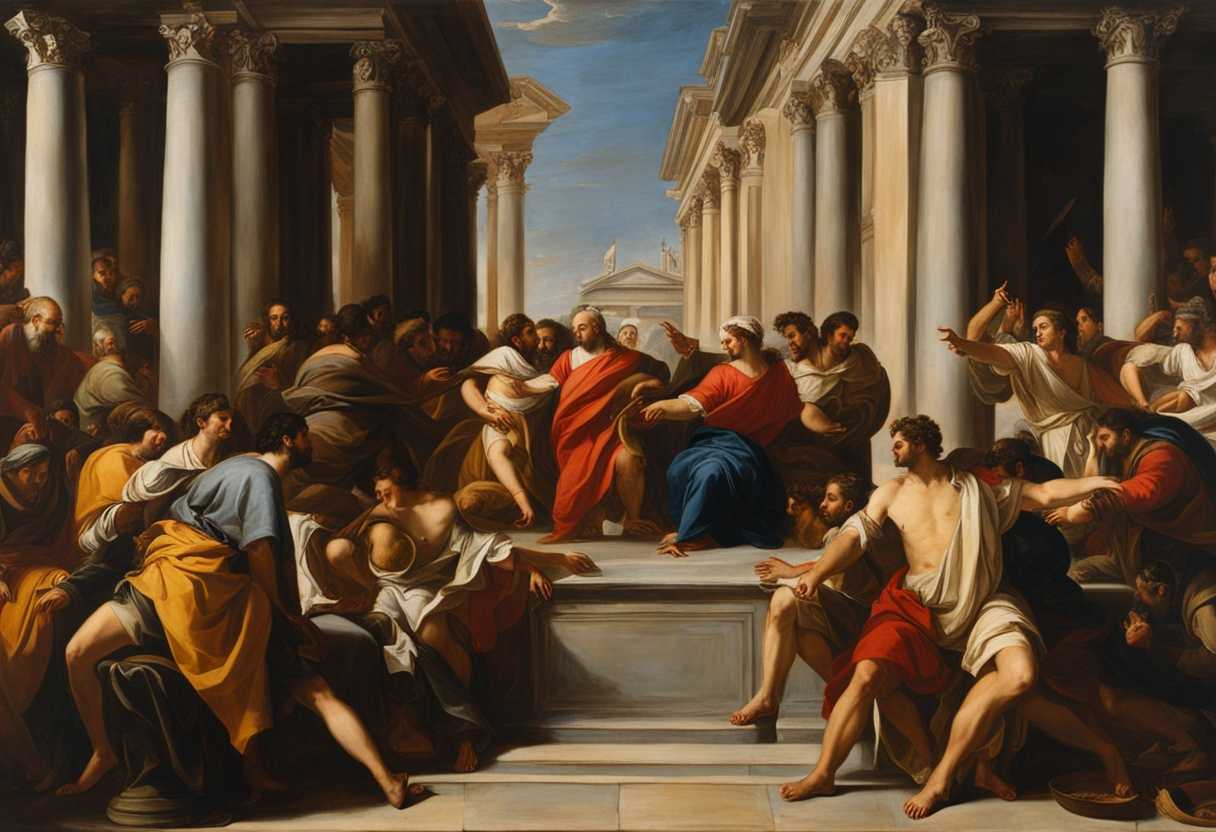
Setting the Scene for Acts 17:16-21
In Acts 17:16-21, the scene is set in the bustling city of Athens, known for its rich history, culture, and intellectual pursuits. The apostle Paul finds himself in this vibrant city during his missionary journey, accompanied by Silas and Timothy. As they walk through the streets, Paul is deeply troubled by the prevalence of idolatry in Athens. The city is filled with temples and statues dedicated to various gods and goddesses, reflecting the polytheistic beliefs of the people.
Paul, Silas, and Timothy engage in discussions with both Jews and Greeks in the marketplace, known as the Agora. This central hub of activity is where merchants sell their goods, philosophers debate ideas, and citizens gather to socialize. The three men share the message of Jesus Christ, sparking curiosity and debate among the Athenians. Some dismiss Paul’s teachings as strange and foreign, while others express interest in hearing more about this new “god” he speaks of.
As the sun sets over the city, Paul continues to proclaim the gospel, seizing the opportunity to share the truth amidst the backdrop of ancient temples and statues. The scene captures the clash of cultures and beliefs, as the message of salvation through Jesus Christ challenges the deeply ingrained traditions of the Athenians. The stage is set for a pivotal moment in the spread of Christianity, as Paul’s words plant seeds of faith in the hearts of those who are willing to listen.
What is Acts 17:16-21 about?
This verse from Acts 17:16-34 is a powerful demonstration of open-mindedness, dialogue, and cultural exchange. Paul engages with different philosophical schools of thought (Stoics and Epicureans) in Athens, known for its intellectual and philosophical background in this verse. Paul showcases the importance of engaging with diverse perspectives and seeking common ground even in the face of differing beliefs by discussing faith with these groups at the Areopagus.
Have you ever found yourself in a situation where you needed to engage with others who hold different beliefs or worldviews? How did you approach those conversations? Paul’s actions in Athens serve as a powerful reminder of the importance of respectful dialogue and exploring the intersections between faith and reason. We can deepen our understanding, foster connections, and promote mutual respect, regardless of our differences, by engaging in meaningful conversations with others.
Through this verse, we are encouraged to embrace diversity, engage in respectful dialogue, and find common ground with others, even when our beliefs may differ. We can learn to approach conversations with an open mind, seeking understanding and connection rather than division, by following Paul’s example in Athens. Let us remember the significance of cultural exchange and the power of dialogue in promoting harmony and mutual understanding in our diverse world.
Understanding what Acts 17:16-21 really means
In Acts 17:16-21, we find the apostle Paul in Athens, a city renowned for its intellectual pursuits and idolatry. The text reveals Paul’s deep emotional response to the idolatry he witnessed, highlighting his passion for God’s truth and his distress over people being led astray. Despite his distress, Paul actively engages with the people of Athens, reasoning in the synagogue with Jews and devout persons, and in the marketplace with everyday individuals. This demonstrates his commitment to reaching diverse groups with the gospel, showing that the message of Jesus is for all.
The presence of Epicurean and Stoic philosophers in the narrative underscores the importance of intellectual engagement with different worldviews. The skepticism and curiosity of the Athenians towards Paul’s message reflect a common reaction to the gospel even today. The misunderstanding of Paul as a preacher of foreign divinities emphasizes the need for clear communication of the core message of Jesus and His resurrection. This challenges believers to articulate their faith in a way that is understandable and relevant to those around them.
Related Bible passages such as 1 Corinthians 1:23-24, Romans 1:16, and Matthew 28:19-20 further illuminate the themes present in Acts 17:16-21. These passages emphasize the power and wisdom of God’s message, the call to boldly proclaim the gospel, and the commission to make disciples of all nations. They serve as a foundation for understanding the significance of Paul’s actions in Athens and their relevance to believers today.
The passage’s relevance to contemporary believers is evident in its call to engage with culture, intellectually engage with different worldviews, and bear public witness to the gospel. Just as Paul engaged with the culture of Athens, Christians today are challenged to address the idols and misconceptions of their own cultural contexts with the truth of the gospel. The example of Paul speaking in the marketplace encourages believers to share their faith in public spaces and everyday interactions, reflecting the Great Commission’s call to make disciples of all nations.
To illustrate the application of Acts 17:16-21 in modern times, consider a believer moving to a secular city and engaging in conversations at local venues. Despite initial skepticism, this believer persists in sharing the message of Jesus with love and clarity, witnessing hearts and minds opening to the gospel. This anecdote mirrors Paul’s experience in Athens, highlighting the transformative power of engaging with culture, intellectual dialogue, and public witness.
In conclusion, Acts 17:16-21 challenges believers to be deeply moved by the spiritual needs around them, engage thoughtfully with different worldviews, and boldly proclaim the gospel in both private and public spheres. Like Paul in Athens, Christians are called to embody a passion for truth, a commitment to diverse outreach, and a willingness to engage with culture in a way that reflects the transformative message of Jesus Christ.
How can we effectively engage with different beliefs?
Adopting a respectful and understanding attitude is essential when engaging with different beliefs. We should approach others with a desire to listen and learn from them, seeking to understand their perspectives and beliefs, just as Paul did in Acts 17:16-21. We can establish common ground and build bridges of communication by doing so. We should be willing to engage in meaningful dialogue and discussion with those who hold different beliefs. Paul engaged with the philosophers in the marketplace, discussing and debating ideas with them, as seen in the passage. Through open and respectful communication, we can share our beliefs in a way that is persuasive and compelling, while also being willing to listen to alternative viewpoints. We should ultimately share the truth in love and with gentleness, as instructed in the passage. We can effectively engage with different beliefs while staying true to our own convictions by approaching others with humility and a genuine desire to connect.
Application
Step out of your comfort zone and boldly engage with those around you, sharing the message of love and hope in a way they can relate to. Just as we navigate the complexities of work and family dynamics, let’s also navigate the diverse beliefs and cultures around us, spreading kindness and understanding. Will you rise to the challenge and be a beacon of light in a world that craves connection and compassion?

Reverend Michael Johnson is an experienced Church Minister with a profound expertise in spirituality and guidance. With a serene presence and a compassionate heart, he has faithfully served his congregation for over 20 years, leading them on a spiritual journey towards inner peace and enlightenment. Reverend Johnson’s extensive knowledge of religious philosophies and profound understanding of human nature have made him a trusted confidant and mentor to many, as he seamlessly weaves his profound wisdom into life teachings. Reverend Johnson’s calming demeanor and empathetic nature continue to uplift and heal souls, nurturing a sense of unity and tranquility within his community.