
Acts 17:16-23 is about the apostle Paul proclaiming the unknown God to the Athenians, using their own culture and beliefs as a bridge to introduce them to the one true God.
16 Now while Paul was waiting for them at Athens, his spirit was provoked within him as he saw that the city was full of idols.
17 So he reasoned in the synagogue with the Jews and the devout persons, and in the marketplace every day with those who happened to be there.
18 Some of the Epicurean and Stoic philosophers also conversed with him. And some said, “What does this babbler wish to say?” Others said, “He seems to be a preacher of foreign divinities”—because he was preaching Jesus and the resurrection.
19 And they took him and brought him to the Areopagus, saying, “May we know what this new teaching is that you are presenting?
20 For you bring some strange things to our ears. We wish to know therefore what these things mean.”
21 Now all the Athenians and the foreigners who lived there would spend their time in nothing except telling or hearing something new.
22 So Paul, standing in the midst of the Areopagus, said: “Men of Athens, I perceive that in every way you are very religious.
23 for as I passed along and observed the objects of your worship, I found also an altar with this inscription: ‘To the unknown god.’ What therefore you worship as unknown, this I proclaim to you.
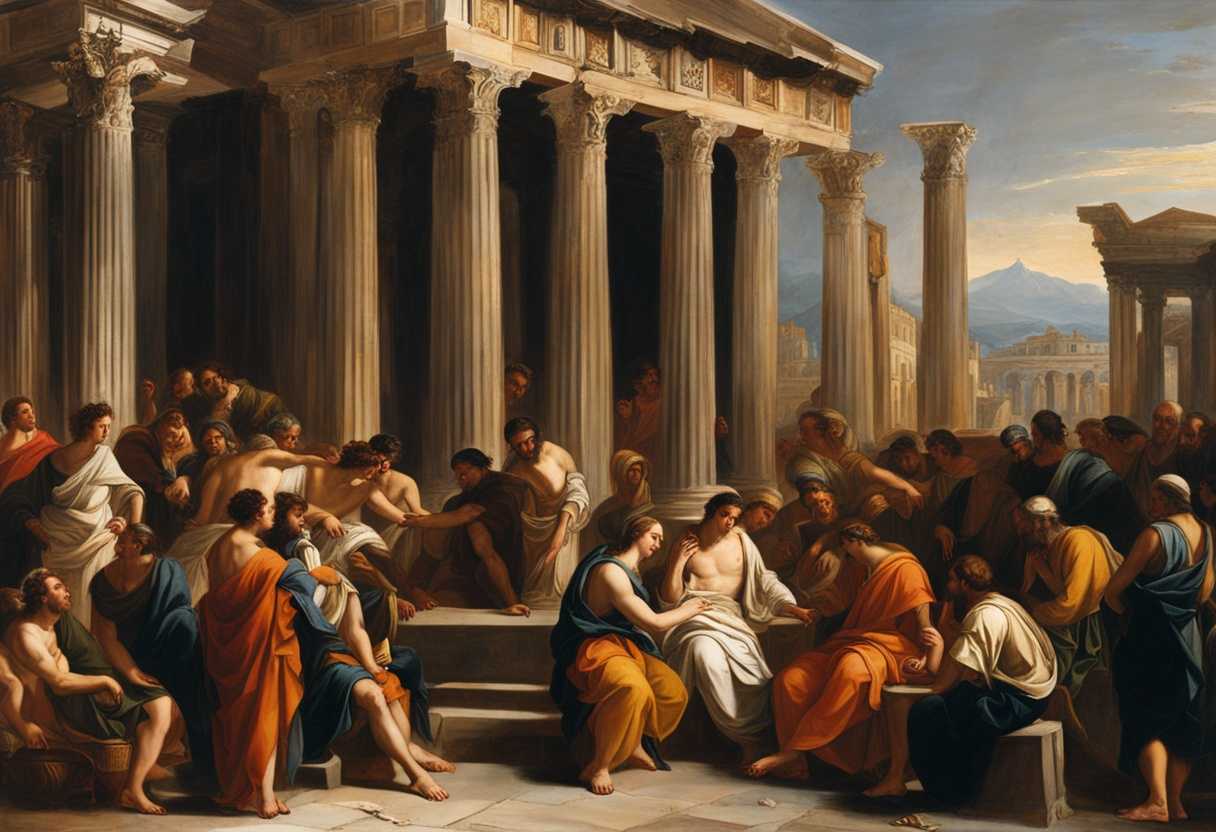
Setting the Scene for Acts 17:16-23
In Acts 17:16-23, the scene is set in the bustling city of Athens, known for its rich history, culture, and intellectual pursuits. The apostle Paul finds himself in this vibrant city during his missionary journey, accompanied by Silas and Timothy. As they walk through the streets, Paul is deeply troubled by the many idols and temples dedicated to various gods that he sees around him.
The Athenians, known for their love of philosophy and debate, invite Paul to speak at the Areopagus, a prominent hill in Athens where important discussions and legal matters are often held. Surrounded by statues and monuments dedicated to different deities, Paul seizes the opportunity to address the crowd and share the message of the one true God. He begins by acknowledging their religious fervor and even references an altar dedicated to an “unknown god,” using this as a starting point to introduce them to the God he proclaims.
As Paul engages with the intellectuals and philosophers present, he eloquently presents the Gospel, drawing from their own poets and philosophers to make his case for the God of the Bible. The scene is filled with curiosity, debate, and a clash of worldviews as Paul fearlessly proclaims the message of salvation through Jesus Christ in the midst of a city steeped in idolatry and intellectualism.
What is Acts 17:16-23 about?
Paul’s message to the Athenians about the “unknown god” in this verse serves as a powerful reminder of the universal nature of God’s existence and the limitless depths of His nature. Paul emphasizes the idea that God transcends human understanding and cannot be confined within the limitations of human knowledge or perception by acknowledging the presence of an “unknown god” among the various idols in Athens. This message challenges the Athenians—and us—to look beyond the physical idols and seek a deeper connection with the divine, recognizing that there is more to God than what meets the eye.
Paul’s preaching underscores the importance of seeking a personal relationship with God, beyond mere rituals or outward expressions of faith. Paul invites the Athenians to explore the depths of their faith, question their beliefs, and open their hearts to a greater understanding of God’s true identity and nature by addressing their worship of an “unknown god.” This verse prompts us to reflect on our own perceptions of God and to consider how we can deepen our connection with Him, moving beyond the superficial to embrace a more profound and transformative relationship with the divine. Let us explore the mysteries of God’s nature, seek Him with open hearts and minds, and cultivate a deeper, more meaningful connection with the source of all life and love.
Understanding what Acts 17:16-23 really means
In Acts 17:16-23, we find Paul in Athens, a city renowned for its intellectual and religious diversity. As he waits for Silas and Timothy, he immerses himself in the city’s culture, deeply troubled by the prevalence of idols. The phrase “His spirit was provoked within him” encapsulates Paul’s intense emotional and spiritual reaction to the idolatry surrounding him, highlighting his fervor for God’s truth and his anguish over false worship. Despite his distress, Paul actively engages with both religious and secular groups, reasoning in the synagogue and the marketplace daily, showcasing his dedication to spreading the Gospel to all.
One striking moment is when Paul seizes upon an altar dedicated “To the unknown god” as a segue to introduce the Athenians to the one true God. This strategic approach demonstrates Paul’s ability to connect with his audience’s existing beliefs and gently guide them towards the truth. The backdrop of idolatry in Athens echoes the commandment against idolatry in Exodus 20:3-5, emphasizing why Paul was so deeply affected by the city’s idolatrous practices. Moreover, Paul’s adaptable nature, as seen in 1 Corinthians 9:22, where he becomes “all things to all people,” aligns with his method of engaging with the Athenians on their terms.
The relevance of Paul’s encounter in Athens extends to contemporary society. While physical idol worship may be less prevalent today, modern forms of idolatry like materialism, fame, and technology abound. Paul’s approach underscores the importance of engaging with culture to effectively communicate the Gospel. Just as Paul’s distress spurred him to action, our unease with the spiritual state of the world can motivate us to engage with those around us, seeking common ground to share our faith. In a bustling modern city, filled with distractions and consumerism, we may experience a similar spiritual unease, prompting us to initiate conversations that bridge popular culture with deeper spiritual truths.
In conclusion, Paul’s experience in Athens serves as a poignant example of navigating a world rife with idolatry and spiritual confusion. By mirroring his approach of understanding the culture, empathizing with the lost, and finding points of connection, we can effectively convey the message of the Gospel in our contemporary context. Just as Paul’s passion for truth led him to engage with the Athenians, may we too be inspired to share the hope of Christ with those around us, meeting them where they are and guiding them towards the ultimate truth.
Are we truly worshiping the unknown God?
Paul preaches to the people of Athens about the “unknown God” whom they had an altar dedicated to in Acts 17:16-23. He explains that this God, whom they worship without fully knowing, is the one true God who created the world and everything in it. Paul’s message challenges the Athenians to move beyond their ignorance and seek a deeper understanding of the divine.
The concept of the unknown God can be applied to our worship today. Are we truly seeking to know and understand God in all His fullness, or are we content with a superficial or incomplete knowledge of Him? We, as believers, must constantly seek a deeper relationship with God, study His Word, and worship Him in spirit and in truth. True worship involves not just going through the motions, but engaging with God with reverence, awe, and a desire to know Him more intimately.
So, the question for us remains: Are we truly worshiping the unknown God, seeking to know Him more deeply and intimately each day? Strive to not be content with a superficial understanding or an incomplete knowledge of God, but instead grow in our relationship with Him, worshiping Him with our whole hearts and minds.
Application
Let’s embrace the spirit of Acts 17:16-23! It’s time to spread the light of the gospel to everyone we meet, just like Paul did in Athens. Let’s be fearless ambassadors of Christ, no matter the reactions we encounter. Will you join the mission to share the love and truth of Jesus with others?

Reverend Michael Johnson is an experienced Church Minister with a profound expertise in spirituality and guidance. With a serene presence and a compassionate heart, he has faithfully served his congregation for over 20 years, leading them on a spiritual journey towards inner peace and enlightenment. Reverend Johnson’s extensive knowledge of religious philosophies and profound understanding of human nature have made him a trusted confidant and mentor to many, as he seamlessly weaves his profound wisdom into life teachings. Reverend Johnson’s calming demeanor and empathetic nature continue to uplift and heal souls, nurturing a sense of unity and tranquility within his community.