
Acts 17:29 is about clarifying that since humans are the offspring of God, they should not think that the divine nature can be represented by man-made objects or images.
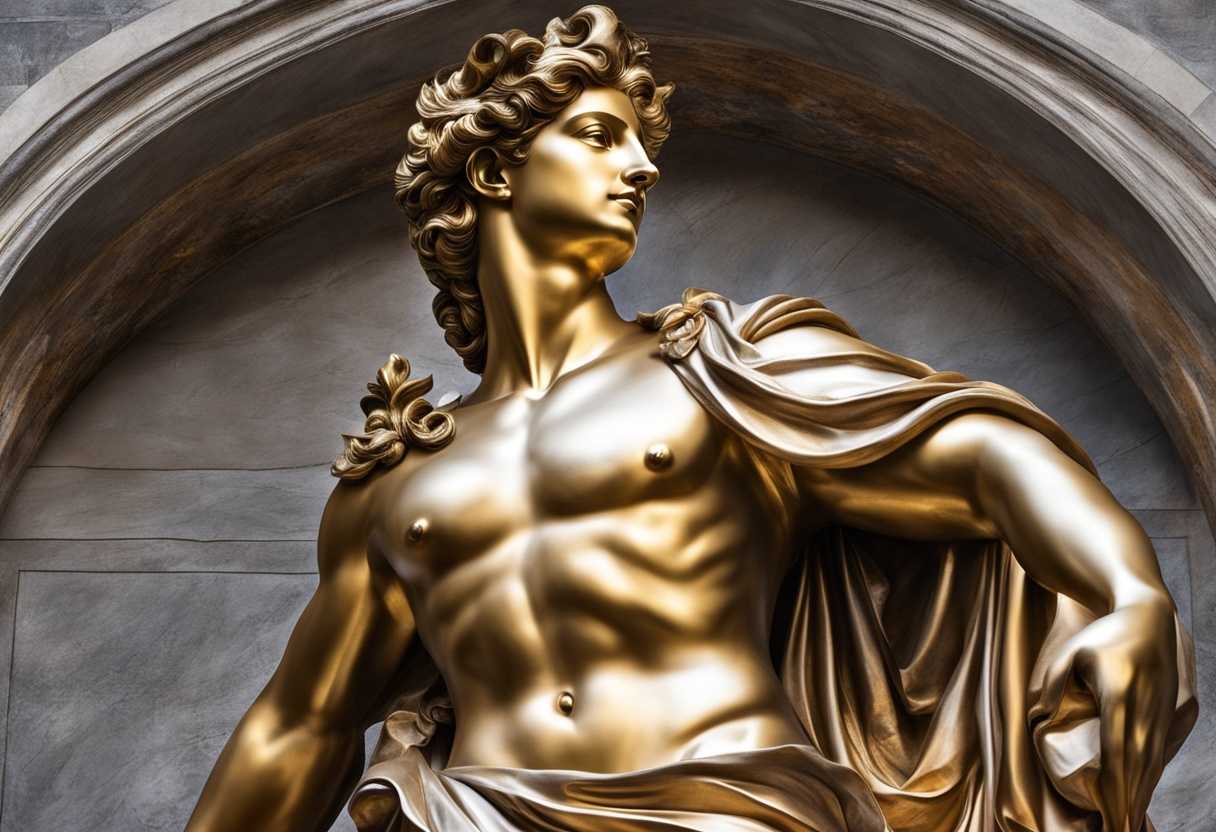
29 Being then God’s offspring, we ought not to think that the divine being is like gold or silver or stone, an image formed by the art and imagination of man.
Setting the Scene for Acts 17:29
In Acts chapter 17, we find the apostle Paul in the city of Athens, known for its rich history and culture. As he walks through the city, he is struck by the numerous idols and altars dedicated to various gods. The people of Athens were known for their devotion to worshiping a multitude of deities, and the city was filled with temples and statues honoring these gods.
Paul finds himself in the midst of the Areopagus, a prominent rock outcropping in Athens where the city’s intellectual and philosophical elite would gather to discuss and debate ideas. Here, Paul encounters a group of philosophers and thinkers who are curious about his teachings and eager to hear what he has to say. Among them are Epicurean and Stoic philosophers, as well as other intellectuals who are interested in hearing about this new “foreign” deity that Paul is proclaiming.
Surrounded by the grandeur of ancient Athens, with the Parthenon looming in the background and the bustling marketplace nearby, Paul seizes the opportunity to share the message of Jesus Christ with these learned individuals. In this setting, amidst the idols and altars of the Athenians, Paul delivers a powerful message about the one true God, who is not like the man-made idols that fill the city.
What is Acts 17:29 about?
This verse is a powerful reminder that as children of God, we are created in His image and likeness. It emphasizes the divine connection we have with our Creator and the inherent value and worth that comes with being His offspring. Recognizing and embracing this truth reminds us of our inherent dignity and the responsibility we have to honor and respect not only ourselves but also others as fellow creations of God.
When the verse cautions us not to think of God as being like gold or silver, it serves as a warning against reducing the divine to mere material goods or earthly possessions. It challenges us to look beyond superficial, tangible forms of value and to appreciate the spiritual and transcendent nature of God. Instead of focusing on material wealth or possessions, this verse encourages us to cultivate a deeper, more meaningful relationship with God based on love, faith, and spiritual connection. Let us reflect on this verse and ponder the profound truth of our divine lineage and the sacred bond we share with our Creator. Let us strive to see God in the light of our spiritual connection and inherent worth as His beloved children, not in terms of material wealth or possessions. May this verse inspire us to cultivate a deeper understanding of our identity as God’s offspring and to live our lives in a way that reflects the divine love and grace that flows through us.
Understanding what Acts 17:29 really means
Structure for Commentary:
- Introduction and Context
- Analysis of Key Phrases
- Theological Implications
- Connection to Other Biblical Passages
- Relevance to Modern Readers
- Paul addresses the people of Athens at the Areopagus, a place known for philosophical debates, in Acts 17:29. He speaks on the nature of God, contrasting the living God with the idols made of gold, silver, and stone. This verse is part of his larger discourse that aims to reveal the truth of the Gospel to a polytheistic audience.
Analysis of Key Phrases:
Paul begins by stating that since we are “God’s offspring,” we should not think of the divine as something crafted by human art and imagination. The phrase emphasizes our intrinsic connection to God, implying that our understanding of Him should transcend physical representations. The terms “gold, silver, and stone” highlight the futility of worshipping inanimate objects, urging us to seek a more profound, spiritual relationship with the divine.
Theological Implications:
Paul’s message here is revolutionary. It challenges the deeply ingrained practices of idol worship and invites people to a higher understanding of God. Paul underscores the personal and relational nature of God by calling us “God’s offspring,” who is not confined to physical forms or human constructs. This idea resonates with the biblical theme of imago Dei, the belief that humans are created in the image of God (Genesis 1:27).
Connection to Other Biblical Passages:
Paul’s argument aligns with Exodus 20:4, where God commands, “You shall not make for yourself a carved image.” It also connects to John 4:24, where Jesus teaches that “God is spirit, and his worshipers must worship in the Spirit and in truth.” These passages collectively emphasize the spiritual nature of God and the appropriate way to engage in worship.
Relevance to Modern Readers:
Today, while we may not bow to idols of gold and silver, we often find ourselves creating modern “idols” in the form of wealth, status, or even technology. Paul’s message is a reminder to examine what we truly worship and to direct our devotion towards God, who is beyond material and superficial representations. This call to seek a deeper connection with the divine is more relevant than ever in an age of distraction.
Anecdote and Practical Application:
I recall a story of a young professional who was consumed by his career, equating his worth with his success. After a series of personal and professional failures, he realized he had been worshipping the “idol” of success. When he turned back to his faith, he found a renewed sense of purpose and identity, not tied to his achievements but to his relationship with God.
Paul’s words in Acts 17:29 challenge us to reflect on what we hold as sacred and to ensure that our worship and devotion are directed towards the living God. We are God’s offspring, created for a relationship with Him that goes beyond any physical or material form as we navigate our daily lives. What are the “idols” in your life that need to be reevaluated? How can you foster a deeper, more authentic connection with God today?
Where do we place our worth and devotion?
The verse alludes to the idea that we should not place our worth and devotion in something physical or created by human hands. Instead, our focus should be on the eternal and unseen, on something greater than ourselves. We acknowledge that our worth comes from being creations of something beyond our understanding by turning our attention and devotion towards the divine. We shift our perspective from the transient and fleeting nature of earthly possessions and achievements to the everlasting and unchanging presence of the divine. Our worth and devotion are better placed in something that stands the test of time and transcends the boundaries of this world. This verse encourages us to find our true value and purpose in recognizing and connecting with the eternal and infinite, rather than in the temporary and finite aspects of life.
Application
You are a part of God’s family, crafted in His likeness. This truth should ignite your actions, pushing you to treat others with the same respect you’d show your own family. How will you reflect this in your daily life, at work and home? How will your actions speak to the dignity God has given to everyone?

Reverend Michael Johnson is an experienced Church Minister with a profound expertise in spirituality and guidance. With a serene presence and a compassionate heart, he has faithfully served his congregation for over 20 years, leading them on a spiritual journey towards inner peace and enlightenment. Reverend Johnson’s extensive knowledge of religious philosophies and profound understanding of human nature have made him a trusted confidant and mentor to many, as he seamlessly weaves his profound wisdom into life teachings. Reverend Johnson’s calming demeanor and empathetic nature continue to uplift and heal souls, nurturing a sense of unity and tranquility within his community.