
Acts 19:19 is about the new believers in Ephesus publicly confessing their involvement in occult practices by burning their valuable scrolls, demonstrating their full commitment to God and renunciation of their past sinful ways.
19 And a number of those who had practiced magic arts brought their books together and burned them in the sight of all. And they counted the value of them and found it came to fifty thousand pieces of silver.
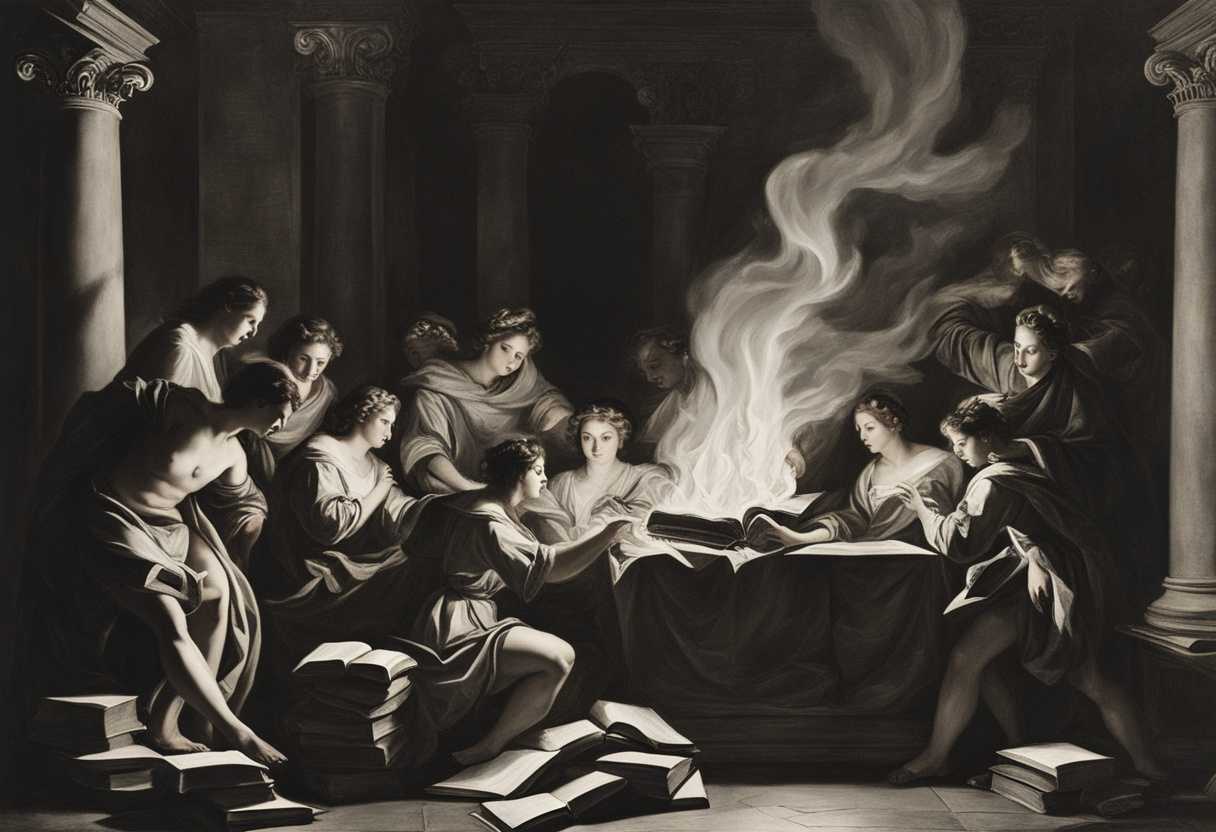
Setting the Scene for Acts 19:19
In Acts chapter 19, we find a powerful scene unfolding in the city of Ephesus. The city is known for its pagan practices and idol worship, particularly the worship of the goddess Artemis. In this chapter, we see a group of believers who have recently come to faith in Jesus Christ, led by the apostle Paul. These new believers have renounced their former practices of sorcery and magic, choosing to follow the one true God.
As the scene unfolds, these new believers gather together in a public square, bringing their scrolls containing magical formulas and incantations. The atmosphere is charged with anticipation and awe as they prepare to make a bold statement of their newfound faith. The group, filled with zeal and conviction, sets the scrolls ablaze, watching as the flames consume their former way of life. The crackling of the fire and the smell of burning parchment fill the air, symbolizing the complete break from their past and their commitment to following Christ wholeheartedly.
Among the believers present are individuals who were once deeply entrenched in the occult practices of the city. Their decision to burn their scrolls is a public declaration of their transformation and a testament to the power of the gospel to bring about radical change in the lives of those who believe. The scene serves as a powerful reminder of the transformative power of God’s word and the freedom that comes from surrendering to His will.
What is Acts 19:19 about?
Imagine a group of individuals who have encountered the transformative power of Jesus Christ, and in response, they make a bold and public declaration of their faith. These believers are symbolizing a profound change in their lives by burning their magic books – turning away from practices that are contrary to their new identity in Christ. This act shows a willingness to let go of their old ways and fully commit to following Jesus, regardless of the cost. They are not only renouncing their ties to magic and the occult but also demonstrating to others the depth of their commitment to Christ by considering the significance of this act. It is a visible and radical step that sets them apart from their past life and showcases their newfound allegiance to the Lord. This verse challenges us to reflect on our own commitment to Christ – are there things in our lives that we need to let go of in order to fully follow Him? Are we willing to make a public declaration of our faith, even if it means letting go of familiar but worldly practices? May we be inspired by the example of these repentant believers and be willing to take bold steps in our own faith journey.
Understanding what Acts 19:19 really means
Introduction and Context
To understand Acts 19:19, we must first place it in its broader biblical context. The Book of Acts, written by Luke, documents the early church’s history and the spread of the gospel after Jesus’ resurrection and ascension. Acts 19 specifically describes Paul’s ministry in Ephesus, a city known for its strong ties to pagan worship and magic. Luke describes how many who practiced sorcery brought their scrolls together and burned them publicly in Acts 19:19. This act of burning their scrolls signifies a radical transformation and commitment to their newfound faith in Jesus Christ.
Phrase Analysis
The phrase “many of those who practiced sorcery” highlights the prevalence of magical practices in Ephesus. This wasn’t a minor issue; it was a deeply ingrained part of the culture. The new believers were making a significant break from their past by turning away from these practices.
The phrase “burned them publicly” is equally significant. Public acts carry a strong statement. These individuals were not only renouncing their old ways but also making a bold declaration of their new allegiance to Christ by burning their scrolls in front of others. It was a costly act, both financially and socially, as these scrolls were valuable and their decision could have led to ostracism.
Biblical Cross-References
This passage echoes themes found elsewhere in the Bible. For example, in Matthew 13:44-46, Jesus speaks about the kingdom of heaven being like a treasure hidden in a field, for which a man sells all he has to buy the field. Similarly, the new believers in Ephesus were willing to give up their valuable possessions for the sake of their faith. This also resonates with Romans 12:2, which urges believers not to conform to the patterns of this world but to be transformed by the renewing of their minds.
Relevance Today
Why is this relevant today? We may not encounter scrolls of sorcery in modern times, but we certainly face our own “scrolls”—addictions, harmful relationships, or material possessions that can hold us back from fully committing to our faith. The act of burning these scrolls teaches us about the importance of making a clean break from anything that hinders our spiritual growth. Jane, a young woman, struggled with substance abuse. After finding faith, she made the difficult decision to go through rehab and cut ties with friends who encouraged her addiction. Like the Ephesians, Jane’s public renunciation of her past was a powerful testament to the transformative power of faith.
Conclusion
Acts 19:19 challenges us to examine our own lives. What scrolls do we need to burn? What public declarations do we need to make to show our commitment to Christ? This verse invites us to take bold steps in our faith journey, encouraging us to make sacrifices that reflect our new identity in Christ.
What idols or sinful practices should we renounce?
We should renounce idols and sinful practices that are contrary to the teachings of the Bible. This verse highlights how the early Christians in Ephesus publicly burned their books of magic spells, which were seen as objects of idolatry and practices that went against the Christian faith. Just like these early believers, we should be willing to let go of anything that leads us away from God and His Word.
Idols can come in various forms in our lives today, not just physical objects of worship like statues or talismans, but also things that we prioritize over our relationship with God. This can include material possessions, success, relationships, or even certain habits or behaviors that go against God’s commandments. We can begin the process of renouncing these idols and sinful practices in our lives by identifying them and turning our hearts fully towards God.
Renouncing idols and sinful practices is not just about getting rid of external symbols of worship, but about a deeper transformation of the heart. It requires a deliberate choice to turn away from anything that hinders our relationship with God and to wholeheartedly commit ourselves to following His ways. We can experience a greater sense of freedom, joy, and fulfillment by living according to God’s will.
Application
Imagine your life is a busy office, filled with tasks and distractions. Acts 19:19 calls you to clear out the clutter that keeps you from your true purpose. Identify what in your life doesn’t align with God’s will, and make room for what truly matters. Like clearing your desk for important work, cleanse your life to focus solely on His glory. Are you ready to take action and realign your life with God today?

Reverend Michael Johnson is an experienced Church Minister with a profound expertise in spirituality and guidance. With a serene presence and a compassionate heart, he has faithfully served his congregation for over 20 years, leading them on a spiritual journey towards inner peace and enlightenment. Reverend Johnson’s extensive knowledge of religious philosophies and profound understanding of human nature have made him a trusted confidant and mentor to many, as he seamlessly weaves his profound wisdom into life teachings. Reverend Johnson’s calming demeanor and empathetic nature continue to uplift and heal souls, nurturing a sense of unity and tranquility within his community.