
Acts 19:32-41 is about a riot instigated by the silversmith Demetrius in Ephesus due to the threat posed to his trade by the spread of Christianity, highlighting the clash between economic interests and religious beliefs.
And when the town clerk had quieted the crowd, he said, “Men of Ephesus, who is there who does not know that the city of the Ephesians is temple keeper of the great Artemis, and of the sacred stone that fell from the sky?”
33 Some of the crowd prompted Alexander, whom the Jews had put forward. And Alexander, motioning with his hand, wanted to make a defense to the crowd.
34 But when they recognized that he was a Jew, for about two hours they all cried out with one voice, “Great is Artemis of the Ephesians!”
35 And when the town clerk had quieted the crowd, he said, “Men of Ephesus, who is there who does not know that the city of the Ephesians is temple keeper of the great Artemis, and of the sacred stone that fell from the sky?
36 So, since these things cannot be denied, you ought to be quiet and do nothing rash.
37 For you have brought these men here who are neither sacrilegious nor blasphemers of our goddess.
38 If therefore Demetrius and the craftsmen with him have a complaint against anyone, the courts are open, and there are proconsuls. Let them bring charges against one another.
39 But if you seek anything further, it shall be settled in the regular assembly.
40 For we really are in danger of being charged with rioting today, since there is no cause that we can give to justify this commotion.”
And when he had said these things, he dismissed the assembly.
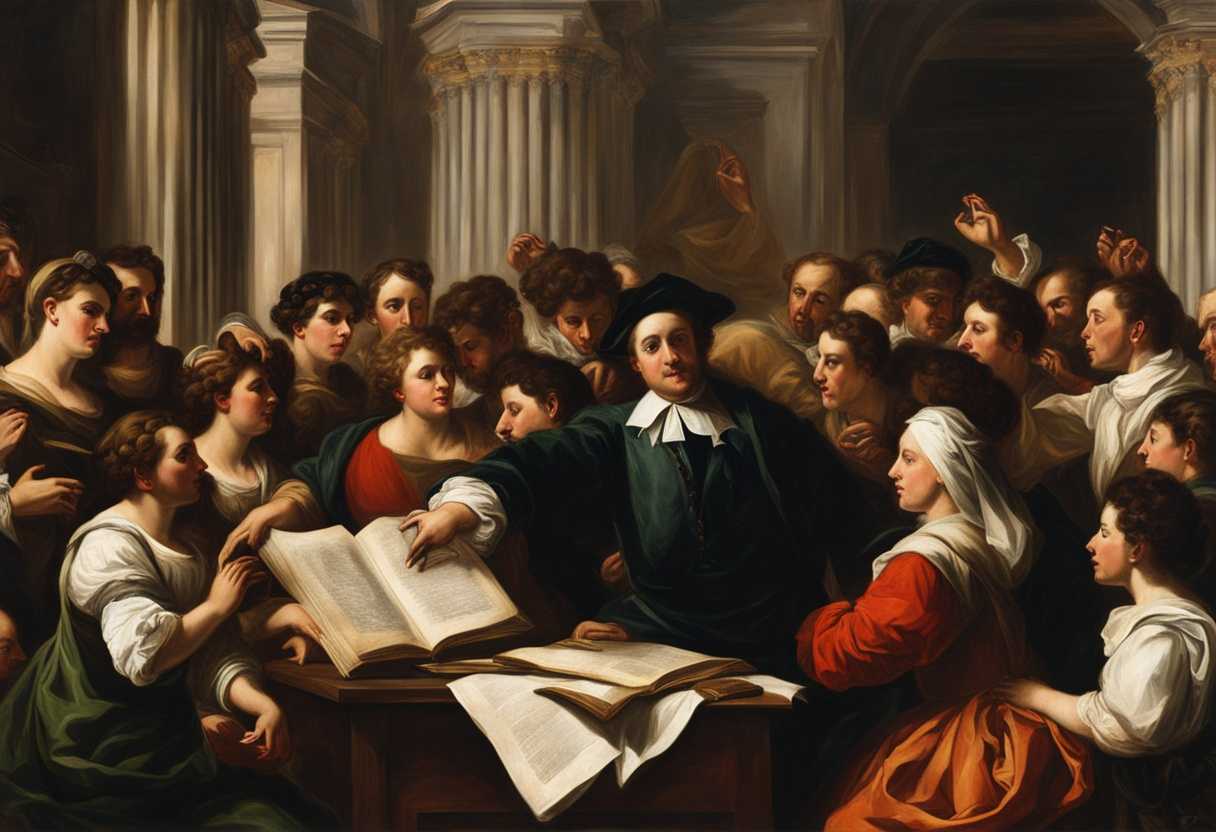
Setting the Scene for Acts 19:32-41
In Acts chapter 19, we find a tumultuous scene unfolding in the city of Ephesus. The city is known for its grand Temple of Artemis, one of the Seven Wonders of the Ancient World, and a center for the worship of the goddess. As the story goes, a silversmith named Demetrius, who made silver shrines of Artemis, gathered his fellow craftsmen in a large theater to address a growing concern. They were worried that the teachings of the apostle Paul, who was preaching about the one true God, would diminish the reverence for Artemis and impact their livelihood.
The theater is filled with a diverse crowd – craftsmen, merchants, curious onlookers, and followers of both Artemis and the Christian faith. Emotions run high as Demetrius stirs up the crowd, leading to a chaotic uproar. The mob chants praises to Artemis, creating a deafening roar that echoes through the grand theater. The situation escalates as some in the crowd seize two of Paul’s companions, Gaius and Aristarchus, dragging them into the theater. The scene is charged with tension and uncertainty as the crowd becomes increasingly agitated, with conflicting voices and opinions clashing in the air.
Amidst the chaos, the city clerk eventually steps in to restore order, calming the crowd and urging them to handle the matter through legal channels rather than resorting to violence. The scene in Acts 19:32-41 captures the intensity of the moment, showcasing the clash of beliefs, economic interests, and the power dynamics at play in the ancient city of Ephesus.
What is Acts 19:32-41 about?
Ah, the scene in Ephesus, a city pulsating with religious fervor. Here, Artemis, the revered goddess of fertility and hunting, held immense influence over the people. A riot erupts as tensions rise between those who worshipped Artemis and those challenging her status. The town clerk steps in as a voice of reason, calming the chaos with his words of wisdom and diplomacy, reminding the crowd of the legal channels through which their grievances could be addressed.
Imagine the intensity of emotions running high in the streets, the clash of beliefs and loyalties creating a volatile atmosphere. The town clerk’s intervention serves as a crucial moment of leadership, steering the crowd away from violence and towards a peaceful resolution. This event highlights the power of communication and mediation in times of conflict, showcasing how a calm voice of authority can defuse a heated situation. The verse serves as a lesson in the importance of rational dialogue and respect for differing beliefs in maintaining harmony within a diverse community.
Understanding what Acts 19:32-41 really means
In Acts 19:32-41, we witness a tumultuous scene in Ephesus where a riot erupts following Paul’s preaching, threatening the local economy tied to the worship of the goddess Artemis. The chaos is palpable as the crowd, confused and disoriented, lacks a clear purpose or understanding of the situation. “Some were shouting one thing, some another,” showcasing the lack of unity and the ease with which individuals can be swayed into disorder without a coherent grasp of events. This phrase underscores the fragility of human nature and the susceptibility to being swept up in collective emotions without a solid foundation of knowledge.
Moreover, the statement that “Most of the people did not even know why they were there” sheds light on the power of mob mentality, where individuals relinquish personal conviction for the sake of group dynamics. It serves as a cautionary tale about the dangers of blindly following the crowd without critical thinking or understanding. The intervention of the city clerk, who quiets the crowd, symbolizes a voice of reason and authority restoring order amidst the chaos. This act emphasizes the significance of calm and rational leadership in times of turmoil, showcasing the importance of level-headed individuals in diffusing volatile situations.
Drawing parallels to other biblical passages, such as 1 Corinthians 14:33, which emphasizes God as a deity of peace and order, contrasts the disorder in Ephesus, highlighting the divine preference for harmony over chaos. Proverbs 29:11 underscores the wisdom in maintaining composure, contrasting the folly of uncontrolled anger with the virtue of bringing calm to turbulent situations. James 1:19-20 further reinforces the value of measured responses over impulsive reactions, advocating for thoughtful contemplation and restraint in the face of provocation.
The relevance of this passage extends to contemporary society, where misinformation and heightened emotions often fuel conflicts, particularly in the age of social media. It underscores the importance of seeking understanding, resisting the pull of collective emotions, and advocating for calm and rational leadership in resolving disputes and dispelling confusion. An illustrative anecdote set in a workplace scenario mirrors the chaos in Ephesus, where a calm and informed manager steps in to clarify rumors, address concerns, and restore order, akin to the city clerk’s role in the biblical account.
In conclusion, Acts 19:32-41 serves as a poignant reminder of the perils of mob mentality and the necessity of reasoned leadership in times of upheaval. It prompts individuals to prioritize understanding over blind conformity, advocating for clarity and composure in the face of confusion. By internalizing these lessons, we can navigate conflicts with wisdom and grace, fostering peace and order within our communities, echoing the timeless relevance of seeking clarity amidst chaos.
How can we discern truth in a chaotic world?
Discerning truth can be a challenging task in a chaotic world. The passage can be understood as showing how easily chaos can lead people astray and cloud their judgment. We must rely on core values and principles to guide our understanding of what is true and just in such times. We can better navigate the chaos surrounding us and find clarity amidst the noise by grounding ourselves in these foundational beliefs.
Furthermore, seeking wisdom from trustworthy sources and engaging in critical thinking can also help in discerning truth. It is important to question information, consider different perspectives, and examine the motives behind various messages. We can sift through the chaos and recognize the truths that align with our values and beliefs by doing so. A combination of introspection, critical thinking, and a steadfast commitment to our core values ultimately helps us find truth in a chaotic world.
Application
In a world where chaos can easily take over, let’s be the calm in the storm. Let’s choose to be the pillars of peace and unity among our peers, not just bystanders in the crowd. Be a beacon of hope and understanding in a time where discord and rage seem to prevail. Will you take up the mantle of a peacemaker and bridge builder in your corner of the world?

Reverend Michael Johnson is an experienced Church Minister with a profound expertise in spirituality and guidance. With a serene presence and a compassionate heart, he has faithfully served his congregation for over 20 years, leading them on a spiritual journey towards inner peace and enlightenment. Reverend Johnson’s extensive knowledge of religious philosophies and profound understanding of human nature have made him a trusted confidant and mentor to many, as he seamlessly weaves his profound wisdom into life teachings. Reverend Johnson’s calming demeanor and empathetic nature continue to uplift and heal souls, nurturing a sense of unity and tranquility within his community.