
Acts 1:21 is about the criteria set by the apostles to choose a replacement for Judas Iscariot among those who had been with Jesus from the beginning of His ministry until His ascension.
21 So one of the men who have accompanied us during all the time that the Lord Jesus went in and out among us,
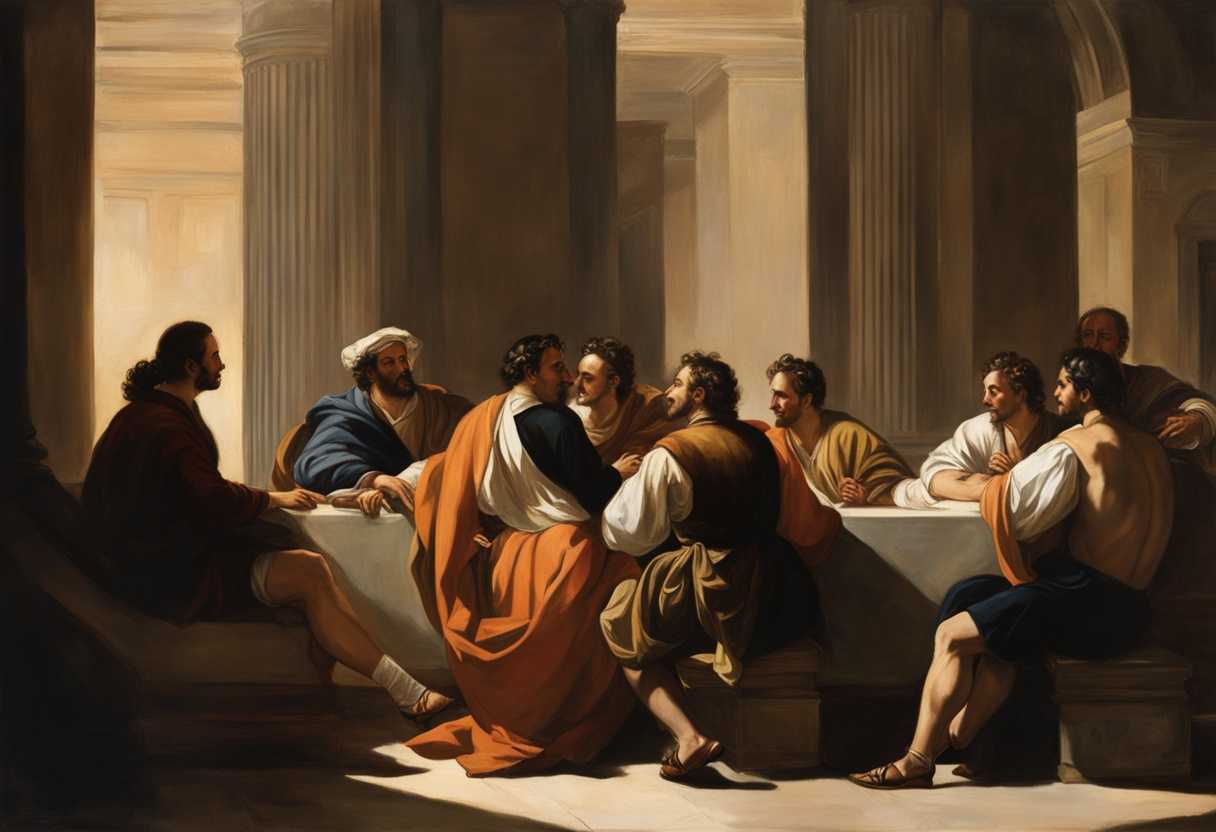
Setting the Scene for Acts 1:21
The scene in Acts 1:21 takes place in Jerusalem, shortly after the ascension of Jesus. The disciples are gathered together in the upper room, which is a familiar meeting place for them. The room is dimly lit by oil lamps, casting a warm glow on the faces of the twelve men present. The atmosphere is heavy with anticipation and uncertainty as they grapple with the recent departure of their beloved teacher.
Among those present are Peter, John, James, Andrew, Philip, Thomas, Bartholomew, Matthew, James son of Alphaeus, Simon the Zealot, and Judas son of James. They are joined by other followers of Jesus, totaling about 120 people. The group is in deep discussion, reflecting on the teachings of Jesus and trying to make sense of the events that have unfolded. As they seek guidance and direction for the future, they are preparing to choose a replacement for Judas Iscariot, who betrayed Jesus. The air is thick with emotion as they grapple with the weight of this decision and the responsibility that comes with carrying on the ministry of their beloved leader.
What is Acts 1:21 about?
The disciples of Jesus in this verse face the task of selecting a replacement for Judas Iscariot, who betrayed Jesus. This moment is significant as it marks the disciples’ faithfulness to Jesus’ teachings and their commitment to continuing his work despite the betrayal they experienced. They are ensuring that the ministry and mission entrusted to them by Jesus will continue to be carried out by choosing a new apostle.
Have you ever had to make a difficult decision in a moment of adversity or betrayal? How did you navigate through that challenging situation with integrity and faith? Just like the disciples, we are often faced with unexpected obstacles in our lives that test our beliefs and values. It is essential to remember the importance of staying true to our principles and carrying on with determination, even in the face of betrayal or difficulties. This verse serves as a reminder that in times of uncertainty, staying grounded in our faith and making decisions in line with our values can lead us towards righteousness and purpose.
Understanding what Acts 1:21 really means
Structure for Commentary
- Introduction and Context
- Detailed Breakdown of the Verse
- Related Biblical Passages
- Relevance to Contemporary Life
- Anecdote for Illustration
- The early church is in a period of transition in Acts 1:21. Judas Iscariot, one of the original twelve apostles, has betrayed Jesus and subsequently died. The remaining apostles are now seeking a new member to take his place. The criteria they set are crucial for ensuring the continuity and integrity of their mission. This moment underscores the importance of leadership and continuity in any community of faith.
Detailed Breakdown of the Verse
The apostles emphasize that the new member must be someone “who has been with us the whole time the Lord Jesus was living among us.” This phrase highlights two critical elements: continuity and witness. The apostles understand that the new leader must have been an eyewitness to Jesus’ ministry, from His baptism by John until His ascension. This requirement ensures that the new apostle can genuinely testify to Jesus’ life, death, and resurrection.
Related Biblical Passages
This emphasis on eyewitness testimony resonates with other parts of Scripture. For instance, in 1 John 1:1, the apostle John writes, “That which was from the beginning, which we have heard, which we have seen with our eyes, which we have looked at and our hands have touched—this we proclaim concerning the Word of life.” Here, John underscores the importance of direct experience and personal witness in sharing the gospel. Similarly, in Acts 10:39-41, Peter speaks of being witnesses to all that Jesus did, reinforcing the idea that firsthand experience is foundational to their testimony. The idea of witness remains relevant in today’s world. While we may not be eyewitnesses to Jesus’ earthly ministry, we are called to be witnesses to His impact on our lives. Our personal experiences and transformations serve as powerful testimonies to others. We are called to cultivate a consistent and growing relationship with Christ just as the apostles sought someone who had been with Jesus from the beginning. John, a man who found redemption through faith in Christ, had struggled with addiction for years. His transformation was so profound that he became a beacon of hope for others struggling with similar issues. John’s life serves as a living testimony, much like the new apostle sought by the early church. His firsthand experience of Jesus’ transformative power becomes a compelling narrative that can lead others to faith.
Reflection and Engagement
Reflect on your own life. How have you witnessed Jesus’ work in your journey? Are there moments you can share that testify to His power and love? Acts 1:21 reminds us that our personal experiences with Christ are invaluable. They are not just for our benefit but are meant to be shared, fostering faith and encouraging others. We see the importance of continuity, integrity, and personal witness in our faith journey by examining Acts 1:21. Whether in the early church or today, the call to be a witness to Christ’s work remains a cornerstone of our mission.
How can we faithfully serve in church leadership roles?
To faithfully serve in church leadership roles, we must understand the importance of being a witness to the ministry of Jesus. This involves being actively involved in spreading the teachings of Jesus and being a living example of His love and grace. We, as church leaders, are called to lead by serving others, just as Jesus did during His time on earth. We can effectively lead and guide those under our care by humbly serving others and putting their needs above our own.
Additionally, we should seek guidance and wisdom from the Holy Spirit in all aspects of our leadership roles. The Holy Spirit empowers us to make wise decisions, lead with integrity, and discern the needs of the congregation. Through prayer, studying scripture, and seeking the counsel of other mature believers, we can ensure that we are leading in a way that is pleasing to God and beneficial to those we serve.
Finally, it is essential to remember that our ultimate goal in church leadership is to glorify God and further His kingdom. We can lead with humility, love, and grace by keeping our focus on God’s will and seeking His guidance in all that we do. Church leaders have a primary responsibility to help others grow in their relationship with God and support them in their spiritual journey.
Application
Think about choosing a mentor at work. Would you go for someone who’s never been in the trenches? No, you’d pick someone who’s seen it all, right? In the same way, when we choose leaders in faith, we need those who have walked the path with Jesus and witnessed His wonders firsthand. Seek out those who stand firm in their faith and have truly felt Christ’s transformative power. Are you finding and supporting leaders who genuinely live out their relationship with our Savior?

Reverend Michael Johnson is an experienced Church Minister with a profound expertise in spirituality and guidance. With a serene presence and a compassionate heart, he has faithfully served his congregation for over 20 years, leading them on a spiritual journey towards inner peace and enlightenment. Reverend Johnson’s extensive knowledge of religious philosophies and profound understanding of human nature have made him a trusted confidant and mentor to many, as he seamlessly weaves his profound wisdom into life teachings. Reverend Johnson’s calming demeanor and empathetic nature continue to uplift and heal souls, nurturing a sense of unity and tranquility within his community.