
1 And when we had parted from them and set sail, we came by a straight course to Cos, and the next day to Rhodes, and from there to Patara.
2 And having found a ship crossing to Phoenicia, we went aboard and set sail.
3 When we had come in sight of Cyprus, leaving it on the left we sailed to Syria and landed at Tyre, for there the ship was to unload its cargo.
4 And having sought out the disciples, we stayed there for seven days. And through the Spirit they were telling Paul not to go on to Jerusalem.
5 When our days there were ended, we departed and went on our journey, and they all, with wives and children, accompanied us until we were outside the city. And kneeling down on the beach, we prayed.
6 And when we had taken leave of one another, we got on the ship, and they returned home.
7 When we had finished the voyage from Tyre, we arrived at Ptolemais, and we greeted the brothers and stayed with them for one day.
8 On the next day we departed and came to Caesarea, and we entered the house of Philip the evangelist, who was one of the seven, and stayed with him.
9 He had four unmarried daughters, who prophesied.
10 While we were staying for many days, a prophet named Agabus came down from Judea.
11 And coming to us, he took Paul’s belt and bound his own feet and hands and said, “Thus says the Holy Spirit, ‘This is how the Jews at Jerusalem will bind the man who owns this belt and deliver him into the hands of the Gentiles.’”
12 When we heard this, we and the people there urged him not to go up to Jerusalem.
13 Then Paul answered, “What are you doing, weeping and breaking my heart? For I am ready not only to be imprisoned but even to die in Jerusalem for the name of the Lord Jesus.”
14 And since he would not be persuaded, we ceased and said, “Let the will of the Lord be done.”
15 After these days we got ready and went up to Jerusalem.
16 And some of the disciples from Caesarea went with us, bringing us to the house of Mnason of Cyprus, an early disciple, with whom we should lodge.
17 When we had come to Jerusalem, the brothers received us gladly.
18 On the following day Paul went in with us to James, and all the elders were present.
19 After greeting them, he related one by one the things that God had done among the Gentiles through his ministry.
20 And when they heard it, they glorified God. And they said to him, “You see, brother, how many thousands there are among the Jews of those who have believed. They are all zealous for the law,
21 And they have been told about you that you teach all the Jews who are among the Gentiles to forsake Moses, telling them not to circumcise their children or walk according to our customs.
22 What then is to be done? They will certainly hear that you have come.
23 Do therefore what we tell you. We have four men who are under a vow.
24 take these men and purify yourself along with them and pay their expenses, so that they may shave their heads. Thus all will know that there is nothing in what they have been told about you, but that you yourself also live in observance of the law.
25 But as for the Gentiles who have believed, we have sent a letter with our judgment that they should abstain from what has been sacrificed to idols, and from blood, and from what has been strangled, and from sexual immorality.
26 Then Paul took the men, and the next day he purified himself along with them and went into the temple, giving notice when the days of purification would be fulfilled and the offering presented for each one of them.
27 When the seven days were almost completed, the Jews from Asia, seeing him in the temple, stirred up the whole crowd and laid hands on him,
28 crying out, “Men of Israel, help! This is the man who is teaching everyone everywhere against the people and the law and this place. Moreover, he even brought Greeks into the temple and has defiled this holy place.”
29 For they had previously seen Trophimus the Ephesian in the city with him, and they supposed that Paul had brought him into the temple.
30 Then all the city was stirred up, and the people ran together. They seized Paul and dragged him out of the temple, and at once the gates were shut.
31 And as they were seeking to kill him, word came to the tribune of the cohort that all Jerusalem was in confusion.
32 He at once took soldiers and centurions and ran down to them. And when they saw the tribune and the soldiers, they stopped beating Paul.
33 Then the tribune came up and arrested him and ordered him to be bound with two chains.
34 Some in the crowd were shouting one thing, some another. And as he could not learn the facts because of the uproar, he ordered him to be brought into the barracks.
35 And when he came to the steps, he was actually carried by the soldiers because of the violence of the mob,
36 For the mob of the people followed, crying out, “Away with him!”
37 As Paul was about to be brought into the barracks, he said to the tribune, “May I say something to you?” And he said, “Do you know Greek?
38 Then you are not the Egyptian who recently stirred up a revolt and led the four thousand men of the Assassins out into the wilderness?”
39 Paul replied, “I am a Jew, from Tarsus in Cilicia, a citizen of no obscure city. I beg you, permit me to speak to the people.”
40 And when he had given him permission, Paul, standing on the steps, motioned with his hand to the people. And when there was a great hush, he addressed them in the Hebrew language, saying:
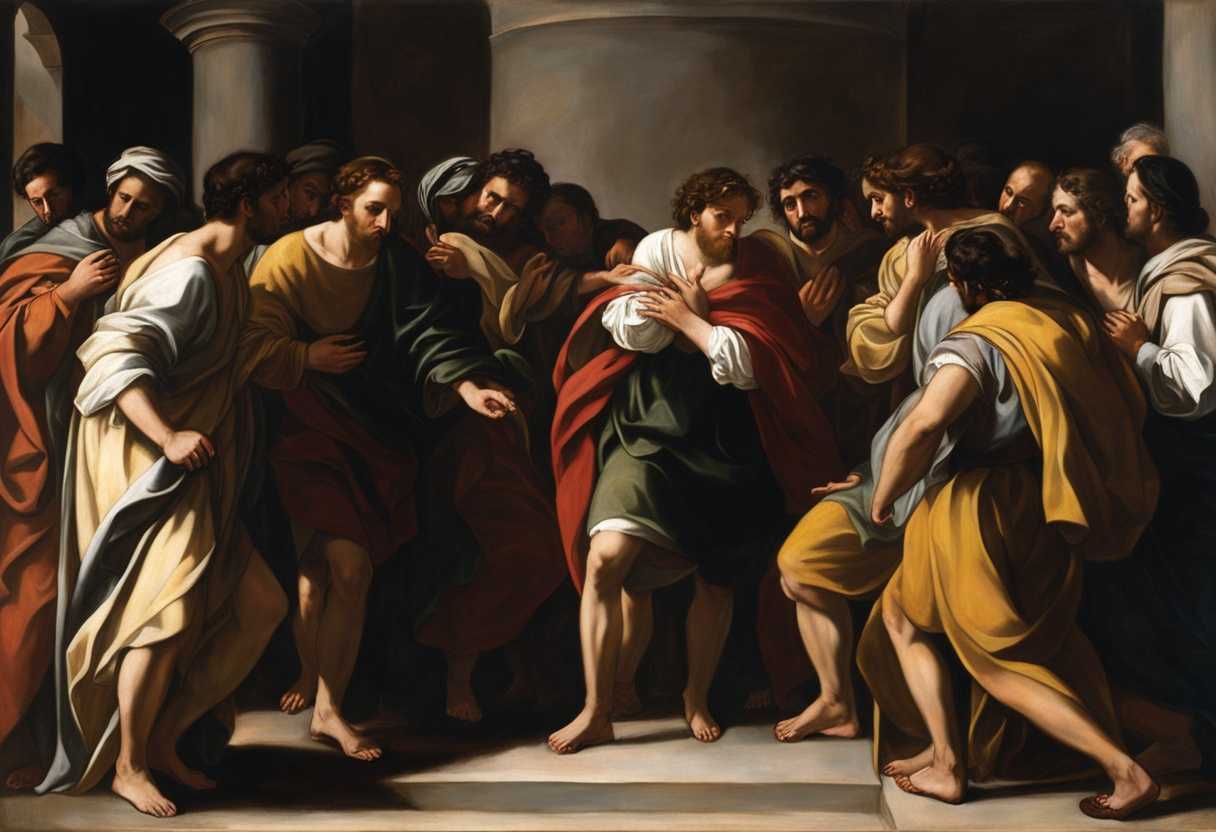
The True Meaning of Acts 21
The Book of Acts, written by Luke, the beloved physician, provides a captivating account of the early Christian church and the remarkable journeys of the apostle Paul. Paul returns to Jerusalem in this particular chapter, facing a pivotal moment in his ministry that foreshadows the challenges and triumphs ahead. We will explore Paul’s determination to reach Jerusalem, despite the warnings he receives along the way, as we delve into Acts 21. This chapter highlights the growing tensions between Paul and the Jewish authorities, as well as the unwavering faith that sustains him in the face of adversity. We’ll also see the role of the local church in supporting and guiding Paul, echoing the principles of unity and community that are central to the Christian message.
Throughout this passage, we’ll find echoes of Paul’s earlier experiences, such as his encounter with the Ephesian elders in Acts 20, where he warned them of the trials that awaited him. These interconnections within the Book of Acts serve to reinforce the overarching narrative of God’s plan unfolding, even amidst the uncertainties and obstacles that the early believers faced.
Acts 21:1-6
The passage in Acts 21:1-6 describes Paul’s journey towards Jerusalem. Let’s break it down section by section for a deeper understanding.
Verse 1 starts with Paul and his companions departing from Miletus, a city in Asia Minor. They set sail and arrived at the port of Cos, an island near Asia Minor. This journey by sea was a common mode of transportation during ancient times, and it highlights the physical challenges and risks early Christians like Paul faced in spreading the Gospel. The group travelled to Rhodes, another island, and then to Patara in verse 2. These locations were strategic port cities in the ancient world, serving as important trading hubs and points of connection between different regions. This journey signifies the geographical extent of Paul’s missionary travels and the lengths he went to in order to proclaim the Good News.
Verse 3 mentions that they found a ship bound for Phoenicia and boarded it. After setting sail, they came within sight of Cyprus, but passed it by, sailing on to Syria. Cyprus was significant because it was where Paul and Barnabas had their first missionary journey (Acts 13), and it was also the birthplace of Barnabas. Passing by Cyprus indicates that Paul was determined to reach his destination in Jerusalem without any diversions, showing his unwavering commitment to fulfilling his mission. The group arrives in Tyre, a coastal city in Phoenicia, in verses 4-6. Here, they meet with the local disciples and stay with them for seven days. The disciples, through the Holy Spirit, warn Paul not to go to Jerusalem, foretelling the trouble he would face there. However, Paul is resolute in his decision to continue towards Jerusalem, despite the hardships that await him. This demonstrates Paul’s courage and conviction in following the path set before him, even in the face of adversity.
This passage in Acts 21:1-6 showcases a few important themes. Firstly, it highlights the physical and spiritual challenges faced by early Christians in proclaiming the Gospel. Paul’s journey reflects the sacrifices and risks involved in spreading the message of Christ to different regions. Secondly, it underscores the importance of obedience to God’s calling, even when it leads to discomfort or opposition. Paul’s determination to go to Jerusalem, despite warnings of trouble, reveals his trust in God’s plan for his life. Lastly, it illustrates the unity and support within the early Christian community, as seen in the hospitality extended to Paul and his companions by the disciples in Tyre. This unity and fellowship among believers are integral to the growth and strength of the Church, a theme echoed throughout the New Testament (Acts 2:42-47).
Acts 21:7-14
The apostle Paul continues his journey towards Jerusalem in a poignant scene found in Acts 21:7-14. Let’s break down this passage into crucial sections for a more thorough understanding.
Verse 7 sets the stage, describing Paul’s companions and the destination of their journey. The disciples, including Luke, were traveling with Paul as he made his way to Jerusalem. This aspect is noteworthy as it highlights the importance of community and fellowship in the life of a believer. Just as Paul had fellow believers accompanying him on his journey, Christians are encouraged to support and walk alongside one another in their Christian walk. Ecclesiastes 4:9-10 emphasizes the strength found in companionship – “Two are better than one because they have a good return for their labor: If either of them falls down, one can help the other up. But pity anyone who falls and has no one to help them up.”
Moving on to verses 8-9, upon arriving in Caesarea, we are introduced to Philip the evangelist. Philip was one of the seven men chosen to serve in Acts 6:5 and was known for his powerful ministry in Samaria (Acts 8:5-8) and his encounter with the Ethiopian eunuch (Acts 8:26-40). Here Philip has four unmarried daughters who prophesied. This reference to Philip’s daughters prophesying is significant as it reveals that the gift of prophecy was not limited by gender in the early church. It underscores the egalitarian nature of spiritual gifts bestowed by the Holy Spirit, as reiterated in 1 Corinthians 12:7-11, where the diversity of gifts is emphasized for the common good of the body of Christ. Agabus, a prophet who comes from Judea, meets Paul in verses 10-11. This is not the first time Agabus appears in the book of Acts; he also prophesied a great famine during the time of Claudius Caesar (Acts 11:28). Agabus dramatically uses Paul’s belt to bind his own hands and feet in Acts 21, illustrating that the person who owns the belt would face a similar fate. This symbolic act serves as a foreshadowing of the trials and imprisonment awaiting Paul in Jerusalem. Despite this forewarning, Paul remains resolute in his decision to go to Jerusalem, demonstrating his unwavering commitment to fulfilling God’s calling on his life. This act foreshadows Paul’s later arrest and imprisonment. Paul’s companions and the believers respond to Agabus’s prophecy in verses 12-14. They plead with Paul in tears, urging him not to go to Jerusalem. Their emotional reaction showcases their deep love and concern for Paul’s well-being. However, Paul’s response is steadfast and unwavering. He is willing to face persecution and hardship for the sake of the gospel, echoing his earlier statements about being ready to suffer for the name of Jesus (Acts 21:13). This unwavering commitment to the mission parallels Jesus’ own determination to go to Jerusalem, knowing the suffering and death that awaited Him (Luke 9:51). Acts 21:7-14 provides profound insights into the themes of community, prophecy, obedience to God’s calling, and unwavering faith in the face of adversity. We, as believers, are called to walk in fellowship with one another, use our spiritual gifts for the edification of the body of Christ, heed the guidance of the Holy Spirit, and remain steadfast in our commitment to follow Christ, even when faced with trials and opposition. Just as Paul’s companions supported him on his journey, we are encouraged to support and encourage our fellow believers in their walk of faith.
Acts 21:15-19
Paul arrives in Jerusalem in an important moment in his life as seen in Acts 21:15-19. Let’s break down this passage to understand its significance. Paul and his companions reached Jerusalem after the seven-day journey mentioned in the first section of verse 15. This journey was not just a physical one but a symbolic one as well. Jerusalem held great significance in Jewish history as the religious and political center of the Jewish people. Paul, as a devout Jew turned Christian missionary, was returning to a city that held both cultural and religious importance to him.
The mention of James in verse 18 is crucial as he was a key figure in the early Christian church in Jerusalem. James, also known as James the Just, was the brother of Jesus and played a prominent role in leading the Jewish Christian community in Jerusalem. His presence signifies the unity between the Jewish Christians in Jerusalem and the Gentile believers that Paul had been ministering to in his missionary journeys. This unity was crucial in the early church as it navigated the balance between Jewish traditions and the inclusion of Gentile believers.
The discussion about the conversion of the Gentiles in verse 19 highlights the ongoing debate within the early church about the acceptance of Gentile believers into the Christian faith. Paul’s ministry focused on bringing the message of salvation to the Gentiles, which at times caused contention among the Jewish Christians who held onto their cultural and religious traditions. This ongoing tension is a central theme in the New Testament as the early church struggled to define its identity and mission in light of the diverse backgrounds of its members. This passage from Acts 21:15-19 showcases the complex dynamics of the early Christian church as it navigated issues of cultural identity, religious tradition, and unity among believers. It reminds us of the importance of embracing diversity within the body of Christ while remaining steadfast in the foundational truths of the faith. The presence of figures like Paul, James, and the Gentile believers serve as a testament to the transformative power of the gospel in breaking down barriers and uniting all believers under the banner of Christ. This passage underscores the timeless message of inclusion, unity, and the expansion of God’s kingdom to all nations, as foretold in passages like Matthew 28:19-20 where Jesus commands his followers to go and make disciples of all nations.
Acts 21:20-26
The Apostle Paul returns to Jerusalem in Acts 21:20-26, unaware of the challenges that awaited him. Let’s break down this passage:
Verse 20 begins with the leaders of the Jerusalem church praising God for the work He had done among the Gentiles through Paul’s ministry. They emphasize that many Jews have also believed in Christ.
This section highlights the journey of the early church and the widespread impact of the Gospel beyond the borders of Judaism. It underscores the unity that faith in Christ brings, transcending societal divides and cultural differences. It is a reminder that God’s salvation is not limited by human categories or boundaries. The church leaders in verses 21-22 express concern about rumors circulating among the Jewish believers that Paul was teaching Jews to forsake Moses and customs. They propose a solution for Paul to join in a purification rite at the temple to show he still walked according to the law of Moses.
This incident brings to light the tension between the law and grace in the early church. Paul himself had addressed this issue in his letters, such as in Romans, where he explained the relationship between the law and faith in Christ. This event serves as a practical example of Paul’s approach to contextualizing his message to different audiences while remaining true to the core beliefs of Christianity. Paul agrees to the suggestion of the church leaders in verse 23 and prepares to undergo the purification rite. This decision reflects Paul’s willingness to be adaptable in his approach for the sake of unity within the church.
Paul’s willingness to participate in the purification ritual demonstrates his commitment to building bridges and fostering understanding among different factions within the early church. It echoes his later teachings on being all things to all people for the sake of the Gospel (1 Corinthians 9:22), showing flexibility in non-essential matters to promote unity and peace. Certain Jews from Asia stir up the crowd as Paul goes through with the purification rite in verses 24-26, accusing him of bringing Gentiles into the temple and defiling the holy place. This false accusation leads to a riot and Paul’s eventual arrest.
This sudden shift in events serves as a reminder of the persecution and opposition faced by those who boldly proclaim the Gospel. It echoes Jesus’ teachings that his followers would encounter trouble in the world (John 16:33) and underscores the cost of discipleship. Paul’s experiences in Jerusalem foreshadow the trials and hardships he would endure for the sake of Christ throughout his missionary journeys. Acts 21:20-26 offers valuable insights into the themes of unity, cultural sensitivity, and persecution in the early church. It showcases the challenges faced by early Christians as they navigated cultural differences and opposition while remaining steadfast in their faith. The passage serves as a reminder for believers today to seek unity in diversity, to be adaptable in their approach to sharing the Gospel, and to stand firm in the face of adversity for the sake of Christ.
Acts 21:27-32
Several important sections can be observed in Acts 21:27-32. “When the seven days were almost over, some Jews from the province of Asia saw Paul at the temple. They stirred up the whole crowd and seized him.”
Here we see the continued opposition and persecution Paul faced for preaching the gospel. These Jews from Asia were likely part of the group that opposed Paul’s teaching and tried to incite the crowd against him. Their actions demonstrate the intense hostility Paul faced from some Jewish factions who saw his teachings as a threat to their traditional beliefs. This event highlights the ongoing theme of conflict between Paul and certain Jewish groups, emphasizing the resistance faced by early Christians as they spread the message of Jesus. It also serves as a reminder of the challenges faced by believers when their faith contradicts the beliefs of those around them.
- “They shouted, ‘Men of Israel, help us! This is the man who teaches everyone everywhere against our people and our law and this place.’”
The Jews who seized Paul falsely accused him of speaking against their people, their law, and the temple. This accusation was not true, as Paul consistently upheld the importance of the Jewish law and customs while preaching about the fulfillment of the law through Jesus Christ. This accusation reflects the misunderstanding and misrepresentation that often surrounds the message of Christianity, even to this day. It serves as a reminder of the importance of clarity and understanding in sharing the gospel, as well as the inevitability of facing opposition and false accusations when proclaiming the truth.
- The commander of the Roman troops received news that the whole city of Jerusalem was in an uproar as they were trying to kill him. He at once took some officers and soldiers and ran down to the crowd.”
The scene escalates quickly as the crowd attempts to kill Paul, prompting the Roman commander to intervene. The Roman presence in Jerusalem was significant during this time to maintain order and prevent uprisings. The commander’s swift action to protect Paul illustrates the providence of God in preserving His servant for the furtherance of His kingdom. This event also demonstrates the intersection of political power and religious tension in the New Testament narrative, highlighting the complex dynamics at play in the early church’s interactions with both Jewish authorities and the Roman occupying forces. Early believers faced challenges and dangers in spreading the gospel, as depicted vividly in Acts 21:27-32. Paul’s experience at the temple serves as a microcosm of the broader conflict between the message of Christianity and the entrenched religious traditions of the time. Despite facing intense opposition and danger, Paul’s resilience and God’s providence are evident throughout this narrative, emphasizing the unstoppable nature of God’s plan for redemption. The events in this passage serve as a reminder of the courage and faith required to stand firm in the face of adversity, trusting in God’s protection and guidance even in the midst of chaos and danger.
Acts 21:33-36
A passage in Acts 21:33-36 describes an intense and chaotic situation involving the Apostle Paul in Jerusalem. The section begins with a Roman commander arriving with his soldiers to take Paul into custody after a riot broke out in the temple. The crowd becomes increasingly unruly and violent as the commander tries to ascertain Paul’s identity and the cause of the commotion. Paul is arrested and bound with two chains in the midst of this turmoil.
This portion of the passage highlights the theme of persecution and the willingness of Paul to endure suffering for the sake of spreading the gospel. The account of Paul being arrested reflects the challenges and opposition faced by early Christians in their mission to preach the message of Christ. It also serves as a reminder of the sacrifices that believers may have to make in order to remain faithful to their calling.
The chaotic scene in Acts 21:33-36 underscores the importance of remaining steadfast in the face of adversity and staying true to one’s convictions. Despite the hostility and danger surrounding him, Paul remains resolute and composed, demonstrating a deep faith and trust in God’s plan. This episode serves as a powerful example of courage and perseverance in the midst of trials, inspiring believers to stand firm in their faith no matter the circumstances.
This passage also highlights the sovereignty and protection of God amidst chaos and uncertainty. God’s will ultimately prevails as Paul is seized and bound. This aligns with the broader message in the Bible that God is in control of all situations, even those that may seem dire or out of our control. Believers are reminded in times of trouble to place their trust in God’s providence and to rely on His strength to see them through challenging circumstances.
Furthermore, the events in Acts 21:33-36 foreshadow Paul’s future trials and imprisonment for the sake of the gospel. This incident serves as a precursor to the numerous hardships and persecutions that Paul will endure in his ministry, underscoring the reality of suffering and opposition that often accompany a life devoted to serving Christ. Through Paul’s example, believers are encouraged to persevere in their own faith journeys, knowing that trials and tribulations may come, but God’s grace and power are more than sufficient to sustain them. Jesus forewarns his disciples in John 15:20 that they will face persecution because of their association with him, reminding us when we connect this passage to other verses in the Bible. Acts 21:33-36 exemplifies this very persecution and the reality of being mistreated for one’s faith. It underscores the timeless message that following Christ may not always be easy, but it is a calling that may require sacrifice and endurance. Acts 21:33-36 provides a vivid account of Paul’s arrest in the midst of chaos and persecution, showcasing his unwavering faith and trust in God despite the challenging circumstances. This passage serves as a poignant reminder of the trials faced by early Christians and the timeless message of perseverance, courage, and reliance on God’s sovereignty in the face of adversity. Paul’s example continues to inspire believers to stand firm in their faith and remain steadfast in the midst of opposition and hardship.
Acts 21:37-40
An account of the apostle Paul being arrested in Jerusalem is seen in Acts 21:37-40. Let’s break down this passage into important sections for a comprehensive analysis:
-
Paul said to the tribune, ‘May I say something to you?’ as he was about to be brought into the barracks.’ And he said, ‘Do you know Greek? Paul addresses the Roman tribune in this first part, requesting to speak. The fact that he speaks Greek is interesting because it indicates Paul’s education and background. This moment highlights Paul’s ability to communicate with both Jews and Gentiles, which was essential for his mission to spread the gospel to all nations. This situation also demonstrates the cultural diversity present in the Roman Empire and how God’s message transcends language and cultural barriers.
-
“Are you not the Egyptian, then, who recently stirred up a revolt and led the four thousand men of the Assassins out into the wilderness?” (Acts 21:38)
The tribune mistook Paul for the Egyptian who had led a revolt, showing the political tension and turmoil present in Jerusalem during that time. This confusion reminds us of how easily misunderstandings can occur, and it serves as a reminder of the worldly challenges that God’s messengers faced while spreading the Good News. It also highlights the perception that the authorities had of Paul and other Christian leaders, often associating them with political troublemakers. -
“Paul replied, ‘I am a Jew, from Tarsus in Cilicia, a citizen of no obscure city. I beg you, permit me to speak to the people.’” (Acts 21:39)
Paul clarifies his identity and background to the tribune, emphasizing his Jewish heritage and his citizenship of a respected city. This statement showcases Paul’s strategic approach to the situation and his desire to address the Jewish people in Jerusalem. It also emphasizes Paul’s willingness to engage with his own people, despite the challenges and risks involved. -
“And when he had given him permission, Paul, standing on the steps, motioned with his hand to the people. And when there was a great hush, he addressed them in the Hebrew language, saying:” (Acts 21:40)
Paul’s request to address the crowd shows his boldness and commitment to sharing the gospel, even in the face of opposition. Paul connects with his Jewish audience on a deeper level by speaking in Hebrew, showing his cultural sensitivity and understanding of the importance of effectively communicating the message of Christ. This moment sets the stage for Paul’s defense of his faith and mission in the following chapters of Acts. Paul’s unwavering dedication to his calling despite the challenges and dangers he faced is witnessed in Acts 21:37-40. This passage teaches us about effective communication, cultural awareness, and the importance of standing firm in our faith, even in the midst of adversity. Paul’s interactions with the Roman tribune and the Jewish crowd exemplify the complexities of sharing the gospel in a diverse and sometimes hostile world, emphasizing the need for wisdom, courage, and reliance on the Holy Spirit. Paul’s boldness in this situation echoes his earlier teachings in his letters about preaching the gospel boldly and fearlessly (Ephesians 6:19-20, 2 Timothy 1:7-8). This passage serves as a powerful reminder of the perseverance and passion required to proclaim the message of Christ, no matter the circumstances.
After Acts 21
The apostle Paul had arrived in Jerusalem, despite the warnings of his companions about the dangers that awaited him there. The crowd seized him as a riot broke out when he entered the temple. The Roman commander, Claudius Lysias, intervened and arrested Paul, believing him to be a troublemaker. Paul’s arrest in Jerusalem sets in motion a series of events that will ultimately lead him to Rome in the next chapter. Though the path ahead may be uncertain, we can take comfort in the knowledge that God’s plan for Paul’s life is unfolding, and that even in the midst of adversity, the gospel will continue to spread. Let us follow Paul’s journey, reminding ourselves of the power of faith and the unwavering commitment to truth that has marked his life.

Reverend Michael Johnson is an experienced Church Minister with a profound expertise in spirituality and guidance. With a serene presence and a compassionate heart, he has faithfully served his congregation for over 20 years, leading them on a spiritual journey towards inner peace and enlightenment. Reverend Johnson’s extensive knowledge of religious philosophies and profound understanding of human nature have made him a trusted confidant and mentor to many, as he seamlessly weaves his profound wisdom into life teachings. Reverend Johnson’s calming demeanor and empathetic nature continue to uplift and heal souls, nurturing a sense of unity and tranquility within his community.