
Acts 21:23-24 is about the apostle Paul undergoing a purification ritual as a demonstration of his commitment to upholding the traditions and laws of the Jewish faith in order to dispel false accusations against him.
23 Do therefore what we tell you. We have four men who are under a vow.
24 take these men and purify yourself along with them and pay their expenses, so that they may shave their heads. Thus all will know that there is nothing in what they have been told about you, but that you yourself also live in observance of the law.
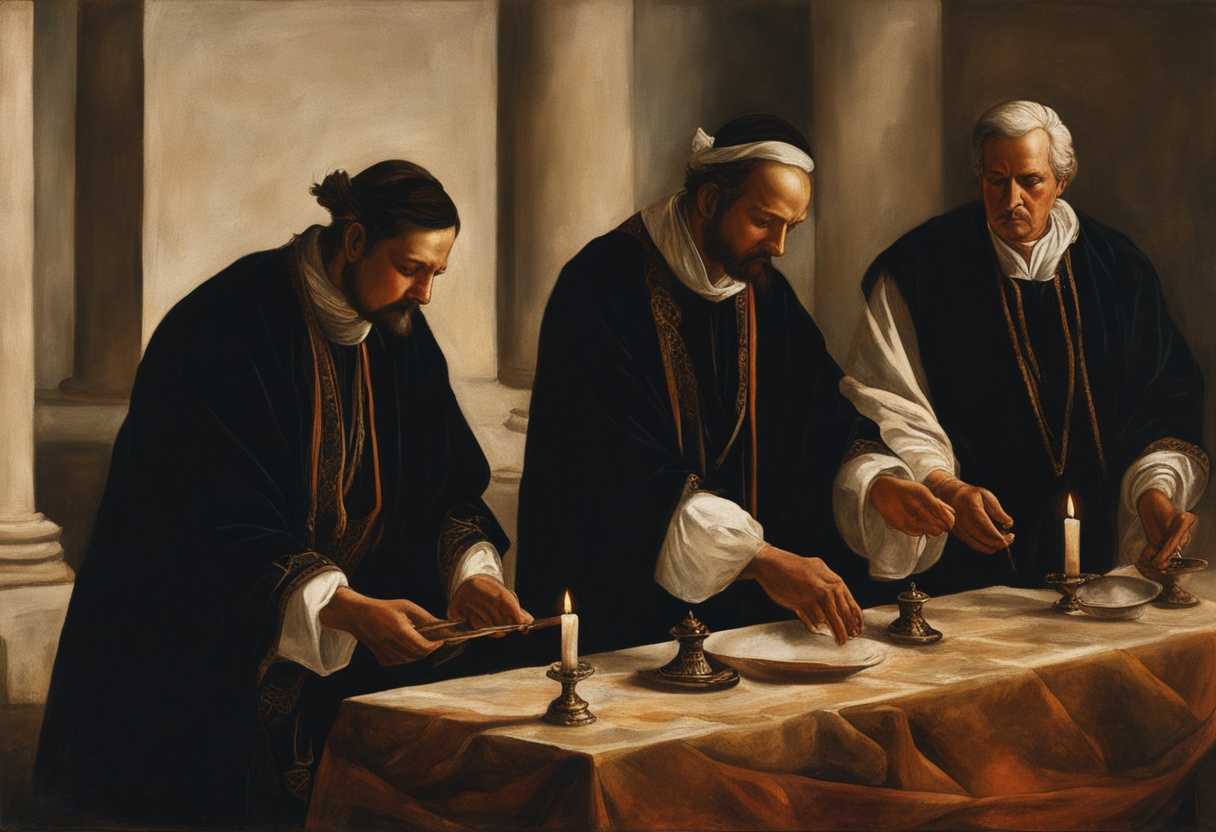
Setting the Scene for Acts 21:23-24
In Acts chapter 21, we find the apostle Paul in Jerusalem, where he has come to deliver a financial gift to the church from the Gentile churches he had visited on his missionary journeys. Paul is accompanied by several men, including Trophimus the Ephesian, who is a Gentile believer.
As Paul arrives in Jerusalem, he is met by James and the elders of the church. They inform him that there are rumors circulating among the Jewish believers that he has been teaching the Jews living among the Gentiles to forsake Moses, telling them not to circumcise their children or walk according to the customs. To dispel these rumors and to demonstrate his commitment to the Jewish customs, James suggests that Paul participate in a purification ritual at the temple.
The scene is set in the bustling city of Jerusalem, with the temple looming in the background. Paul, James, the elders, and the other men are gathered together, discussing the best course of action to address the concerns of the Jewish believers. The tension is palpable as they navigate the delicate balance between Paul’s ministry to the Gentiles and his desire to maintain unity within the church.
What is Acts 21:23-24 about?
Paul takes a specific action in this verse by undergoing a purification ritual in response to rumors circulating about him. This action is not just a mere ritual but a deliberate choice to dispel misunderstandings and misconceptions surrounding his beliefs and practices. Paul, by engaging in this ritual, asserts his commitment to his Jewish heritage and customs and shows his willingness to address concerns and maintain unity within the community. To understand the significance of Paul’s actions, it is essential to delve deeper into the context of this verse. Paul is not compromising his beliefs but rather demonstrating his respect for the traditions and beliefs of others by participating in the purification ritual. This can serve as a powerful lesson in humility, empathy, and the importance of fostering understanding and unity within a diverse community. It prompts us to reflect on how we can bridge differences, address misconceptions, and promote harmony through our actions, just as Paul did in this instance.
Understanding what Acts 21:23-24 really means
In Acts 21:23-24, we find Paul in Jerusalem, facing opposition from Jewish believers concerned about his teachings to the Gentiles. The elders suggest he join a purification ritual to show respect for Jewish law. The phrase “Do what we tell you” underscores the elders’ authority and their desire for unity in the early Christian community. The mention of “Four men who have made a vow” refers to a Nazirite vow, involving special commitments to God and purification rituals. Paul is urged to “Purify yourself along with them,” indicating participation in the ritual to honor Jewish customs. Additionally, being asked to “Pay their expenses” symbolizes solidarity and support for the Jewish believers.
These verses resonate with Paul’s message in 1 Corinthians 9:20-22, where he adapts for the sake of the Gospel, becoming “all things to all people” to save some. Romans 14:13-19 emphasizes not causing others to stumble in faith, promoting unity and peace within the community. Galatians 3:28 highlights unity in Christ, transcending cultural and religious differences. Today, these teachings stress the significance of unity and respect in diverse communities, urging personal sacrifices for harmony and the greater good. In multicultural societies, these principles are vital for peaceful coexistence and mutual respect.
Consider a workplace scenario where diverse colleagues interact. A vegetarian employee, uncomfortable during meat-based team lunches due to religious beliefs, finds support from a non-vegetarian colleague who joins vegetarian meals to show respect. This act of solidarity fosters a more inclusive and cohesive team. Similarly, Paul’s participation in the purification ritual exemplifies respect and unity, valuing the beliefs and practices of fellow believers. These verses teach empathy, respect, and unity in our interactions, emphasizing the importance of understanding and sometimes engaging in practices different from our own to build harmonious communities.
In conclusion, Acts 21:23-24 underscores the timeless lesson of empathy, respect, and unity in diverse settings. By embracing and respecting the practices of others, we cultivate stronger, more harmonious relationships and communities. This principle extends beyond personal interactions to broader societal contexts, guiding us towards peaceful coexistence and mutual understanding. The narrative challenges us to consider the value of unity and respect in navigating differences, fostering a culture of empathy and solidarity in our interactions with others.
How can we honor and respect cultural differences?
Honoring and respecting cultural differences involves acknowledging and valuing the unique practices, traditions, and beliefs of different cultures. It requires us to approach others with an open mind and a willingness to learn from their customs and ways of life. We can foster understanding, appreciation, and harmony among diverse communities by showing respect towards cultural differences. Paul accommodated the cultural practices of the Jews in the verse to show his reverence for their traditions, demonstrating cultural sensitivity and respect. This demonstrates the importance of being mindful of how our actions may impact others from different cultural backgrounds. We can build bridges and cultivate deeper connections with people of diverse heritages by being considerate and respectful of cultural differences. Honoring and respecting cultural differences can ultimately lead to a more inclusive and harmonious society where individuals feel valued and accepted for who they are. It allows for the celebration of diversity and promotes a sense of unity amidst the differences that enrich our world. We can create a more inclusive and compassionate community for all by embracing cultural differences with an attitude of respect and appreciation.
Application
Channel your inner Paul, striving to bridge divides and create a united front among those around you. Just as Paul dedicated himself to building trust and unity, commit to fostering harmony and empathy in your interactions with others. Embrace diversity, celebrating the unique qualities that each individual brings to the table. Will you rise to the occasion and be the catalyst for unity within your community, just like Paul?

Reverend Michael Johnson is an experienced Church Minister with a profound expertise in spirituality and guidance. With a serene presence and a compassionate heart, he has faithfully served his congregation for over 20 years, leading them on a spiritual journey towards inner peace and enlightenment. Reverend Johnson’s extensive knowledge of religious philosophies and profound understanding of human nature have made him a trusted confidant and mentor to many, as he seamlessly weaves his profound wisdom into life teachings. Reverend Johnson’s calming demeanor and empathetic nature continue to uplift and heal souls, nurturing a sense of unity and tranquility within his community.