
Acts 22:22-29 is about the apostle Paul using his Roman citizenship to his advantage in order to escape unjust punishment and persecution, demonstrating how God can work through earthly institutions to fulfill His purposes.
22 Up to this word they listened to him. Then they raised their voices and said, “Away with such a fellow from the earth! For he should not be allowed to live.”
23 As they were shouting and throwing off their cloaks and flinging dust into the air,
24 the tribune ordered him to be brought into the barracks, saying that he should be examined by flogging, to find out why they were shouting against him like this.
25 But when they had stretched him out for the whipping, Paul said to the centurion who was standing by, “Is it lawful for you to flog a man who is a Roman citizen and uncondemned?”
26 When the centurion heard this, he went to the tribune and said to him, “What are you about to do? For this man is a Roman citizen.”
27 So the tribune came and said to him, “Tell me, are you a Roman citizen?” He said, “Yes.”
28 But Paul said, “I am a citizen by birth.”
29 So those who were about to examine him withdrew from him immediately, and the tribune also was afraid, for he realized that Paul was a Roman citizen and that he had bound him.
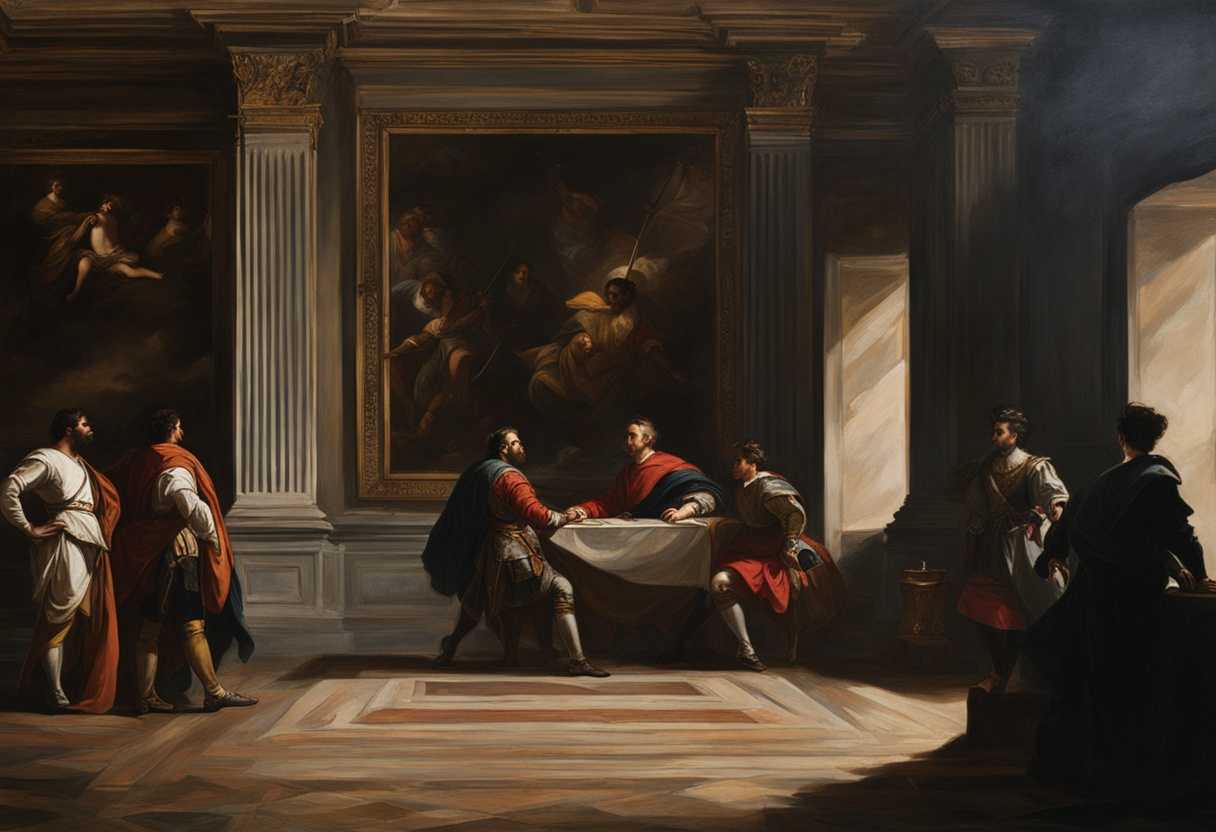
Setting the Scene for Acts 22:22-29
In Acts 22:22-29, the scene is set in Jerusalem, specifically in the temple. The apostle Paul, formerly known as Saul, finds himself in the midst of a heated confrontation with the Jewish crowd. The crowd had become incensed by Paul’s teachings, accusing him of blasphemy and defiling the temple by bringing Gentiles into it. The situation quickly escalates as the crowd becomes unruly, shouting and throwing dust into the air.
The Roman commander of the garrison in Jerusalem becomes aware of the commotion and sends soldiers to intervene. They rush in to rescue Paul from the angry mob, arresting him and binding him with chains. As they are about to take him away, Paul requests to speak to the commander in Greek, revealing his identity as a well-educated Jew. Surprised by this revelation, the commander allows Paul to address the crowd, leading to a tense moment of silence as Paul begins to share his testimony and defend his actions.
Surrounded by the chaos of the temple, with the crowd seething with anger and the Roman soldiers standing guard, Paul stands firm in his faith, using this opportunity to share the message of Jesus Christ with those who sought to harm him. The scene is charged with tension and drama, as Paul’s fate hangs in the balance amidst the conflicting interests of the Jewish authorities and the Roman occupation.
What is Acts 22:22-29 about?
What a powerful display of wisdom and cunning strategy by Paul! He exercises his right as a Roman citizen to avoid mistreatment and ensure fair treatment under Roman law. This action showcases Paul’s ability to navigate challenging situations and leverage his status for his benefit. It raises the question: How can we use our own rights and privileges to advocate for justice and fairness in our own lives and the lives of others?
Paul’s assertion of his Roman citizenship serves as a reminder of the importance of knowing and understanding our rights. It prompts us to reflect on how we can advocate for ourselves and others in situations where fairness and justice are at stake. This verse highlights the power of standing up for what is right and utilizing the resources available to us to ensure equitable treatment. It challenges us to consider how we can use our own privileges and rights to promote equality and justice in our communities. How can we follow Paul’s example and leverage our own positions to create positive change and advocate for fairness and equality for all?
Understanding what Acts 22:22-29 really means
In Acts 22:22-29, we witness a pivotal moment in the life of the Apostle Paul as he faces a hostile crowd in Jerusalem. The intensity of the situation is palpable as the crowd cries out, “Rid the earth of him! He’s not fit to live!” This extreme hostility towards Paul underscores the deep-seated tension between early Christians and traditional Jewish authorities. It prompts us to consider the challenges faced by those who boldly proclaim their faith in the midst of opposition.
Paul’s response to the crowd’s anger is both strategic and insightful. He astutely questions the legality of flogging a Roman citizen who has not been found guilty. This moment not only showcases Paul’s knowledge of his legal rights but also his ability to navigate precarious situations with wisdom. It serves as a reminder of the importance of being informed about our rights and standing up against injustice, even in the face of overwhelming hostility.
The passage also sheds light on the concept of citizenship, both earthly and heavenly. While Paul asserts his Roman citizenship to avoid physical harm, his ultimate allegiance lies in his identity as a citizen of heaven. This duality of citizenship is further explored in Philippians 3:20, where Paul reminds believers that their true citizenship is in heaven. It challenges us to consider where our ultimate allegiance lies and how our earthly citizenship intersects with our spiritual identity.
Drawing parallels to modern-day scenarios, we can envision situations where individuals assert their legal rights to avoid unjust treatment. Just as Paul used his Roman citizenship to protect himself, we are called to be knowledgeable and courageous in standing up for justice and truth. This anecdote serves as a powerful reminder of the importance of understanding and asserting our rights, whether in legal, social, or spiritual contexts.
As we reflect on this passage, we are encouraged to consider the broader implications for our lives today. How can we apply the lessons of Paul’s experience to our own circumstances? How does our identity in Christ inform the way we navigate challenges and injustices in the world? These questions prompt us to delve deeper into our understanding of rights, responsibilities, and the foundational truths that guide our actions.
In conclusion, Acts 22:22-29 challenges us to be wise, courageous, and informed in our interactions with the world. It calls us to stand firm in our beliefs, knowing our rights and responsibilities, while also recognizing the transcendent citizenship we hold in heaven. As we navigate the complexities of life, may we draw strength from Paul’s example and find assurance in our identity as citizens of a heavenly kingdom that surpasses all earthly affiliations and protections.
How can we show love and respect to those who oppose us?
We can show love and respect to those who oppose us by responding with kindness, patience, and understanding. Instead of reacting with anger or hostility, we can choose to listen attentively to their perspective and seek to understand their point of view. We demonstrate compassion and humility by showing respect to those who oppose us, which can help foster mutual respect and open a dialogue for peaceful resolution.
Furthermore, we can show love and respect by responding with gentleness and grace, even in the face of opposition. Through our actions and words, we can choose to extend love and kindness towards those who may not share our beliefs or opinions. We can set an example of how to engage with differing viewpoints with grace and dignity by embodying the values of empathy and compassion. We ultimately emulate the teachings of Jesus by showing love and respect to those who oppose us, exemplifying love, forgiveness, and understanding towards all, regardless of their beliefs or actions. Through our actions of compassion and respect, we can strive to build bridges of understanding and foster a spirit of unity and reconciliation within our interactions with others.
Application
Dear friend, let Paul’s resilience in Acts 22:22-29 ignite a fire within you to confront adversity head-on, just as he did. Let adversity be the wind beneath your wings propelling you forward, not holding you back. Embrace challenges as opportunities to showcase your unwavering faith and commitment to the truth. Like a beacon of light in darkness, stand firm in your beliefs, knowing that even in your weakest moments, divine strength prevails. Will you rise to the occasion and stand tall in the face of trials and tribulations?

Reverend Michael Johnson is an experienced Church Minister with a profound expertise in spirituality and guidance. With a serene presence and a compassionate heart, he has faithfully served his congregation for over 20 years, leading them on a spiritual journey towards inner peace and enlightenment. Reverend Johnson’s extensive knowledge of religious philosophies and profound understanding of human nature have made him a trusted confidant and mentor to many, as he seamlessly weaves his profound wisdom into life teachings. Reverend Johnson’s calming demeanor and empathetic nature continue to uplift and heal souls, nurturing a sense of unity and tranquility within his community.