
Acts 22:25-29 is about Paul asserting his Roman citizenship to avoid mistreatment and gain fair treatment from the authorities while also setting an example of using legal rights to further the spread of the gospel.
25 But when they had stretched him out for the whipping, Paul said to the centurion who was standing by, “Is it lawful for you to flog a man who is a Roman citizen and uncondemned?”
26 When the centurion heard this, he went to the tribune and said to him, “What are you about to do? For this man is a Roman citizen.”
27 So the tribune came and said to him, “Tell me, are you a Roman citizen?” He said, “Yes.”
28 But Paul said, “I am a citizen by birth.”
29 So those who were about to examine him withdrew from him immediately, and the tribune also was afraid, for he realized that Paul was a Roman citizen and that he had bound him.
Setting the Scene for Acts 22:25-29
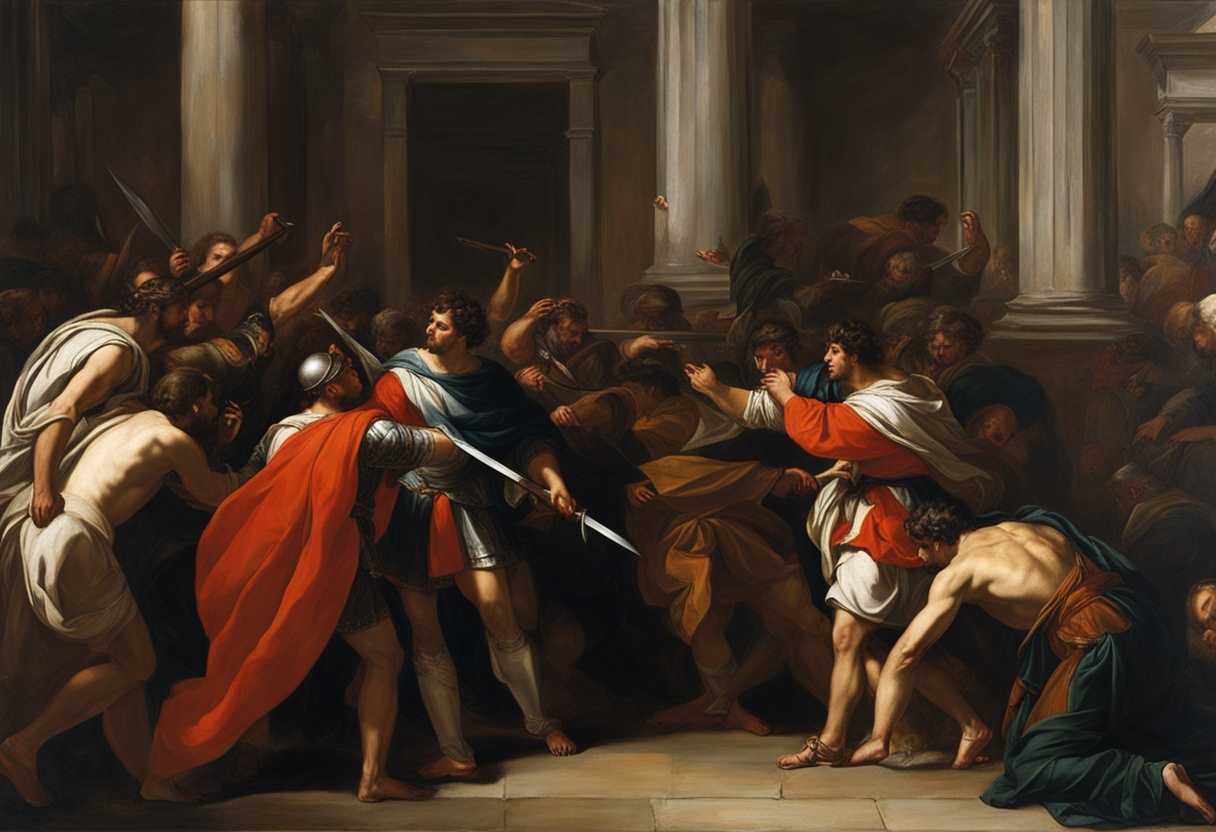
In Acts 22:25-29, we find the apostle Paul in a tumultuous situation in Jerusalem. The scene is set in the midst of a riot in the temple, where Paul has been accused of bringing Gentiles into the inner courts, a serious offense according to Jewish customs. The crowd is in an uproar, shouting and throwing dust into the air, demanding Paul’s arrest and punishment.
Amidst the chaos, the Roman commander of the garrison in Jerusalem, Claudius Lysias, intervenes to bring order to the situation. He orders Paul to be brought into the barracks for questioning and to be flogged to extract information about the cause of the uproar. Paul, a Roman citizen, asserts his rights and questions the legality of his treatment, causing Lysias to rethink his actions and decide to bring Paul before the Jewish council for a fair trial.
The setting is tense and charged with emotion as Paul stands before the authorities, defending himself against the accusations of the crowd. The scene is a mix of confusion, anger, and authority, with Paul’s fate hanging in the balance as he navigates the complexities of Roman law and Jewish customs.
What is Acts 22:25-29 about?
Paul uses his Roman citizenship to protect himself from potential harm in this verse. He is asserting his rights and demanding fair treatment under Roman law by revealing his citizenship. This shows us that Paul is using all the tools at his disposal to ensure justice is served. It also highlights the importance of standing up for our rights and not allowing ourselves to be mistreated or unfairly punished.
Have you ever felt the need to assert your own rights in a challenging situation? How did you handle it? This verse reminds us of the power and importance of knowing and standing up for our rights, even in difficult circumstances. It prompts us to consider how we can advocate for ourselves and others when faced with injustice. Just like Paul, we can use our voice and resources to ensure fairness and equality prevail.
Understanding what Acts 22:25-29 really means
In Acts 22:25-29, we witness a pivotal moment in the Apostle Paul’s life as he asserts his Roman citizenship to avoid unjust punishment. This passage unfolds during Paul’s defense before the Roman authorities following his arrest in Jerusalem. By revealing his citizenship, Paul effectively prevents being unlawfully flogged, a stark reminder of the significance of justice and due process in society. The key phrase, “Is it lawful for you to flog a man who is a Roman citizen and uncondemned?” encapsulates Paul’s assertion of his legal rights, emphasizing the importance of fair treatment and adherence to the law.
The reaction of the centurion, who promptly informs the tribune of Paul’s citizenship, underscores the gravity of violating Roman law and the respect accorded to citizenship. The immediate withdrawal of those intending to examine Paul upon learning of his status highlights the power and protection that citizenship affords. This episode serves as a poignant reminder of the value of knowing and asserting one’s rights, both in a legal context and in a broader spiritual sense. It prompts reflection on the fundamental principles of justice and due process that should underpin societal interactions.
Drawing parallels to contemporary scenarios, envision a situation where someone wrongly accused demands a fair trial based on their legal rights, leading to their vindication. This narrative echoes Paul’s experience, emphasizing the importance of being informed and assertive about one’s rights to ensure justice prevails. Similarly, in our spiritual journey, understanding our identity and rights as children of God can shield us from spiritual harm and injustice, reinforcing the significance of knowing and asserting our heavenly citizenship.
Acts 22:25-29 resonates with believers today by highlighting the importance of justice, the rule of law, and the protection inherent in citizenship—both earthly and heavenly. It prompts individuals to be proactive in understanding and standing up for their rights while trusting in the ultimate justice and safeguarding provided by God. This passage serves as a compelling call to uphold principles of justice, advocate for fairness, and embrace the rights and responsibilities that come with citizenship, whether in the temporal realm or the spiritual domain.
How can we show compassion to those who oppose us?
We can show compassion to those who oppose us by seeking to understand their perspective and motivations. We can empathize with their feelings and reasons for their actions by putting ourselves in their shoes. Showing understanding and empathy can help build a bridge of compassion between us and those who may oppose us.
Furthermore, practicing patience and tolerance towards those who oppose us can also demonstrate compassion. Instead of reacting with anger or defensiveness, responding with kindness and patience can help diffuse tension and create a more respectful dialogue. We can embody the message of compassion in our interactions with others by showing restraint and extending grace even in the face of opposition. Treating those who oppose us with respect and dignity ultimately means showing them compassion, regardless of our differences. We can promote reconciliation and harmony, even in the midst of disagreement, by approaching conflicts with a mindset of compassion and understanding. Our actions and attitudes can serve as a beacon of light and hope, inspiring others to also choose compassion over hostility.
Application
Let’s learn from Paul’s example and stand strong in our beliefs, just as he did in his time of adversity. Like him, let’s hold onto our convictions and courageously speak out for what is just. Take a moment to think about how you can mirror Paul’s commitment to sharing the message of love and truth. Will you rise to the challenge and become a guiding light amid the looming shadows of doubt and confusion?

Reverend Michael Johnson is an experienced Church Minister with a profound expertise in spirituality and guidance. With a serene presence and a compassionate heart, he has faithfully served his congregation for over 20 years, leading them on a spiritual journey towards inner peace and enlightenment. Reverend Johnson’s extensive knowledge of religious philosophies and profound understanding of human nature have made him a trusted confidant and mentor to many, as he seamlessly weaves his profound wisdom into life teachings. Reverend Johnson’s calming demeanor and empathetic nature continue to uplift and heal souls, nurturing a sense of unity and tranquility within his community.